

Africa-FX: Ghanaian and Zambian Currencies Seen Under Pressure
The Ghanaian and Zambian currencies are expected to be under pressure in the next week to Thursday, while those of Kenya and Uganda should be broadly stable, traders said.
GHANA
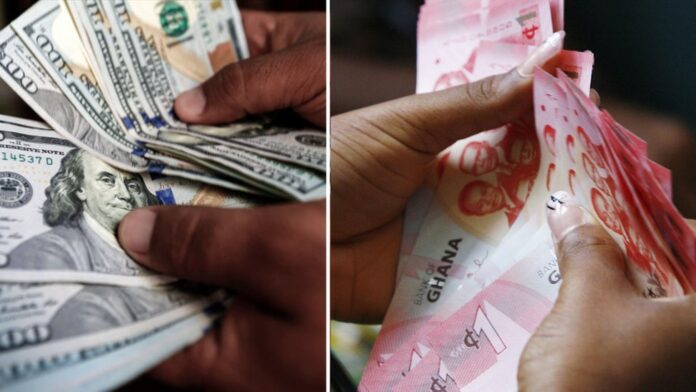
Ghana’s cedi is seen extending recent losses against the dollar due to persistent corporate foreign-currency demand.
LSEG data showed the cedi trading at 11.03 to the dollar on Thursday, compared to 11.01 a week earlier.
“Strong FX demand from the energy, commerce and manufacturing sectors is likely to spur a stronger dollar in the week ahead, as supply remains tight despite decent interbank turnover in recent sessions,” said Andrews Akoto, head of trading at Absa Bank Ghana.
He said bids surpassed $401 million at the last central bank FX auction held on Tuesday, with only $110 million filled, signalling a significant backlog of FX demand in the market.
KENYA
Kenya’s shilling should be steady as foreign-currency demand has eased since the U.S. and Iran agreed a ceasefire and global financial markets turned optimistic about the prospects for a peace deal.
On Thursday the shilling traded at 129.05/129.25 per dollar, compared to last Thursday’s close of 129.10/129.40.
UGANDA
Uganda’s shilling is also forecast to be relatively stable, helped by dollar inflows from coffee exporters and a slowdown in FX appetite.
Commercial banks quoted the shilling at 3,695/3,705 to the U.S. currency, compared to last Thursday’s close of 3,687/3,697.
“We have a bit of flows coming in from coffee while we’ve also seen demand pressure from energy importers slowing,” a trader said.
The shilling is likely to trade in a range of 3,670-3,710 against the dollar in the coming days, he said.
ZAMBIA
Zambia’s kwacha may come under pressure against the dollar next week as the price of copper, the country’s main foreign exchange earner, has been unstable.
Commercial banks quoted the currency of Africa’s No.2 copper producer at 19.40 per dollar from 19.46 a week ago.
“The notable recovery in global copper prices has helped to cushion the local currency, but the metal is likely to remain volatile over the near term,” Access Bank said in a note.
“We could see some pressure re-exerted on the kwacha should the commodity suffer another downturn,” it added.
Source:
reuters
Via:
norvanreports

