


- Africa CEO Forum Launches Second LEAD Cohort to Strengthen Public-Sector Reform
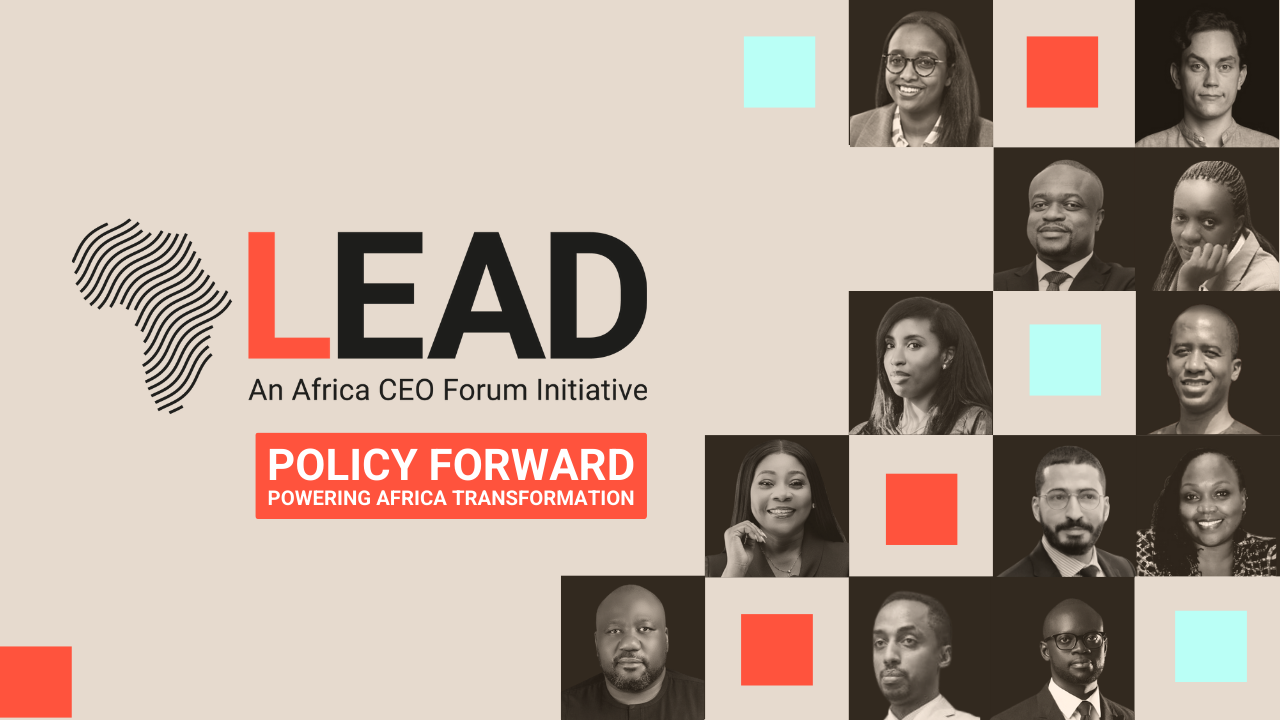
The Africa CEO Forum has launched the second cohort of its LEAD programme, bringing together 50 senior public decision-makers as part of an effort to strengthen state capacity, accelerate digital transformation and improve the quality of public administration across the continent.
The three-day programme, scheduled for August 28 to 30, 2026, will take place at Mohammed VI Polytechnic University in Rabat, Morocco, one year after the initiative was created to make excellence in public governance a central part of Africa’s economic transformation agenda.
LEAD is designed as a pan-African leadership platform for senior officials involved in the formulation and implementation of economic and social policy. It aims to build a long-term community of public-sector leaders capable of sharing experiences, comparing reform approaches and developing common responses to governance, technological and institutional challenges.
The second cohort will participate in collaborative working sessions, peer exchanges and discussions with senior figures from government, business, academia and development finance.
Speakers include Mehdi Jomaa, former head of government of Tunisia; Donald Kaberuka, founder and managing partner of SouthBridge Group and former president of the African Development Bank; Serge Ekue, president of the West African Development Bank; and Sanjay Jain, co-creator of India Stack and director of digital public infrastructure at the Gates Foundation.
Mauricio Cárdenas, professor of professional practice in global leadership at Columbia University’s School of International and Public Affairs and former finance minister of Colombia, will also participate.
The programme is supported by Mohammed VI Polytechnic University, Asafo & Co, the West African Development Bank, Boston Consulting Group and the African Development Bank.
The involvement of these institutions reflects the programme’s focus on linking public administration with development finance, private-sector expertise and practical reform experience.
LEAD was created by the Africa CEO Forum to reposition Africa’s administrative leadership as a driver of policy reform, institutional performance and stronger engagement between governments and the private sector.
Its framework rests on three broad priorities: modernising the state, improving public services and strengthening cooperation among governments, development institutions and businesses.
The first cohort comprised 36 fellows from public administrations and institutions in 24 African countries.
Within less than 12 months, six members moved into more senior roles. Two were appointed ministers, two assumed strategic positions at the highest levels of government and two were promoted to chief executive positions.
The six appointments represented 16.70% of the inaugural cohort, which LEAD described as evidence of the programme’s potential to accelerate the influence of senior officials within African public institutions.
Although promotions alone do not measure improvements in public administration, they indicate that the programme is attracting officials already positioned to shape government policy and institutional reform.
LEAD’s long-term ambition is to admit a new cohort each year and gradually create a network of several hundred African public decision-makers united around transparency, performance and regional cooperation.
The first year of the programme focused heavily on public service delivery and digital public infrastructure.
Participants examined digital identity systems, payments, secure data exchange, interoperability, data governance and the protection of citizens.
These issues have become increasingly important as African governments digitalise public services and seek to reduce the cost and administrative burden associated with identification, taxation, social protection, business registration and public payments.
Digital public infrastructure can improve access to services and create platforms on which private companies develop new products.
However, its expansion also raises concerns about data protection, cybersecurity, exclusion, surveillance and the concentration of technological control.
LEAD’s work considered how African states could build shared and open digital systems capable of supporting local innovation while preserving the authority of governments to establish rules and protect citizens.
The emphasis on shared infrastructure is particularly relevant because many African countries continue to develop digital systems independently, often relying on different technologies, standards and external providers.
Fragmentation can increase costs and make it difficult for systems to communicate across institutions and borders.
More interoperable infrastructure could support regional commerce, cross-border payments and the delivery of public services, while also reducing duplication among governments.
The first year of the programme has culminated in a white paper produced with Boston Consulting Group on Africa’s role in the digital economy and artificial intelligence.
The document estimates that the digital economy accounts for about 5.00% of Africa’s gross domestic product, compared with nearly 15.00% globally.
It argues that the continent must move from consuming imported technology towards creating intellectual property, infrastructure, companies and economic value locally.
The white paper identifies three principal priorities for policymakers.
The first is to build shared digital infrastructure capable of supporting both public services and private innovation.
The second is to pool investment across countries and institutions to achieve sufficient scale and avoid fragmented, duplicative projects.
The third is to favour open and interoperable technology architectures in which trust, governance and citizen protection are integrated from the design stage.
These priorities reflect a wider debate about digital sovereignty in Africa.
Many countries are expanding digital public services, but the underlying technology, cloud infrastructure, data storage and artificial intelligence systems are often provided by foreign companies.
That dependence can limit domestic value creation and expose governments to external technological and commercial risks.
Amir Ben Yahmed, president of the Africa CEO Forum, said the experience of the first cohort demonstrated that Africa already possessed officials capable of transforming public administration.
He said the programme’s responsibility was to provide a pan-African platform where those officials could compare experiences, develop shared solutions and advance a new generation of public policy.
The second cohort would seek to accelerate the transition from ambition to execution, particularly in digital public infrastructure and artificial intelligence, which he described as central to sovereignty, state effectiveness and economic value creation.
The central test for LEAD will be whether its network produces measurable improvements in public institutions rather than remaining primarily a high-level leadership forum.
African governments frequently adopt reform strategies, digitalisation plans and investment frameworks, but implementation is often constrained by weak coordination, limited administrative capacity and political resistance.
By connecting senior officials across countries, the programme could help reduce some of those constraints through peer learning and the transfer of tested policy approaches.
Its potential value will ultimately depend on whether fellows use the network to improve service delivery, strengthen institutional accountability and implement reforms that survive political transitions.
The launch of the second cohort suggests the Africa CEO Forum and its partners are positioning public-sector leadership as a necessary complement to private investment.
Africa’s economic transformation will require capital, infrastructure and competitive businesses, but it will also depend on governments capable of designing credible policies, enforcing rules and delivering services efficiently.
LEAD’s expanding network is an attempt to build that administrative capacity at a continental level, with digital infrastructure and artificial intelligence emerging as the immediate testing grounds for whether African states can move from policy ambition to execution.

