

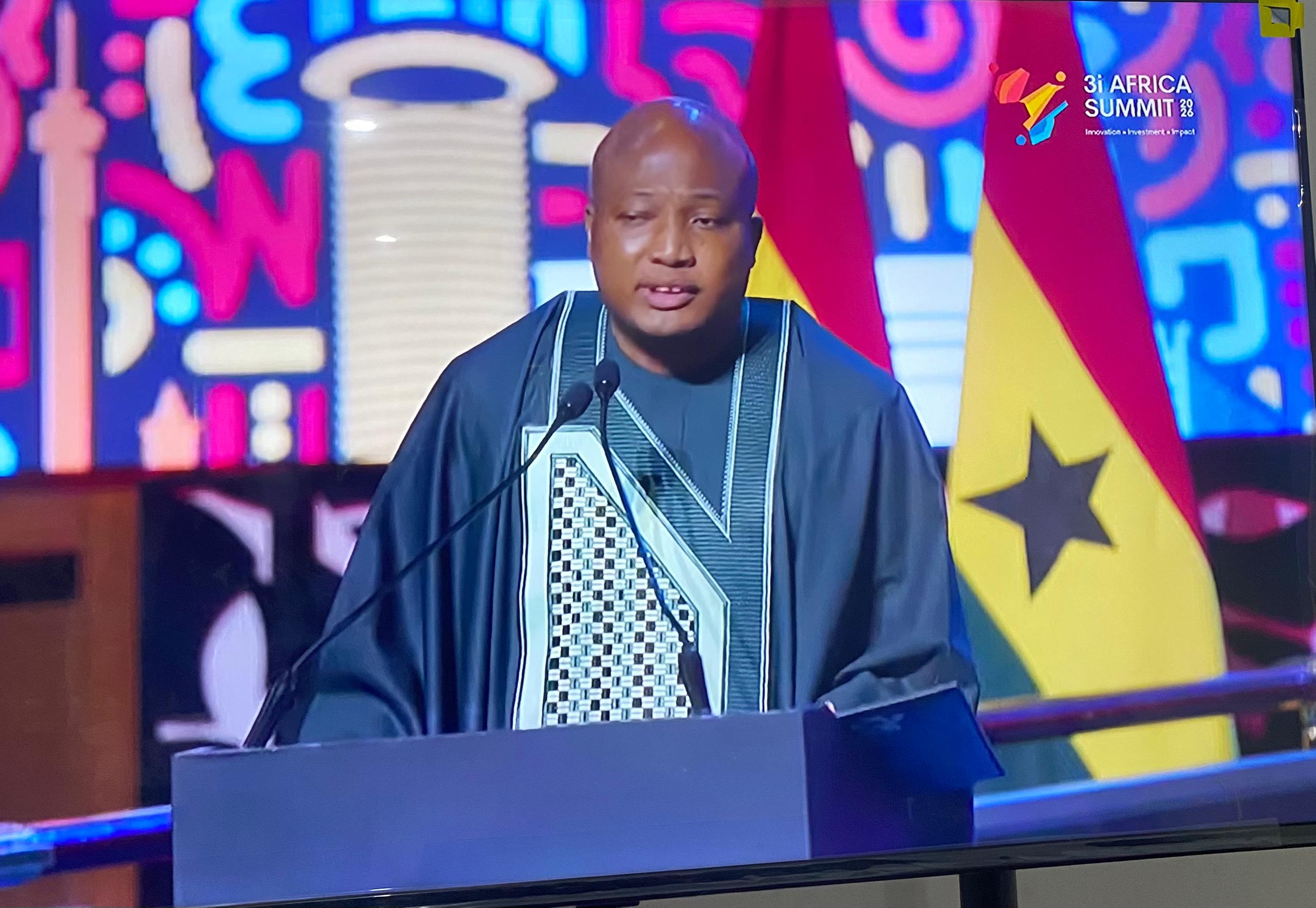

Africa Must Unite Economically or Risk Missing Historic Opportunity, Foreign Affairs Minister Warns
Africa risks undermining its own economic future unless governments commit to deeper regional integration, stronger continental financial systems and greater solidarity among Africans, Ghana’s Foreign Affairs Minister, Samuel Okudzeto Ablakwa, has warned.
Delivering a keynote address on “Regional Financial Integration for Nation Development” at the 3i Africa Summit 2026, Mr Ablakwa said Africa possesses nearly all the resources needed to emerge as a major global economic force but continues to struggle with fragmentation, weak intra-African trade and insufficient policy coordination.
The minister noted that Africa holds 30% of the world’s mineral resources, 60% of global arable land and a population of more than 1.4 billion people, placing the continent in a strong position to benefit from ongoing global economic transformation.
“Africa has almost all the foundations it requires to be an economically strong and vibrant economic space,” he said. “The gap between Africa’s potential and reality lies in the deliberate policies we pursue.”
Speaking against the backdrop of rising geopolitical tensions, shifting trade patterns and rapid technological innovation, Mr Ablakwa said Africa’s future prosperity would depend on how effectively the continent strengthens regional integration and develops resilient financial systems capable of supporting industrialisation and cross-border commerce.
He lamented that intra-African trade remains around 15%, far below levels recorded in Europe and Asia, describing the situation as inadequate for sustainable continental growth.
“We can no longer accept an African market that is fragmented and whose productive centres are not connected,” he said.
The minister also delivered a sharp rebuke against xenophobia and anti-immigrant sentiment within parts of the continent, arguing that hostility toward fellow Africans directly contradicts the vision of continental unity and economic integration.
“We cannot be talking about trading among ourselves and integrating when we are not welcoming of each other,” he said.
Drawing comparisons with Europe’s response to the displacement crisis caused by the Russia-Ukraine war, Mr Ablakwa praised European countries for rapidly integrating millions of Ukrainian refugees into their economies through employment support, visa arrangements and social protection measures.
He contrasted that response with the limited support extended to displaced Sudanese despite Sudan’s conflict producing one of the world’s largest humanitarian crises.
“The international community has forgotten that the biggest displacement is not Ukrainians leaving Ukraine, it is what is going on in Sudan,” he said.
Mr Ablakwa said Africa’s long-term solution to unemployment, instability and weak growth lies not in isolationism but in deeper cooperation, stronger trade partnerships and increased confidence in African-made products and innovation.
The minister added that recommendations emerging from the summit would contribute to Ghana’s continental policy agenda ahead of President John Dramani Mahama assuming leadership of the African Union in February 2027.

