

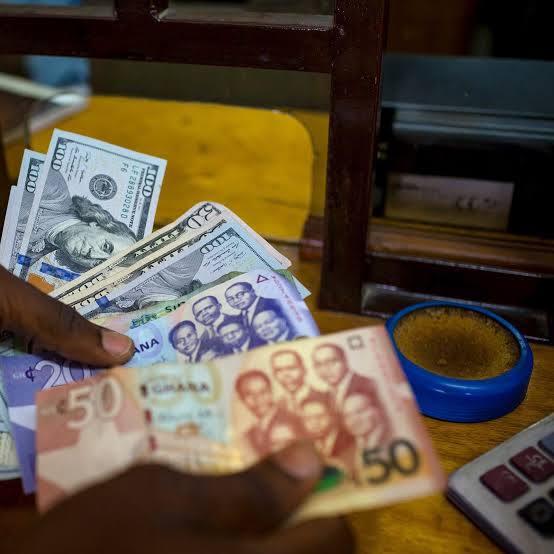

- African Currencies Feel Oil Shock as Uganda and Zambia Slide, Cedi Crosses GH¢11.55
African currencies are beginning to reflect the strain from elevated global energy prices and renewed geopolitical uncertainty, with the Ugandan shilling and Zambian kwacha posting some of the sharpest recent losses while Ghana’s cedi continues a slower but increasingly visible depreciation.
Reuters’ latest regional foreign-exchange assessment shows dollar demand from manufacturers, importers and energy companies intensifying across several markets as businesses seek protection against further increases in fuel and other externally priced inputs.
Ghana’s official interbank midpoint has now moved through GH¢11.55 to the US dollar, bringing the next closely watched level around GH¢11.60 into focus.
Uganda has emerged as one of the clearest pressure points. The shilling weakened to about UGX3,925-3,935 per dollar on September 17 from roughly UGX3,860-3,870 a week earlier, equivalent to approximately 1.68% depreciation using midpoint rates.
Reuters attributed the move to strong dollar demand from manufacturers and energy-sector companies, with Bank of Uganda research director Adam Mugume saying some market participants were making forward dollar purchases to lock in exchange rates amid uncertainty generated by the Iran conflict.
Dealers cited by Reuters said the Ugandan currency could test UGX4,000 per dollar, a level that would represent a fresh all-time low if reached.
The significance of the move lies not simply in the percentage depreciation but in the behaviour behind it: companies are seeking dollars in advance rather than waiting for immediate settlement needs, a sign that expectations themselves are beginning to influence demand.
When importers and manufacturers begin hedging aggressively, pressure can intensify even before the underlying energy bill is fully reflected in trade flows.
Zambia has experienced an even larger weekly adjustment. The kwacha weakened from around ZMW19.53 to ZMW19.94 per dollar, representing approximately 2.10% depreciation, as strong corporate and import-related demand for foreign currency outweighed some of the traditional support from higher copper prices and easing domestic inflation.
Reuters’ assessment indicates that Zambia recorded the largest verified weekly depreciation among the major currencies covered in the regional survey
Ghana’s move has been less dramatic but is increasingly important because the cedi has now crossed a level that had acted as a near-term reference point.
The Bank of Ghana’s September 18 interbank data showed the dollar at GH¢11.5442 buying and GH¢11.5558 selling, producing an official weighted median midpoint of GH¢11.5500.
Reuters had placed the market around GH¢11.50 on September 17 compared with approximately GH¢11.45 a week earlier, implying a depreciation of roughly 0.44% over that comparison period.
The more consequential signal for Ghana is the flow imbalance underneath the headline rate. Reuters reported that dollar demand from the energy and services sectors was exceeding interbank supply, a pattern that mirrors the pressures visible elsewhere in Africa as petroleum and other import costs rise.
Traders nevertheless expect support from the Bank of Ghana and foreign-exchange inflows associated with Ghana’s gold marketing arrangements to limit the risk of a disorderly depreciation.
That means Ghana’s position remains materially different from Uganda and Zambia for now. The cedi is weakening, but the movement has so far been gradual rather than disorderly, while official reserves and central-bank intervention capacity continue to provide a buffer against abrupt market dislocation.
The next useful market threshold is around GH¢11.60 per dollar, particularly if a break above that level is accompanied by stronger petroleum-sector demand, widening retail-interbank spreads or heavier Bank of Ghana intervention.
Nigeria and Kenya remain comparatively stable. Reuters put Nigeria’s naira around NGN1,328 per dollar in the official market on September 17, broadly unchanged from a week earlier, with central-bank dollar sales and relatively subdued import demand helping maintain stability.
Kenya’s shilling was quoted around KES129.50-129.70 per dollar, compared with KES129.30-129.50 previously, a movement of only about 0.15% on midpoint rates.
The common external pressure is oil. Brent crude ended September 18 at US$104.87 a barrel, down on the day as diplomatic efforts and Saudi export adjustments eased some immediate concerns about supply disruption, but conditions in the Middle East remain far from normal.
Reuters reported that traffic through the Strait of Hormuz remained severely constrained and that damage to Saudi Arabia’s East-West pipeline continued to affect crude flows towards the Red Sea.
The weekend then added another layer of uncertainty after Houthi missile and drone attacks on Riyadh pushed oil higher again, with Brent trading around US$104.68 in early Monday dealings.
That suggests the energy shock facing African importers has not disappeared even though crude has retreated from recent peaks.
For countries such as Ghana, Uganda and Zambia, the more important FX transmission mechanism is the sustained requirement for additional dollars to finance petroleum and refined-product imports rather than any single daily movement in Brent.
The regional pattern therefore warrants differentiated attention rather than a single Africa-wide conclusion.
Uganda and Zambia are displaying clearer signs of stress, with weekly depreciation of roughly 1.68% and 2.10% respectively and explicit evidence of strong corporate and energy-related dollar demand.
Ghana remains under pressure but has so far contained the adjustment to less than 1.00% over the latest weekly comparison, while Nigeria and Kenya remain relatively steady.
For Ghana, the immediate question is whether the cedi can stabilise around the current GH¢11.55 level or whether import demand pushes it through GH¢11.60 in the coming sessions.
A breach by itself would not necessarily signal a disorderly market, but a sustained move beyond that threshold combined with heavier petroleum-sector purchases, weaker gold-related inflows or more visible central-bank support would represent a materially stronger warning.
For now, the cedi is not the region’s weakest currency but the same oil-driven dollar pressure hitting Uganda and Zambia is increasingly visible in Accra.

