

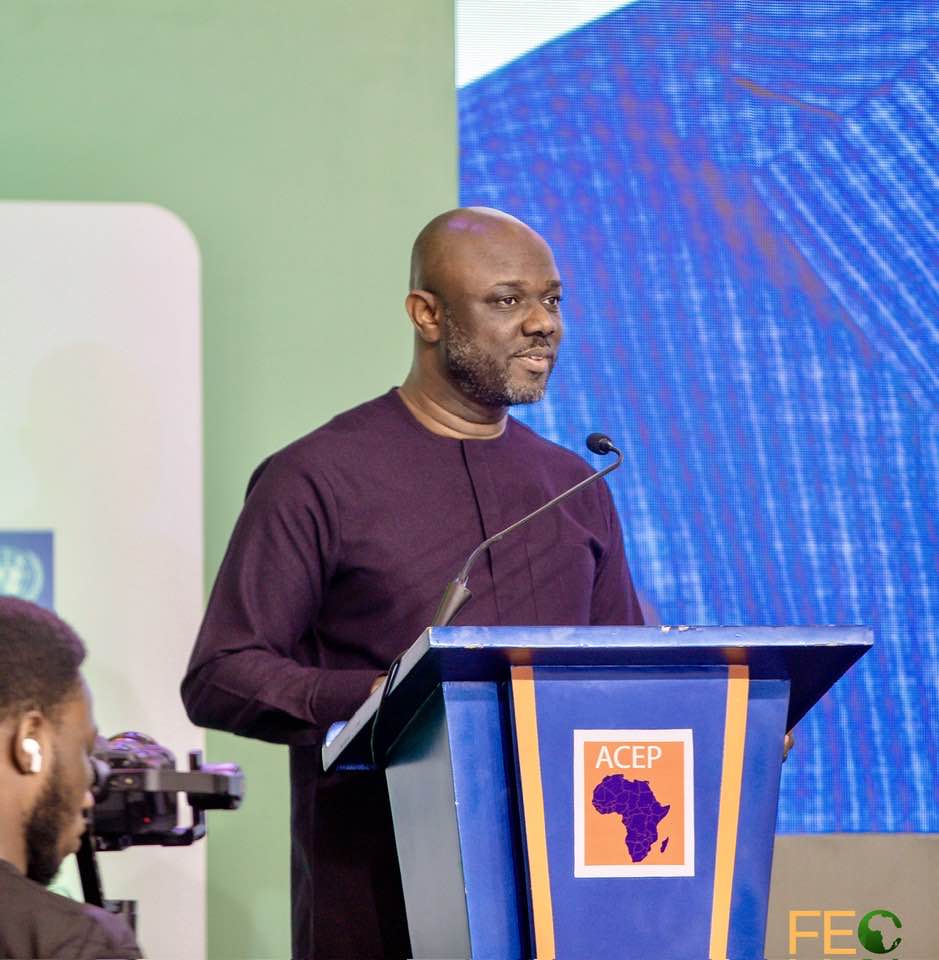

- From PDS To ECG: Ben Boakye Says Ghana Is Chasing One Controversy While Bigger Losses Persist
Ghana’s renewed investigation into the failed Power Distribution Services concession has opened a wider debate over whether the state has clearly established the financial loss it is seeking to recover and whether similar scrutiny is being applied to the much larger structural weaknesses inside the electricity sector.
Ben Boakye, Executive Director of the Africa Centre for Energy Policy, said state institutions should be free to act where fresh evidence indicates that public resources may have been lost, but argued that investigators must first identify the precise state interest involved and quantify any outstanding liability.
His intervention came during a NorvanReports X Space examining where legitimate protection of public resources ends and potentially excessive use of state power begins.
“We cannot stop state institutions from doing what they have to do at all times if there is fresh evidence that suggests that the state interest is still in question,” Mr Boakye said. But he argued that institutions including the Economic and Organised Crime Office, Financial Intelligence Centre and Attorney-General’s office should be able to establish what public interest has been harmed before deploying investigative powers.
“Somebody must tell you where the state interest is suffering for you to make that intervention,” he said.
The central question, according to Mr Boakye, is whether the state has established a reconciled financial claim against PDS rather than relying on headline figures relating to money collected during the company’s brief period managing ECG operations. “Is Ghana losing money, or have we lost money? How much have we lost? And who said we have lost money?” he asked.
He said those questions should logically precede account freezes, arrests or other coercive measures because they determine whether authorities are pursuing a recoverable public loss, a contractual dispute or possible criminal conduct.
His comments come after the PDS dispute passed through international arbitration, where a London-seated tribunal in November 2025 substantially rejected the company’s roughly US$390mn claim arising from the termination of the concession.
The tribunal upheld ECG’s right to terminate the arrangement, while the Ministry of Energy subsequently said the government would pursue any amounts due to ECG. That outcome, Mr Boakye argued, makes a careful reading of the arbitration and any related judicial decisions essential before new enforcement action is taken.
“For a matter that has gone to court, gone to arbitration, and has been ruled on, at least understanding what the court said, or understanding the outcome of the arbitration, is the starting point of any other investigation,” he said.
Mr Boakye also questioned why different figures including GH¢800mn, GH¢850mn and GH¢1bn have circulated publicly in connection with the renewed investigation.
“I’m not seeing any document from ECG that says that PDS owes us a million, two million, one billion,” he said, arguing that the state should publish or establish a reconciled balance if one exists.
That distinction is important because gross electricity collections are not automatically equivalent to money owed to the state or ECG.
A distribution operator collects revenues but also incurs obligations to power generators, transmission companies and other participants in the electricity value chain, meaning the relevant figure would ordinarily be the reconciled amount remaining after permitted payments and contractual obligations.
“We are not even interested in their collection,” Mr Boakye said. “You are interested in a reconciled number of what you think the balance is.”
A law firm linked to people questioned in the investigation has separately disputed allegations surrounding the reported GH¢850mn transfer and accused authorities of intimidating lawyers who attended to represent clients.
The firm said two lawyers were interrogated, arrested and subsequently granted bail, while rejecting the suggestion that their conduct amounted to wrongdoing; those claims remain contested and have not been finally determined by a court. The episode has widened the argument from financial accountability into questions about legal representation, investigative proportionality and due process.
Mr Boakye’s broader argument, however, is that the PDS episode risks absorbing political and institutional attention while far larger weaknesses inside ECG and the electricity value chain continue to impose costs on the public purse.
He said some changes introduced during the short PDS operational period appeared to improve workplace discipline and revenue focus and argued that those principles could have been retained even after the concession was terminated.
“Whatever they don’t pay, the state pays,” he said, framing poor utility performance ultimately as a fiscal burden transferred to taxpayers.
He also cited alleged losses of equipment, revenue-management weaknesses and concerns over the operation of the cash waterfall mechanism as areas deserving equivalent investigative attention.
Mr Boakye alleged that ECG had at one stage been spending more than GH¢600mn a month beyond authorised revenues and under-declaring amounts expected to flow through the cash waterfall, claims that would require reconciliation against official ECG, government and sector accounts.
“The state was paying billions a year. Nobody is acting on them,” he said, questioning how national interest is defined when different categories of potential public loss receive different levels of enforcement attention.
His most sweeping estimate was that losses accumulated in the electricity sector between the departure of PDS and the present could exceed US$18bn-US$20bn on what he described as a conservative basis.
That figure has not been independently established in the material provided and would require detailed reconciliation with official fiscal transfers, power-sector shortfalls, debt-service costs and other liabilities before being treated as an aggregate public loss.
Mr Boakye’s underlying argument is nevertheless that persistent electricity-sector deficits create opportunity costs because resources used to settle power obligations cannot simultaneously finance hospitals, education, infrastructure or other public priorities.
The ACEP executive director also warned that the manner in which the state exercises financial investigative powers could affect Ghana’s investment climate if businesses conclude that contractual funds can be frozen or transferred before liabilities have been firmly established.
“It actually means that anybody dealing with government should be wary of keeping their money in Ghana,” he said, expressing concern about predictability rather than arguing that investigators should be prevented from acting where evidence supports intervention.
For private investors entering infrastructure and public-private arrangements, perceived uncertainty around property rights, contract enforcement and investigative processes can translate into higher risk premiums and ultimately higher costs to the state.
He similarly questioned the proportionality of some bail requirements reported in connection with the investigation, arguing that their rationale should be clear and connected to the alleged conduct of each individual.
His concern was that frequently changing or exceptionally large bail conditions could create an appearance of arbitrariness if authorities do not explain why they are necessary.
The legal merits of those conditions remain matters for the courts and investigating authorities, but the argument feeds into the broader question of how enforcement can remain robust without weakening procedural safeguards.
The larger lesson from the PDS fallout, Mr Boakye argued, is that Ghana must distinguish between recoverable public losses, contractual disagreements, administrative failure and potential criminal wrongdoing, rather than treating them as interchangeable.
“We need to show the world that we have a capable state that understands where its power ends,” he said.
For Ghana, that leaves two parallel tests: establishing and recovering any legitimate financial claim arising from the failed PDS concession, while confronting the deeper electricity-sector governance and financial weaknesses that continue to impose costs long after PDS itself disappeared from the power-distribution system.

