


- African FX Divide Widens as Ghana, Kenya and Zambia Find Temporary Stability
Ghana’s cedi is expected to remain broadly stable over the coming week as improved dollar liquidity and mining-sector inflows provide support, contrasting with mounting pressure on the Nigerian naira and Uganda’s shilling as importers compete for foreign exchange.
The cedi traded at approximately GH¢11.54 to the dollar on Thursday, strengthening from GH¢11.63 a week earlier, according to LSEG data cited by Reuters. Traders expect scheduled dollar sales by the Ghana Gold Board and continuing mining-related inflows to underpin the currency in the near term.
The relative stability places Ghana alongside Kenya and Zambia in a group of African markets where foreign-exchange supply is expected to broadly match demand. Nigeria and Uganda face a less favourable balance, although the causes and policy challenges differ.
In Ghana, the immediate support comes from growing interbank liquidity. Andrews Akoto, head of trading at Absa Bank Ghana, said “decent mining-related FX inflows” should provide favourable tailwinds as dollar demand from the energy and commerce sectors moderates.
Ronald Mensah, a trader at Stanbic Bank Ghana, also pointed to planned GoldBod dollar sales as a source of near-term support. The assessment follows the Board’s announcement of a US$130 million spot sale to commercial banks at GH¢11.60 per dollar, part of a wider October intervention programme.
The cedi’s performance demonstrates how commodity-export receipts can influence short-term currency conditions when converted into usable market liquidity. Ghana has long exported substantial quantities of gold, but domestic dollar shortages can persist when proceeds are fragmented, retained offshore or fail to enter the interbank system predictably.
GoldBod’s intervention model seeks to close that gap by channelling foreign exchange from gold trading into authorised banks and official reserves. If sustained transparently, the mechanism could reduce volatility and improve access for businesses. Its durability, however, will depend on whether supply remains commercially generated rather than requiring costly or exceptional support.
Nigeria presents the clearest near-term threshold risk. The naira was quoted at 1,339 per dollar on the official market, compared with 1,331 a week earlier, while street-market transactions occurred around 1,370. Traders warned that a breach of 1,340 could produce further weakness unless the Central Bank of Nigeria intervenes.
Demand is being driven partly by importers purchasing foreign currency ahead of the holiday season and investors taking profits on securities. These forces illustrate the sensitivity of the naira to seasonal trade flows and portfolio behaviour. Even where official reserves provide intervention capacity, concentrated demand can quickly test market confidence.
The difference between the official and street rates also matters. Parallel-market premiums can indicate that some businesses and individuals cannot obtain enough foreign exchange through formal channels. If the gap widens, it may encourage speculative activity and weaken confidence in the official price.
Central-bank intervention could slow the naira’s decline, but sustainable stability requires more than periodic dollar sales. Nigeria needs reliable export inflows, confidence in monetary policy and a market structure capable of clearing legitimate demand without repeatedly creating sharp price distortions.
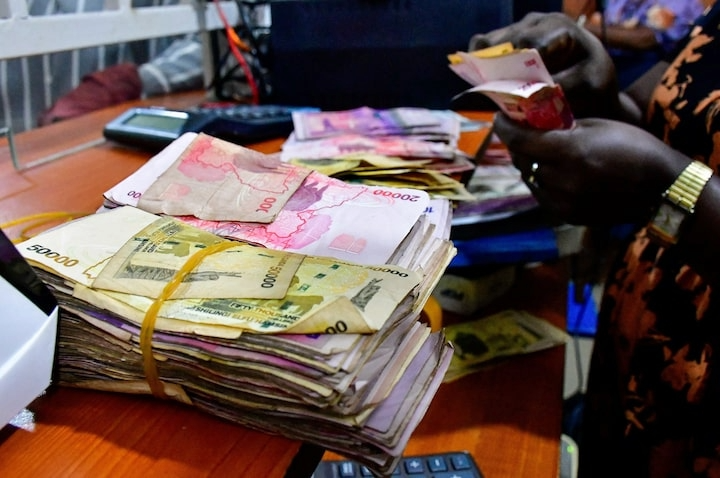
Uganda faces the strongest depreciation among the five currencies. Commercial banks quoted the shilling at 4,250/4,260 per dollar, compared with 4,045/4,055 the previous Thursday. At the midpoint, that represents a weekly weakening of about 5 per cent—an unusually large movement for businesses dependent on imports.
Strong demand from energy and merchandise importers is driving the pressure. The Bank of Uganda sold dollars into the market, but traders expected the intervention to slow rather than reverse the depreciation. That distinction is important: intervention can absorb immediate orders, yet it cannot permanently overcome a structural shortage of foreign currency.
For Uganda, a weaker shilling raises the local cost of fuel and imported goods, potentially transmitting currency pressure into inflation. Businesses may increase prices or reduce imports, while companies with foreign-currency liabilities face higher repayment costs. The speed of the movement also complicates budgeting and contract pricing.
Kenya’s shilling offers a contrasting picture. Banks quoted it at 129.80/130.00 per dollar, unchanged from the previous week. Traders expect month-end demand to keep the currency within a range of 128 to 130, even as the dollar shows some strength.
Range-bound trading suggests Kenya’s supply and demand remain comparatively balanced. However, stability near 130 should not be confused with an absence of risk. Higher energy costs, portfolio outflows or stronger import demand could disrupt the range if dollar inflows fail to respond.
Zambia’s kwacha is also expected to remain within a narrow band. Banks were selling the dollar at approximately 20.37 kwacha, compared with 20.18 a week earlier. Corporate dollar sales ahead of local-currency payments are providing support, even though underlying pressure persists.
This month-end pattern is common in African foreign-exchange markets. Companies convert export earnings or offshore balances to pay wages, taxes and domestic suppliers, temporarily increasing local-currency demand. The support may weaken after those obligations are met, making the durability of the kwacha’s stability dependent on continuing inflows.
Across the five markets, energy demand remains a recurring vulnerability. Uganda’s depreciation is directly linked to dollar purchases by fuel importers, while moderated energy-sector demand is helping Ghana. Countries that import petroleum remain exposed to the interaction between global oil prices, domestic consumption and limited foreign-exchange buffers.
The regional comparison also shows that currency stability is determined by flows, not headlines alone. Ghana’s mining receipts, Kenya’s balanced market and Zambia’s corporate conversions are supporting their currencies. Nigeria’s seasonal imports and Uganda’s energy demand are producing the opposite effect.
For Ghana, the encouraging outlook should be treated as an opportunity to strengthen reserves and improve market functioning, not as proof that currency risk has disappeared. Gold-backed liquidity can stabilise conditions, but lasting confidence requires disciplined fiscal policy, lower inflation and predictable foreign-exchange rules.
The coming week will test whether the cedi can remain near GH¢11.54 as commercial demand meets GoldBod and mining-sector supply. More broadly, it will show whether interventions in Nigeria and Uganda can contain pressure or merely delay further depreciation. Across Africa, the decisive question remains whether dollar inflows are deep enough to meet the continent’s import needs without repeated currency shocks as global financial conditions remain unsettled.

