


- Bank Of Ghana Sets Out Four Steps to Unlock Asian Investment
Ghana has urged Asian investors and West African governments to move beyond broad expressions of interest and build practical financing structures capable of converting the region’s development needs into commercially viable investments.
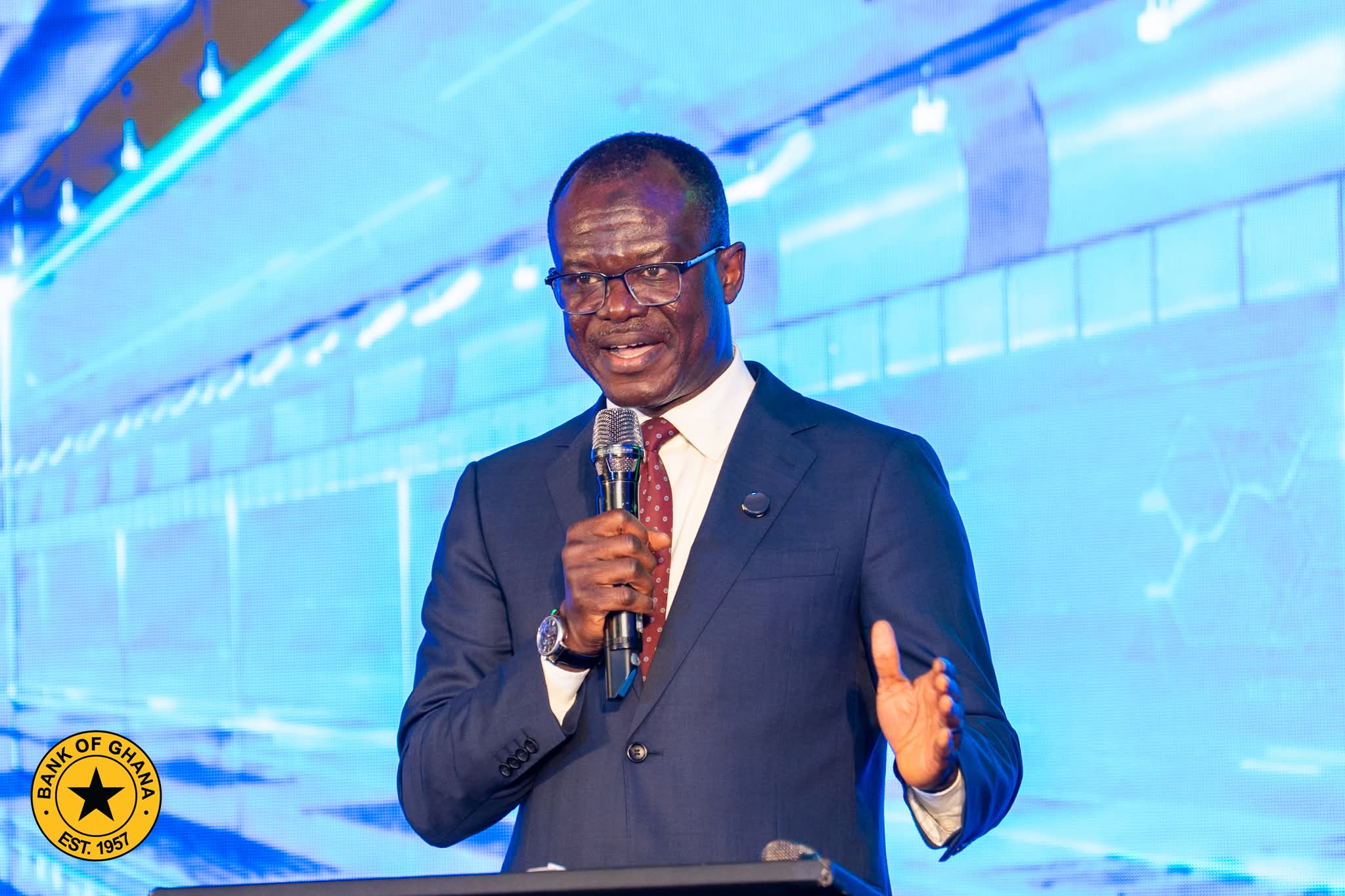
Dr Zakari Mumuni, First Deputy Governor of the Bank of Ghana, said the central obstacle to stronger Asian capital flows was not a shortage of money or opportunities, but concerns about confidence, perceived risk and weak execution structures.
He was delivering the keynote address at the High-Level West Africa–Asia Capital Dialogue, convened by the ECOWAS Bank for Investment and Development on the sidelines of the IMF–World Bank Annual Meetings in Bangkok.
“The challenge is not a lack of capital or investment opportunities but confidence, risk perception, and effective investment structures,” Dr Mumuni said.
His argument places responsibility on both sides of the investment relationship. West African economies must strengthen institutions, prepare bankable projects and reduce uncertainty. Asian investors must avoid treating the region as a single risk category and assess countries and projects on their merits.
This distinction is important. West Africa’s infrastructure deficit is often presented as evidence of enormous investment opportunity. Yet unmet demand does not itself produce an investible asset. A proposed railway, power plant or processing facility becomes attractive to long-term capital only when revenue expectations, legal protections, construction risks and exit arrangements are sufficiently clear.
“Development needs do not automatically become investable opportunities,” Dr Mumuni said. “Projects must be commercially viable, properly structured, supported by credible feasibility studies, and accompanied by transparent risk allocation mechanisms.”
For Ghana, the pitch comes after a difficult period marked by elevated inflation, exchange-rate pressure, debt distress and restricted access to international capital markets. Policy adjustment and economic reforms have since helped reduce inflation, improve debt sustainability and secure upgrades to the country’s sovereign credit ratings.
Dr Mumuni said Ghana’s recent stabilisation demonstrated that credible policy action could restore confidence and reposition an economy for investment. Macroeconomic instability raises financing costs and discourages long-term commitments, while price stability, sustainable public finances and credible institutions create a foundation for private-sector expansion.
But he also cautioned against treating stabilisation as the final objective. “Stability is only the starting point,” he said, arguing that sustainable investment ultimately depends on productive opportunities and competitive businesses.
That observation reflects Ghana’s wider economic challenge. Lower inflation and improved fiscal credibility can repair investor sentiment, but they do not automatically create factories, employment or export capacity. The next phase must connect stability to private capital formation, particularly in sectors capable of generating foreign exchange and reducing dependence on imports.
Dr Mumuni identified agro-processing, manufacturing, energy, transport and logistics, digital services and financial technology as areas offering significant opportunities in Ghana. These sectors could support structural transformation while creating employment for the country’s growing workforce.
The investment proposition extends beyond Ghana’s domestic market. The African Continental Free Trade Area gives companies operating from Ghana potential access to a continent-wide market, but that opportunity will remain theoretical without improvements in logistics, trade facilitation, cross-border payments and dispute resolution.
The first is better risk sharing. Governments, development finance institutions, export credit agencies and private investors must allocate each risk to the party best able to manage it. Expecting private capital to absorb political, currency, construction and demand risks simultaneously will make otherwise useful projects prohibitively expensive.
The second is stronger project preparation. West Africa needs a reliable pipeline of projects with completed feasibility studies, transparent procurement arrangements, realistic revenue models and clearly identified sponsors. Without that groundwork, investment forums risk generating announcements that never reach financial close.
Third, financing structures must match the life of the assets being financed. Infrastructure and industrial projects produce returns over many years and cannot be sustainably funded with short-term capital. Dr Mumuni advocated greater use of long-term and local-currency financing where feasible to reduce currency mismatches.
Foreign-currency loans can appear cheaper at the point of contracting, but sharp exchange-rate depreciation can undermine projects whose revenues are earned in local currency. Local-currency financing transfers part of that vulnerability away from project operators, although it requires deeper domestic capital markets and investors willing to commit funds over longer periods.
The fourth requirement is stronger institutional partnership. Dr Mumuni called for enduring arrangements that combine Asian capital and technical expertise with African market knowledge. Such partnerships would be more valuable than transactional financing because they could support technology transfer, local supplier development and repeated investment.
The Bank of Ghana’s role, he said, was not to determine which commercial projects succeeded but to maintain the monetary and financial environment in which investment decisions could be made credibly. That includes price and financial stability, efficient payment systems and transparent foreign-exchange arrangements.
Dr Mumuni proposed a practical agenda beginning with the identification of priority sectors and projects that have genuine appeal to Asian investors. He also called for structured channels linking African project sponsors with potential financiers, wider collaboration on trade finance and payment connectivity, and a mechanism for tracking deliverables against agreed timelines.
EBID and other regional development finance institutions could serve as coordinators, helping governments improve project preparation while giving investors a credible point of entry. Their participation could also mobilise private finance by providing guarantees, concessional capital or other forms of risk mitigation.
The deeper message from Bangkok is that West Africa cannot market potential indefinitely. Investors ultimately finance cash flows, enforceable agreements and competent institutions, not aspirations. At the same time, Asian investors could miss valuable opportunities if they continue pricing diverse West African economies through undifferentiated regional assumptions.
“Our responsibility in Africa is to make opportunities more investable,” Dr Mumuni said. “Our partners’ responsibility is to assess those opportunities objectively and work with us to develop commercially viable solutions.”
The success of the dialogue will consequently be measured by execution: the investments completed, businesses expanded and partnerships sustained. For Ghana, that means using restored stability to attract capital that increases productive capacity. For Asian partners, it means converting interest in Africa’s growth into patient capital, shared risk and long-term commercial presence.

