

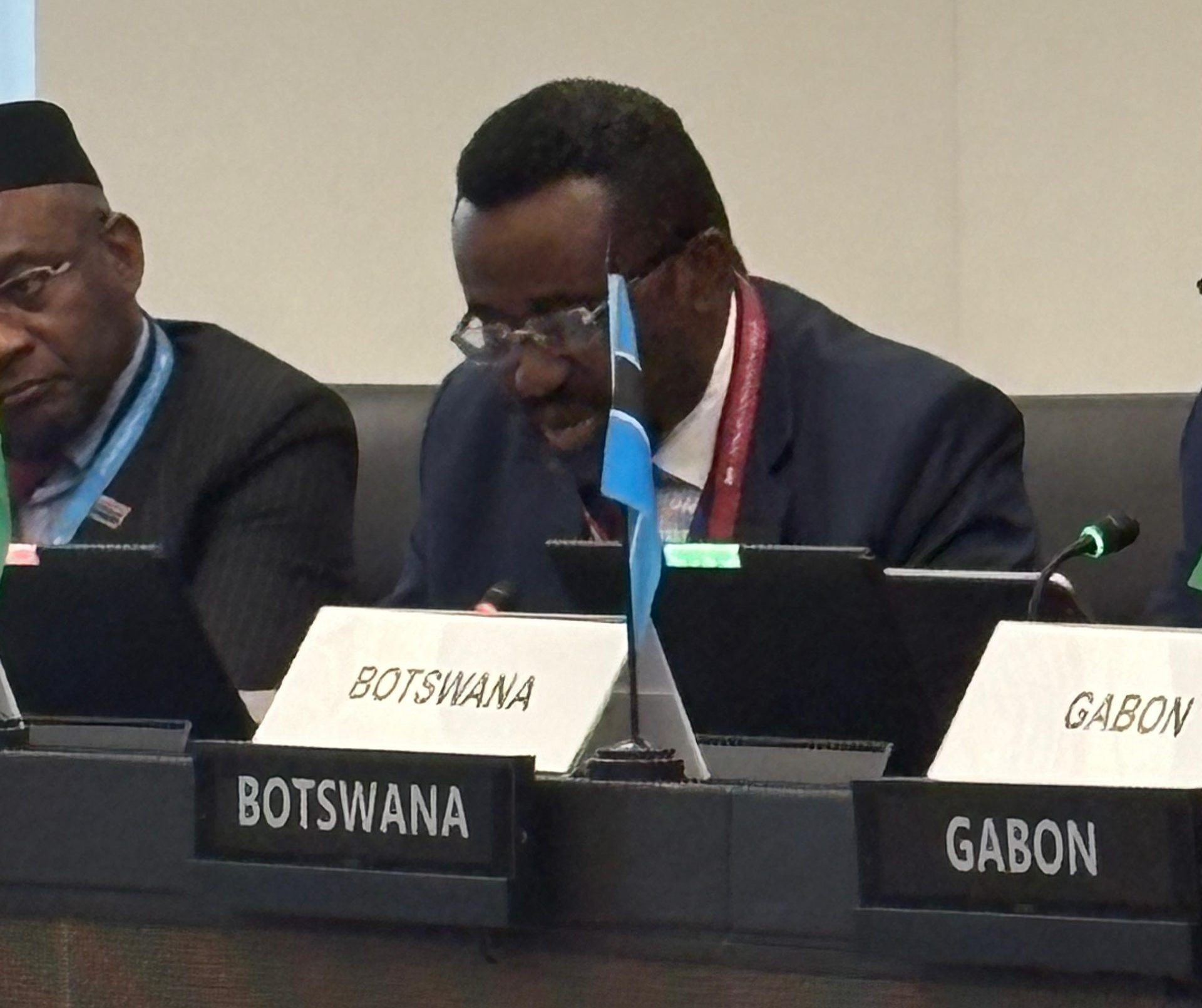

- BoG Governor Calls for Stronger IMF Action on Debt, Liquidity and Climate Risks
The Governor of the Bank of Ghana Dr. Johnson Pandit Asiama, has called for stronger and more agile action by the International Monetary Fund to help African economies navigate mounting debt distress, climate shocks and external financing pressures, warning that the scale of overlapping crises now facing the continent demands more than incremental policy adjustments.
Speaking at the Meeting of Governors of the African Consultative Group held in the IMF Executive Board Room on Tuesday, April 14, and attended by IMF Managing Director Kristalina Georgieva, the Governor aligned himself with fellow African central bank heads in commending the Fund’s leadership but used the platform to press for a more forceful institutional response to Africa’s worsening macroeconomic strain.
His intervention captured the increasingly urgent message from African policymakers: that while the IMF remains central to the continent’s macroeconomic stabilisation efforts, its current debt resolution architecture and financing toolkit are proving too slow and too rigid for the scale of today’s shocks.
African economies, Dr. Asiama said, continue to operate in an “exceptionally challenging macroeconomic environment” shaped by tight global financial conditions, elevated debt vulnerabilities, recurring climate shocks and structural constraints that limit their ability to adjust. These pressures, he added, have been intensified by spillovers from the war in the Middle East, which have heightened inflationary risks and worsened external balances across many countries.
While welcoming the IMF Managing Director’s Global Policy Agenda, the Governor argued that the persistence and layering of these shocks emphasise the necessity of what he described as a “step-change” in the Fund’s response if it is to remain effective for its membership.
At the heart of his remarks was a blunt call for reform of the sovereign debt resolution system.
He said the IMF should use its convening power more decisively to ensure time-bound restructurings under the G20 Common Framework, anchored in credible comparability of treatment and stronger participation by private creditors. The Governor also urged the Fund to refine programme design so that delays caused by creditor coordination failures are not treated in the same way as slippages arising from domestic policy weakness an important distinction for countries undertaking difficult reforms while remaining trapped in drawn-out negotiations with creditors.
The significance of this argument extends well beyond technical program design. For many African economies, delayed debt workouts have become a secondary source of economic damage in their own right prolonging uncertainty, crowding out investment and slowing the path back to market confidence.
Dr. Johnson Asiama He also called for a Low-Income Country Debt Sustainability Framework that is fit for purpose, the Integrated Policy Framework to be used more widely in IMF-supported programmes, and a faster, more tailored implementation of the Fund’s Three-Pillar Approach for countries already in crisis or at high risk of falling into one.
Just as striking was his appeal for the IMF to adapt its policy advice and lending toolkit through a bolder use of its own balance sheet.
That, he said, should include scaling up concessional access, institutionalising the rechanneling of Special Drawing Rights, and making the Resilience and Sustainability Trust quicker and more flexible in responding to countries facing simultaneous liquidity and climate vulnerabilities.
‘”Recent shocks, including the Middle East conflict, have also exposed the need for emergency financing that is adequately resourced and readily accessible to members confronting acute balance-of-payments pressure,” he pointed out.
This was, in effect, a plea for the IMF to move from being a cautious crisis manager to a more adaptive counter-shock institution.
The Governor also underscored the continued importance of IMF capacity development, particularly in domestic revenue mobilisation, debt and public financial management, financial oversight, and resilience against crypto and cyber-related risks.
African central bank governors press Fund to move faster on sovereign debt workouts and deploy a more flexible crisis-response toolkit
The Governor of the Bank of Ghana, Dr. Johnson Pandit Asiama, also called for stronger and more agile action by the International Monetary Fund to help African economies navigate mounting debt distress, climate shocks, and external financing pressures, warning that the scale of overlapping crises now facing the continent demands more than incremental policy adjustments.
Speaking at the Meeting of Governors of the African Consultative Group held in the IMF Executive Board Room on Tuesday, April 14, and attended by IMF Managing Director Kristalina Georgieva, the Governor aligned himself with fellow African central bank heads in commending the Fund’s leadership but used the platform to press for a more forceful institutional response to Africa’s worsening macroeconomic strain.
His intervention captured the increasingly urgent message from African policymakers: that while the IMF remains central to the continent’s macroeconomic stabilisation efforts, its current debt resolution architecture and financing toolkit are proving too slow and too rigid for the scale of today’s shocks.
African economies, Dr. Asiama said, continue to operate in an “exceptionally challenging macroeconomic environment” shaped by tight global financial conditions, elevated debt vulnerabilities, recurring climate shocks and structural constraints that limit their ability to adjust. These pressures, he added, have been intensified by spillovers from the war in the Middle East, which have heightened inflationary risks and worsened external balances across many countries.
While welcoming the IMF Managing Director’s Global Policy Agenda, the Governor argued that the persistence and layering of these shocks underscore the need for what he described as a “step-change” in the Fund’s response if it is to remain effective for its membership.
At the heart of his remarks was a blunt call for reform of the sovereign debt resolution system.
He said the IMF should use its convening power more decisively to ensure time-bound restructurings under the G20 Common Framework, anchored in credible comparability of treatment and stronger participation by private creditors. The Governor also urged the Fund to refine programme design so that delays caused by creditor coordination failures are not treated in the same way as slippages arising from domestic policy weakness, an important distinction for countries undertaking difficult reforms while remaining trapped in drawn-out negotiations with creditors.
The significance of this argument extends well beyond technical program design. For many African economies, delayed debt workouts have become a secondary source of economic damage in their own right prolonging uncertainty, crowding out investment and slowing the path back to market confidence.
Dr. Johnson Asiama He also called for a Low-Income Country Debt Sustainability Framework that is fit for purpose, the Integrated Policy Framework to be used more widely in IMF-supported programmes, and a faster, more tailored implementation of the Fund’s Three-Pillar Approach for countries already in crisis or at high risk of falling into one.
Just as striking was his appeal for the IMF to adapt its policy advice and lending toolkit through a bolder use of its balance sheet.
That, he said, should include scaling up concessional access, institutionalising the rechanneling of Special Drawing Rights, and making the Resilience and Sustainability Trust quicker and more flexible in responding to countries facing simultaneous liquidity and climate vulnerabilities.
‘”Recent shocks, including the Middle East conflict, have also exposed the need for emergency financing that is adequately resourced and readily accessible to members confronting acute balance-of-payments pressure,” he pointed out.
This was, in effect, a plea for the IMF to move from being a cautious crisis manager to a more adaptive counter-shock institution.
The Governor also underscored the continued importance of IMF capacity development, particularly in domestic revenue mobilisation, debt and public financial management, financial oversight, and resilience against crypto and cyber-related risks.

