


- BoG Moves to Enforce Legal Tender Rules Amid Growing Rejection of Coins
The Bank of Ghana has warned traders, transport operators and businesses that refusing to accept Ghana cedi coins as payment for goods and services is unlawful and could attract criminal sanctions, including imprisonment, fines, or both.
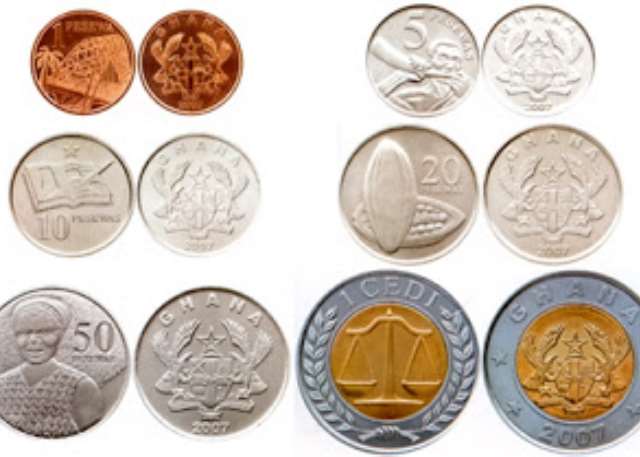
In a public notice dated July 22, 2026, and signed by Aimee Vyda Quashie, Secretary of the Bank, the central bank said it had observed with concern the “widespread and persistent refusal” by traders, transport operators and other business entities to accept 1 pesewa, 5 pesewa, 10 pesewa, 20 pesewa and 50 pesewa coins, as well as GH¢1 and GH¢2 coins.
The notice marks a firmer regulatory response to a growing problem in everyday transactions, where coins are often rejected by retailers, commercial transport operators and service providers on the grounds of inconvenience, low value or customer preference.
The Bank said all coins issued by it remain lawful currency of the Republic of Ghana and must be accepted and treated in accordance with the Bank of Ghana Act, 2002, the Currency Act, 1964 and other applicable laws.
“All coins issued by the Bank of Ghana, including the pesewa denominations, remain valid legal tender for the settlement of debts and the conduct of transactions throughout Ghana,” the notice stated.
The central bank further warned that no trader, transport operator, business entity or individual has the discretion to unilaterally reject coins in legitimate transactions.
The warning is significant because it shifts the issue from public inconvenience to legal enforcement. For many consumers, coin rejection has become a quiet but persistent form of transaction friction. Small denominations are often dismissed as worthless, difficult to store or unattractive for business use. But for the central bank, the refusal to accept coins undermines the integrity of the national currency system.
The notice makes clear that refusing to sell an article to a buyer simply because the buyer is paying with coins or notes constitutes an offence, except where that particular coin or note is no longer legal tender.
The penalties are potentially severe. A person convicted of the offence may face imprisonment for a term not exceeding three years, a fine, or both imprisonment and a fine.
The Bank also warned that a person who deliberately encourages, helps or instructs another person to reject coins can be punished in the same way as the person who directly commits the offence. This means business owners who instruct staff not to accept coins could themselves face legal consequences.
In an even stronger enforcement signal, the notice stated that a person found in the act of committing the offence may be arrested without a warrant.
The Bank of Ghana said it would work closely with the Ghana Police Service and other law enforcement agencies to enforce the law and ensure appropriate action is taken against persons or businesses found culpable of rejecting coins.
The notice also encouraged members of the public who encounter difficulties to report such instances to the nearest Bank of Ghana office, the Ghana Police Service, or through the Bank’s official communication channels.
The issue may appear minor, but it speaks to a deeper question of monetary confidence. Coins are part of the legal currency architecture. When businesses begin to reject them, even informally, the public starts making its own judgment about which forms of money are acceptable and which are not. That weakens the central bank’s authority over the currency it issues.
The rejection of coins also has practical economic consequences. It complicates pricing, creates rounding behaviour, inconveniences consumers and can quietly raise transaction costs. If small denominations are not accepted, businesses may round prices upward or avoid giving proper change, shifting the cost to consumers.
For low-income households, this matters. Small coins may appear insignificant in isolation, but in markets, transport fares and daily retail transactions, they remain part of cash-based economic life. Refusing coins can therefore penalise consumers who transact in smaller amounts.
The Bank’s notice follows an earlier directive dated July 14, 2026, on the misuse, abuse and illegal handling of Ghana cedi banknotes and coins. While the earlier notice addressed physical misuse and defacement of currency, the latest directive focuses specifically on refusal to accept coins as legal tender.
The two notices together suggest the central bank is taking a broader approach to currency discipline. It is not only concerned about monetary policy, inflation or exchange-rate stability, but also about public behaviour towards the physical currency in circulation.
The challenge, however, will be enforcement. Coin rejection is widespread, informal and often occurs in small-value transactions. Prosecuting offenders may be difficult unless the Bank and law enforcement agencies combine enforcement with public education.
Businesses will also need practical guidance. Some may reject coins because of inconvenience in banking, storage or counting. Others may simply follow customer behaviour. The Bank’s warning establishes the legal position, but sustained compliance will require stronger awareness and possibly better systems for recirculating coins through banks, transport unions, retailers and markets.
Still, the message from the central bank is unambiguous. Ghana cedi coins have not been demonetised. They have not been withdrawn. They remain legal tender.
The Bank of Ghana is therefore telling the public that currency acceptance is not optional. In a cash economy, confidence in money depends not only on the value printed on notes and coins, but also on the willingness of citizens and businesses to accept them.
By threatening sanctions, the Bank is drawing a firm line: rejecting Ghana cedi coins is not a matter of convenience. It is a breach of law.

