

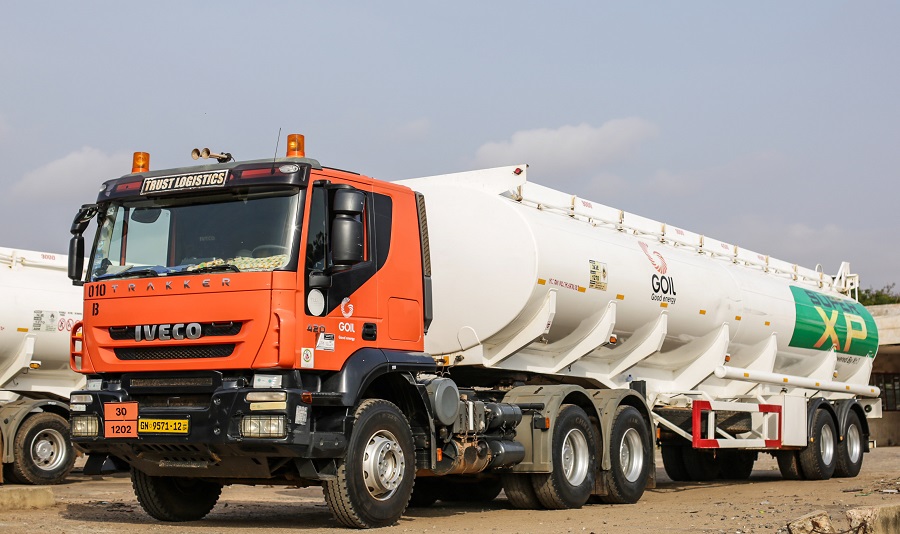

- BOST Cuts Fuel Exports to Burkina Faso and Mali as Ghana Prioritises Domestic Supply
Ghana’s state-owned fuel distributor BOST Energies has reduced diesel and gasoline exports to Burkina Faso and Mali as it prioritises domestic supply, highlighting how tightening global refined-product markets are beginning to reshape energy trade across West Africa.
BOST Managing Director Afetsi Awoonor said the company has curtailed exports to the two landlocked neighbours since August as domestic diesel consumption rises and international supply conditions become more difficult.
Burkina Faso requested 80,000 metric tonnes of fuel for July and August, but BOST supplied only 40,000 tonnes, effectively meeting half of the country’s request. Mali received 10,000 tonnes during the same period despite subsequently requesting an additional 40,000 tonnes for August and September.
The reductions reflect a shift in BOST’s immediate priorities as Ghana attempts to maintain adequate domestic inventories at a time when global crude and refined-product markets remain volatile.
“Supply is available, but it’s at a high cost,” Mr Awoonor said, adding that rising domestic demand was increasing pressure on supplies and complicating efforts to maintain price stability.
BOST controls about 30% of Ghana’s fuel import and distribution market, while diesel accounts for roughly two-thirds of the company’s supplies. Demand for diesel has been increasing alongside stronger economic activity, making the fuel particularly important for transport, industry, mining, construction and agricultural operations.
Burkina Faso, Mali and Niger rely heavily on petroleum products imported through coastal neighbours including Ghana and Côte d’Ivoire, making storage facilities, ports and transport corridors in those countries strategically important to the energy security of the Sahel. Reductions in Ghanaian exports therefore expose the vulnerability of landlocked economies when international fuel markets tighten and coastal suppliers prioritise their own consumers.
The regional squeeze comes amid continuing disruptions to global energy supply linked to conflict in the Middle East and damage to Russian refining infrastructure.
Although international crude prices have retreated from recent peaks, refined diesel markets remain exceptionally tight. Asian refining margins for low-sulphur diesel rose above US$87 per barrel this week, an all-time high and almost four times the roughly US$22 level seen before the latest supply disruptions.
That divergence is particularly important for Ghana because domestic petroleum prices depend not only on the crude benchmark but also on the international price of finished products, freight costs, foreign-exchange movements and distribution expenses.
Brent crude fell about 3% to US$102.72 a barrel on September 17, while US West Texas Intermediate dropped to US$100.47 as concerns over immediate Middle East supply disruption eased. Prices nevertheless remained above US$100, and diesel markets continued to face significant shortages.
For Ghana, that means declining crude prices may not translate quickly into cheaper diesel.
The pressure is particularly relevant because imported fuel costs feed directly into transport fares, logistics, food distribution and production costs. Higher diesel prices can therefore spread through the economy even before they become visible as a broader exchange-rate shock.
BOST’s decision to reduce exports can consequently be read as an attempt to place physical supply security ahead of the potential commercial benefits of regional sales.
That trade-off is becoming more significant as Ghana develops its role as a petroleum logistics hub for landlocked West African markets.
Regional fuel exports generate commercial opportunities for BOST and Ghana’s downstream petroleum industry, while helping to utilise storage and transport infrastructure more efficiently. But in periods of scarcity, export commitments can compete with domestic requirements.
The company’s response suggests that Ghana’s immediate policy priority is to ensure that local demand can be met without allowing regional obligations to create shortages or amplify already elevated domestic prices.
The current situation also illustrates why storage capacity has become strategically important.
Mr Awoonor said BOST plans to construct a liquefied petroleum gas terminal in Tema by the fourth quarter of 2027 and begin importing cooking gas. The company also intends to develop an LPG storage facility in Kumasi as part of a phased programme involving six locations.
Expanding storage can give Ghana greater flexibility during periods of international disruption by allowing larger inventories to be maintained and products distributed more efficiently between coastal import points and inland consumption centres.
But infrastructure alone cannot fully insulate the country from global price shocks.
Ghana remains a significant importer of refined petroleum products, leaving consumers and businesses exposed to international fuel prices and the availability of foreign exchange. Even when physical supplies remain available, sharply higher international prices increase the dollar cost of securing the same quantity of fuel.
More expensive petroleum imports raise foreign-exchange requirements for importers, meaning an extended period of high crude and refined-product prices could eventually increase dollar demand even if the exchange rate initially remains stable.
The same global shock is already affecting markets well beyond West Africa. Diesel and jet-fuel prices have risen sharply in several regions as Middle Eastern and Russian supply disruptions tighten availability, prompting refiners to prioritise diesel production and redirect cargoes over longer distances.
BOST’s export reductions therefore represent more than a bilateral trade adjustment with Burkina Faso and Mali.
They demonstrate how quickly an international energy shock can force governments and state-owned suppliers to reconsider the balance between regional commerce and domestic security.
For Ghana, the immediate objective is maintaining sufficient supply for households and businesses without allowing international shortages to translate into severe local disruption.
For Burkina Faso and Mali, the development underscores the strategic vulnerability created by dependence on coastal fuel corridors.
The broader test will be whether Ghana can preserve that balance if global diesel markets remain tight. For now, BOST has made its priority clear: regional exports remain important, but when supplies become expensive and domestic demand intensifies, Ghana’s own fuel requirements come first.

