

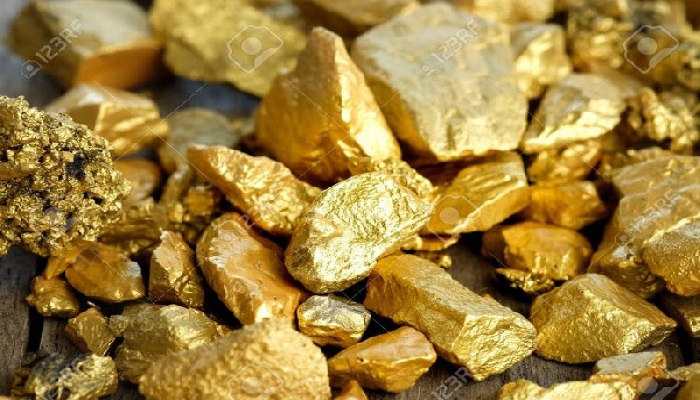

- Burkina Faso’s US$10.00bn Gold Boom Draws Saudi Investors as Ouagadougou Tightens Control Over Mineral Wealth
Burkina Faso’s gold industry is becoming too economically significant for international investors to ignore, with Saudi investors beginning to explore opportunities in a sector that generated exports worth roughly US$10.00 billion in 2025.
The landlocked Sahelian country exported 99.13 tonnes of gold worth CFA5.88 trillion last year, with the metal accounting for more than 91.00% of total export value. The figures underline the extent to which gold has become central to Burkina Faso’s external trade, fiscal position and broader economic strategy.
That growing importance is now attracting interest from Saudi Arabia. On August 30, Nouf Ali Alsalaten Al Qhatani, head of Saudi company Sarmady Co., met Burkina Faso’s ambassador to Saudi Arabia, Boukary Savadogo, in Riyadh to discuss potential investment and partnership opportunities in the mining sector.
Sarmady representatives expressed interest in investing in Burkina Faso and pointed to improvements in the security environment as an important consideration for future cooperation. But the discussions remain preliminary: the company has not yet committed capital and has been invited to submit an investment proposal for consideration by the relevant authorities.
That distinction matters because the significance of the meeting lies less in the prospect of an immediate Saudi investment than in what it says about the changing economics of Burkina Faso’s gold sector.
The government of Captain Ibrahim Traoré has increasingly framed mining policy around greater national participation and economic sovereignty. The central question is shifting from how much gold the country can produce to how much of the economic value surrounding that production can remain inside Burkina Faso.
Burkina Faso produced more than 94 tonnes of gold in 2025, including approximately 42 tonnes from artisanal mining, according to figures presented by Energy, Mines and Quarries Minister Yacouba Zabré Gouba.
The scale of the sector gives the country considerable leverage, but also creates vulnerability.
Mining generated more than CFA776.00 billion, equivalent to about US$1.40 billion, in budget revenue in 2025, while more than CFA85.00 billion was directed to the country’s mining development fund.
At the same time, an export structure in which gold accounts for more than nine-tenths of total value leaves the economy heavily exposed to the fortunes of a single commodity. Strong international prices can rapidly improve foreign-exchange earnings and fiscal revenue, while a sharp correction can produce the opposite effect.
That makes Burkina Faso’s push to retain more value domestically economically rational. It also increases the importance of processing, infrastructure and local industrial linkages rather than relying predominantly on expanding raw production.
The policy direction under Captain Traoré represents a departure from the conventional model under which international mining companies provide capital and technical expertise while governments primarily capture value through taxes, royalties and equity participation.
Ouagadougou is seeking greater state and local participation in mining assets as part of a wider economic-sovereignty agenda.
That creates a strategic paradox.
Burkina Faso still needs foreign investment to develop exploration, processing, infrastructure, logistics and technology, but it simultaneously wants to prevent foreign capital from recreating the dependency it is attempting to reduce.
Saudi capital could offer a new route.
Riyadh has been expanding its international investment footprint while building its own mining sector as part of its economic diversification strategy. For Burkina Faso, that could provide access to financing and commercial relationships beyond its traditional European investment base.
The Sarmady discussions are also part of a broader attempt to deepen Burkina Faso-Saudi Arabia economic relations. In April, around 20 Saudi investors met Burkinabe officials in Riyadh, with opportunities identified across energy, finance, precious metals, agro-processing, aviation and international trade.
For Ouagadougou, however, attracting investment is only half the equation.
The more consequential test will be whether foreign capital produces domestic value retention.
Gold that is mined locally but refined, financed, transported and traded elsewhere can generate substantial export earnings while leaving a relatively small industrial footprint inside the producing country.
Greater local processing could create demand for engineering, logistics, financial services, energy and specialised labour. It could also improve government revenue capture and reduce some of the value lost through offshore processing and trading structures.
The artisanal sector presents an even larger opportunity and governance challenge. With roughly 42 tonnes of 2025 production attributed to artisanal mining, bringing informal output into regulated and transparent channels could substantially increase fiscal visibility and potentially improve working conditions.
But formalisation requires more than regulation. Miners need access to finance, technology, reliable purchasing networks and infrastructure if the official system is to compete effectively with informal channels.
Burkina Faso’s gold strategy also carries wider implications for West Africa.
Governments across the region are increasingly questioning a model in which countries export raw or minimally processed resources while higher-value activities take place elsewhere. Ghana faces a similar challenge as policymakers seek to capture more value from record gold earnings through refining and other domestic activities.
Burkina Faso is taking that debate further by placing state participation and economic sovereignty more explicitly at the centre of mining policy.
Saudi interest suggests that international investors may be willing to operate within that changing framework if the underlying commercial opportunity remains attractive. But Burkina Faso still carries significant political and security risks, making the durability of improvements in the investment environment a critical factor.
For Ouagadougou, the objective is therefore not simply to find more buyers for gold.
It is to turn gold into capital for broader industrial transformation.
The US$10.00 billion export figure demonstrates the scale of the opportunity, but an even more important measure over the coming decade may be the proportion of that value retained within Burkina Faso through taxes, wages, local procurement, processing, financing and domestic ownership.
That is ultimately the test of Captain Traoré’s economic-sovereignty agenda: whether foreign investors such as Sarmady can bring new capital and expertise without becoming another channel through which the greater share of Burkina Faso’s mineral wealth leaves the country.
For now, Saudi interest remains an expression of intent rather than a concluded investment.
Burkina Faso’s gold is no longer merely an export commodity. It is becoming an instrument of economic diplomacy, fiscal strategy and national leverage.

