


- Cedi Faces Three-Way Squeeze as Reserves Fall and Gold Exports Pause – Governor
Ghana’s foreign-exchange position is coming under renewed pressure from a stronger US dollar, sharply higher oil prices and a slowdown in gold shipments, forcing the Bank of Ghana to place reserve rebuilding and currency stability at the centre of its latest policy deliberations.
The pressure is building just as the country approaches the fourth quarter, traditionally a period of stronger demand for foreign currency from importers and businesses preparing for the year-end trading season.
Gross international reserves have fallen to about 4.20 months of import cover, while the current account is projected to move into deficit.
The Ghana Gold Board’s decision to pause gold exports since mid-August has added another layer to the challenge by interrupting an increasingly important source of foreign-exchange inflows.
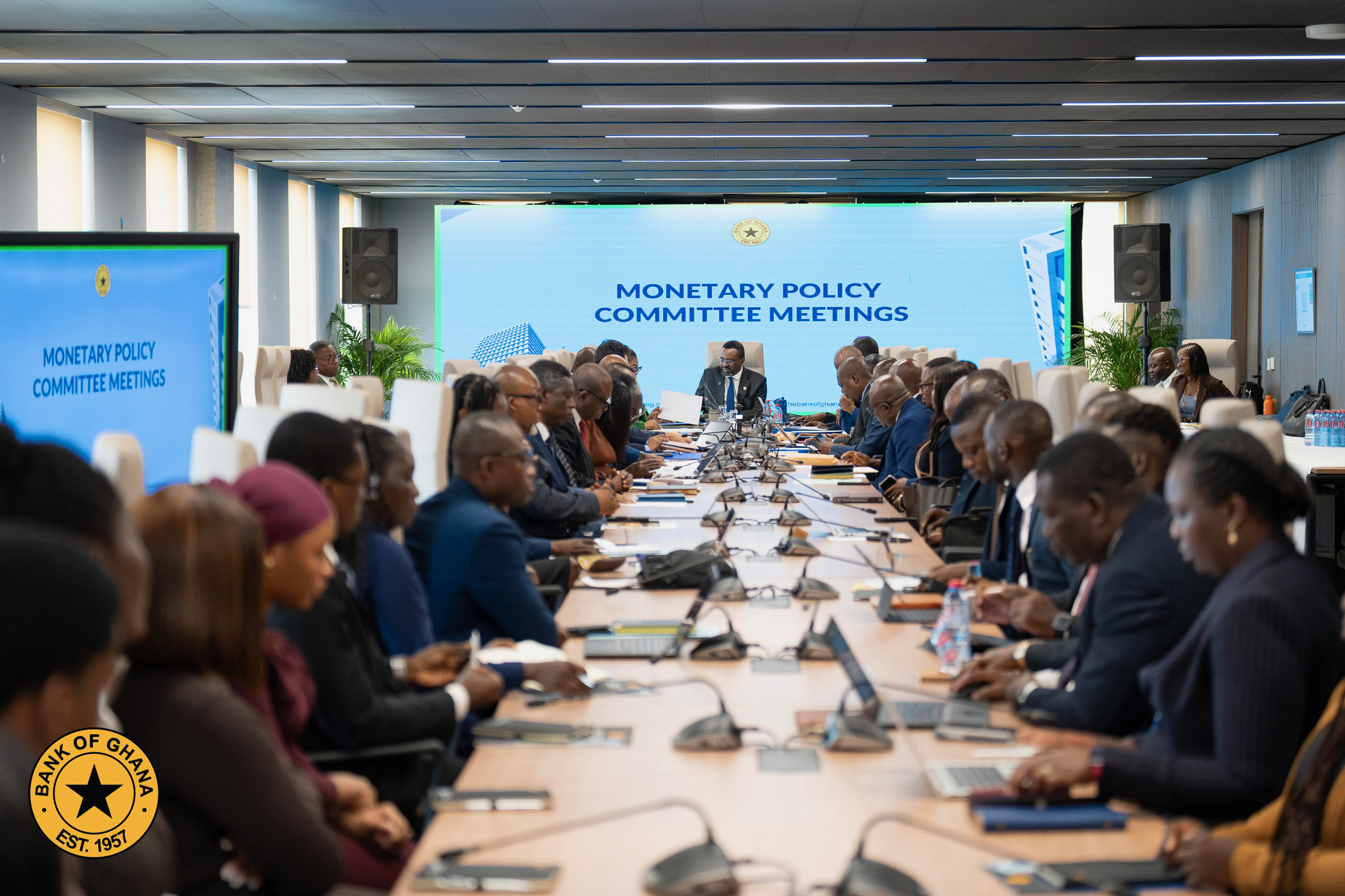
“The weaker current account, the decline in reserves, and the pause in gold exports by GoldBod since mid-August [2026] call for a careful look at our buffers ahead of the usual rise in foreign exchange demand in the fourth quarter,” Governor Dr Johnson Asiama said.
The interruption matters because gold has become central to Ghana’s efforts to rebuild reserves and strengthen the availability of foreign currency.
The external environment is making that task considerably more difficult. The Bank of Ghana says the continuing Middle East conflict has disrupted trade flows and contributed to a sharp rise in global energy prices, with Brent crude climbing from above US$85 per barrel around the July Monetary Policy Committee meeting to about US$107 per barrel last week.
For an economy dependent on imported petroleum products, that increase directly raises the volume of dollars required to finance the same quantity of fuel.
That creates a difficult transmission mechanism for the cedi. Higher oil prices increase demand for dollars, while a stronger US currency raises the local-currency cost of obtaining those dollars, potentially feeding through into fuel prices, transportation, production and consumer inflation.
“Tighter global financial conditions and a stronger US dollar, these have also weighed on emerging market currencies, including the cedi,” Dr Asiama said.
The pressure is therefore emerging simultaneously on both sides of Ghana’s foreign-exchange market. Energy imports and improving domestic activity are increasing dollar demand, while slower gold shipments and the GoldBod pause are constraining one of the sources expected to strengthen supply.
The mismatch could become more pronounced as Christmas-related imports and other fourth-quarter commercial demand begin to rise.
Earlier market activity had already shown businesses increasing demand for foreign currency ahead of the festive trading period, with energy companies also requiring additional dollars because of higher crude prices.
The deeper issue for policymakers is therefore not whether the cedi weakens on any particular day, but whether Ghana has sufficiently predictable FX liquidity to absorb seasonal demand without excessively drawing down the reserve buffer.
That distinction matters because reserve adequacy is central to market confidence and the country’s ability to meet external obligations.
GoldBod’s strategic importance becomes particularly visible against that backdrop. Ghana’s broader gold strategy has increasingly sought to convert domestic gold production into a more reliable stream of foreign-exchange receipts and reserve accumulation, meaning a disruption in exports creates a gap between anticipated and actual inflows.
The Governor has already indicated that rebuilding reserves will be a key priority for the central bank over the coming months.
That priority is becoming more urgent as the current account weakens. Ghana currently has about 4.20 months of import cover, but the Bank expects the current account to record a deficit during the third quarter as gold shipments slow and service payments rise.
A reserve buffer provides the central bank with room to meet external obligations, respond to disorderly currency movements and reassure investors and businesses that essential import and payment requirements can be financed.
A sustained decline in reserves would therefore narrow the Bank of Ghana’s monetary-policy options. Dr Asiama captured that tension by noting that “the domestic position affords policy space indeed.
The external position determines how much of it can safely be used.” Ghana may have improved domestic macroeconomic conditions in several areas, but the central bank cannot make interest-rate decisions without considering the balance of payments, reserve position and currency market.
Inflation further complicates the equation. Higher oil prices increase transport and production costs, while any depreciation of the cedi raises the domestic price of imported goods and potentially agricultural inputs.
The Bank has warned that higher global energy and agricultural-input costs are already contributing to renewed international inflation pressure, placing additional importance on whether Ghana can maintain currency stability.
That leaves the Monetary Policy Committee facing a difficult balance over whether the current 14.00% policy rate remains appropriate.
Maintaining sufficiently tight monetary conditions can support confidence in the currency and anchor inflation expectations, but keeping policy too restrictive for too long can constrain credit, investment and domestic economic activity.
The external environment has made that trade-off more difficult precisely when domestic conditions might otherwise provide room for greater policy flexibility.
International conditions are also becoming less supportive. Several central banks that had begun easing policy have paused or reversed course, while expectations of higher US interest rates have increased the attractiveness of dollar assets and added pressure to emerging-market currencies.
At the same time, global growth projections have weakened, with the World Bank and United Nations cited as forecasting growth of 2.50%, below the IMF’s April estimate of 3.10%.
For Ghana, the immediate challenge is therefore to maintain enough FX liquidity while restoring the reserve-accumulation trajectory.
If GoldBod exports resume quickly, the current interruption may prove temporary, but a prolonged slowdown would deepen the mismatch between dollar supply and demand at a particularly sensitive time of the year.
The central bank would then face the difficult task of supporting orderly currency conditions without weakening the reserves it is simultaneously trying to rebuild.
The emerging picture is one of interconnected external risks rather than a single cedi problem.
A stronger dollar raises import costs, higher oil prices increase Ghana’s foreign-currency requirements, slower gold exports weaken FX supply and a softer current account reduces the country’s external cushion just as seasonal demand is expected to rise.
The coming months will test whether Ghana’s improved domestic macroeconomic position is strong enough to withstand a significantly less favourable external environment.

