

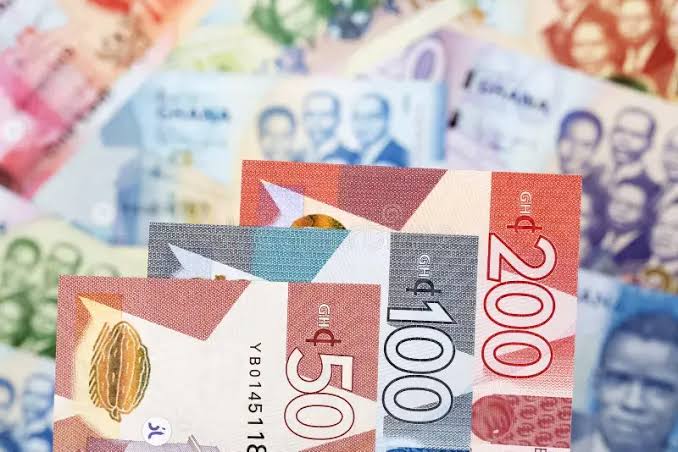

- Cedi Suffered Sharpest Initial Fall Among 22 African Currencies Tracked — World Bank
The Ghana cedi suffered the steepest initial depreciation among 22 African currencies tracked during the escalation of the Middle East conflict, weakening by approximately 10 per cent before recovering most of its losses by the end of August 2026, according to the World Bank.
The Bank’s October 2026 Africa Economic Update shows that the cedi came under acute pressure between March and June as higher energy prices, increased demand for US dollars and a global retreat from riskier assets placed African currencies under strain.
Figure 1.24 of the report indicates that the cedi’s maximum depreciation during the period was about 10 per cent relative to its end-February position — the largest decline among the currencies monitored.
By the end of August, however, the cedi had recovered substantially and was approximately 2.5 to 3 per cent weaker than its end-February level.
The figures depict a currency that absorbed a severe external shock but subsequently regained most of the value lost during the most volatile phase of the crisis.
“The escalation of the conflict in the Middle East initially exerted broad-based pressure on African currencies,” the World Bank said.
“Most countries with available daily exchange rate data recorded currency depreciations during the second quarter of 2026 relative to end-February, before the conflict intensified.”
The World Bank said seven of the 22 countries it monitored, excluding the CFA franc zone, recorded maximum currency depreciations exceeding 5 per cent.
These included Ghana, the Democratic Republic of Congo, Seychelles and South Africa.
“In seven of the 22 countries monitored, the maximum depreciation exceeded 5 per cent, including in the Democratic Republic of Congo, Ghana, the Seychelles, and South Africa,” the report said.
Ghana’s maximum depreciation of about 10 per cent was deeper than the declines recorded by Lesotho, Namibia, South Africa and Eswatini, whose currencies weakened by approximately 7 to 8 per cent at the height of the pressure.
The Seychelles and Democratic Republic of Congo experienced maximum declines of about 6 to 7 per cent, while the Ugandan shilling weakened by roughly 5 per cent.
But the position had improved across much of the continent by August.
“By end-August, however, much of this pressure had eased, with only 10 currencies remaining weaker than their end-February levels,” the World Bank said.
The cedi was among those that had not fully returned to their February positions. Its recovery was nevertheless substantial when compared with the depth of its earlier decline.
The currency regained roughly three-quarters of the value lost during its most difficult period, based on the movement presented in the World Bank’s chart.
The World Bank attributed the pressure on African currencies to a combination of external shocks and existing domestic vulnerabilities.
Higher crude oil and refined-product prices raised import bills for net energy-importing economies such as Ghana, forcing businesses and fuel importers to demand more foreign exchange.
“The sharp increase in oil and energy prices raised import bills across net energy-importing economies, increasing demand for US dollars, weakening reserve positions, and intensifying depreciation pressures,” the report said.
For Ghana, the finding is important because it places the cedi’s performance within a broader regional and global shock rather than attributing the depreciation exclusively to domestic speculation.
Ghana imports a significant proportion of its refined petroleum requirements. Higher international oil prices therefore increase the amount of foreign exchange required by importers, even when the physical quantity of fuel being purchased remains unchanged.
The exchange-rate consequences can spread beyond the petroleum sector. A weaker cedi increases the domestic cost of machinery, pharmaceuticals, fertiliser, food, raw materials and other imported products.
The World Bank said geopolitical uncertainty also triggered a flight towards safer international assets, drawing capital away from emerging and frontier economies.
“At the same time, heightened geopolitical uncertainty triggered a flight to safety in global financial markets, prompting capital reallocation away from emerging and frontier economies,” it said.
This combination of higher dollar demand and weaker capital inflows placed additional pressure on countries with limited international reserves and substantial external financing requirements.
The Bank warned that currency depreciation could intensify fiscal difficulties by increasing the local-currency cost of servicing dollar-denominated debt.
For a country such as Ghana, which has restructured much of its public debt but still faces significant external repayments, sustained cedi weakness could enlarge the domestic cost of meeting foreign-currency obligations.
The report found that the currency impact of the Middle East conflict varied considerably across Africa.
Countries with substantial energy imports, weak reserve buffers and elevated debt-service burdens generally experienced the greatest pressure.
Commodity exporters, by contrast, were able to absorb part of the shock through stronger foreign-exchange earnings.
South Africa benefited from increased demand for gold and platinum, while Angola and Nigeria gained from higher crude-oil prices. These export receipts supplied foreign currency that helped cushion their exchange rates.
Ghana occupies a more complicated position. The country benefits from gold, cocoa and crude-oil exports, but it is also exposed to expensive fuel imports and significant corporate demand for dollars.
The cedi’s recovery by August suggests that export inflows and policy intervention helped reverse the most severe depreciation. Its failure to regain its entire loss, however, indicates that the underlying foreign-exchange imbalance had not disappeared.
The World Bank connected the renewed exchange-rate and inflation risks with the decision by several African central banks to delay monetary-policy easing.
It noted that the Bank of Ghana had maintained its policy rate at 14 per cent because the balance of risks to inflation and economic growth warranted caution.
“Similarly, the Bank of Ghana maintained its policy rate at 14 per cent, assessing that the balance of risks to inflation and growth warranted a cautious stance,” the report said.
The World Bank’s monetary-policy table showed that Ghana’s benchmark rate had declined by a cumulative 4 percentage points in 2026, with the most recent adjustment being a reduction of 1.5 percentage points before the subsequent hold.
The cedi’s performance helps explain why the central bank may be reluctant to accelerate further reductions despite Ghana’s sharp disinflation.
Lower interest rates could support borrowing and investment, but they could also increase demand for foreign currency, reduce the relative attraction of cedi-denominated assets and weaken protection against another external shock.
A renewed decline in the cedi would eventually feed into domestic inflation through imported fuel, food, equipment and industrial inputs.
The World Bank’s findings present two contrasting conclusions for Ghana.
The first is positive: after suffering the largest initial depreciation among the currencies monitored, the cedi recovered most of its losses within a few months. That indicates a degree of resilience and suggests that foreign-exchange inflows and the policy response were capable of stabilising the market.
The second is more cautionary: the cedi remained weaker than its end-February position and continued to be exposed to changes in oil prices, international capital flows and domestic dollar demand.
The recovery should therefore not be interpreted as evidence that Ghana’s exchange-rate vulnerabilities have been eliminated.
The deeper policy question is whether the country can convert strong gold and other export earnings into a more durable foreign-exchange buffer while reducing its dependence on imported fuel, food and industrial inputs.
Without that structural adjustment, the cedi could recover after each external shock but remain vulnerable to the next one.

