

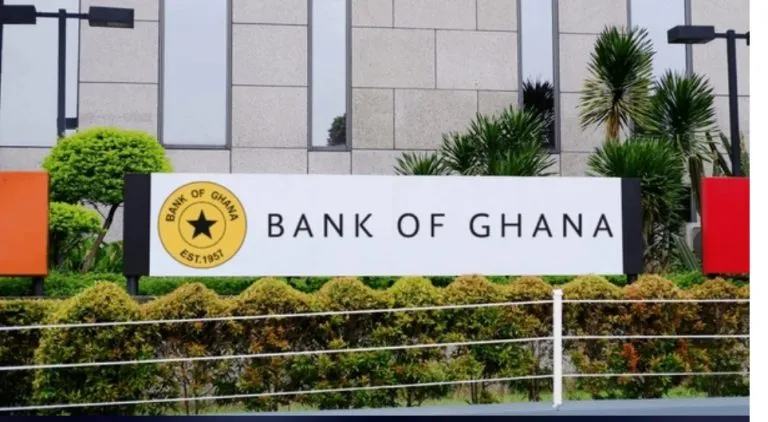

- Central Bank Names 20 Unlicensed Digital Lenders as Crackdown On Mobile Loan Apps Deepens
The Bank of Ghana has named 20 mobile loan applications it says are operating without the required licence or authorisation, escalating its effort to bring Ghana’s rapidly expanding digital-credit market under tighter regulatory control.
The central bank said the activities of the identified providers contravene the Directive for Digital Credit Service Providers in Ghana issued in September 2025.
It said the latest action forms part of continuing measures to “sanitise the digital credit space and protect the public from entities providing digital credit services without the requisite licence or authorisation”.
The applications identified are Cascredit, Cash Future, Cash Cedi, Cashpal, Cashpal Pro, CreditGo, Funds Credit, Glow Credit, Moni Wave, MoniLend, Nova Cedi, Onua Loan, Quick Cedi, Sika Boost, Sika Credit, Sompa Loan, Sune Credit, Swift Lend, Target Credit and Zoom Advance.
The list appears in Notice No. BG/GOV/SEC/29 issued by the Bank of Ghana and addressed to licensed financial institutions and the general public. The regulator said all 20 were operating without the requisite approval from the central bank.
The notice is a continuation of an earlier warning, Notice No. BG/GOV/SEC/2026/22, suggesting the regulator is moving beyond general caution towards the public naming of operators it considers non-compliant.
The Bank said the activities of the listed entities amount to “significant violations of customer data privacy, consumer protection, and established regulatory standards”.
That language elevates the issue beyond licensing alone and places the treatment of borrowers and their personal information at the centre of the regulatory concern.
Digital lending has expanded because mobile platforms can offer borrowers speed and convenience without the paperwork associated with traditional bank credit.
But the same model can create regulatory risks where providers collect sensitive personal data, impose unclear loan terms or operate outside prudential and consumer-protection frameworks.
The Bank of Ghana’s intervention therefore reflects a broader policy challenge: how to encourage financial innovation without allowing digital channels to become a parallel credit market beyond effective supervision.
The central bank said it would continue working with relevant state institutions to identify and investigate unlicensed operators and take enforcement action where appropriate.
“The Bank of Ghana will continue to collaborate with relevant state institutions to identify, investigate, and take appropriate enforcement action against such entities,” the notice said. It added that the purpose was to protect consumers and “uphold the integrity, safety, and stability of the financial sector”.
That collaboration could become important because digital lenders do not operate in isolation from Ghana’s wider financial infrastructure.
Loan disbursements, repayments and customer onboarding can depend on bank accounts, mobile-money channels and payment-service providers even when the lender itself is not regulated as a conventional bank.
Restricting access to those channels can therefore become an important enforcement mechanism against providers operating without authorisation.
The Bank has consequently extended its warning to regulated institutions that may process payments on behalf of the affected lenders.
Banks, Specialised Deposit-Taking Institutions and Payment Service Providers have been cautioned against facilitating or processing transactions for unlicensed loan providers.
The directive effectively places part of the compliance burden on regulated intermediaries, requiring them to ensure that businesses using their payment rails have the necessary regulatory standing.
For consumers, the central bank’s advice is more direct. “The general public is therefore strongly advised not to engage with unlicensed loan providers,” the notice said.
Borrowers using such platforms may have fewer avenues for regulatory protection if disputes arise over deductions, data use, collection practices or the terms under which credit was granted.
The regulatory challenge is particularly significant because digital credit products often target customers who need relatively small amounts of money quickly and may have limited access to conventional lending. That can make borrowers more sensitive to convenience than to licensing status, disclosure standards or the long-term cost of the loan.
Effective supervision therefore depends not only on enforcement against providers but also on consumers being able to distinguish authorised lenders from applications operating outside the regulatory framework.
The September 2025 Directive for Digital Credit Service Providers provides the regulatory basis referenced by the Bank in its latest notice.
By explicitly stating that unlicensed operations contravene that framework, the regulator is signalling that mobile lending is no longer an informal extension of fintech activity but a financial service subject to defined authorisation and conduct requirements.
The practical test will be whether enforcement is sufficiently consistent to prevent prohibited operators from reappearing under new applications or business identities.
The Bank is also asking the public to help identify unlicensed operators. Reports can be submitted to its Fintech and Innovation Department at The Bank Square in Ridge, Accra, or through the telephone and email contacts provided in the notice.
That reporting mechanism suggests the regulator expects market intelligence from consumers to form part of its monitoring of the digital-credit ecosystem.
The latest warning therefore represents more than the publication of another list of mobile applications. It signals a move towards treating licensing, consumer protection, data privacy and payment-system access as interconnected parts of digital-credit supervision.
The effectiveness of the crackdown will ultimately depend on whether the named operators leave the market or become compliant, whether regulated financial institutions stop facilitating them, and whether consumers increasingly verify the status of lenders before borrowing.

