


China developed by defying free trade — not embracing it
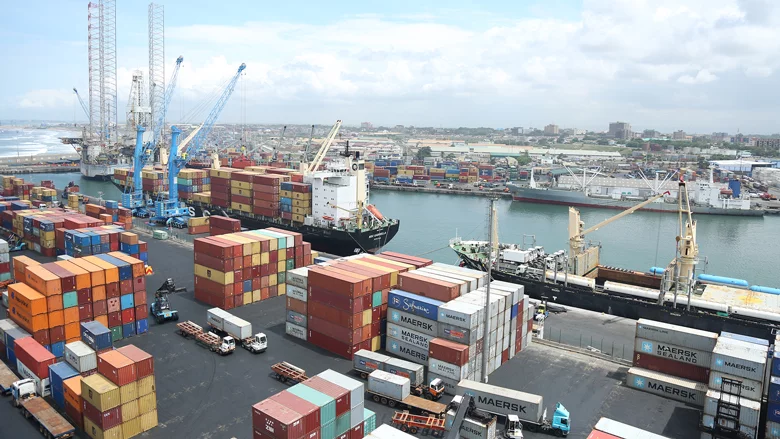
I recently had an exchange on Twitter/X with Jonathan Rosenthal, the international editor of The Economist, about China’s economic rise. In response to a post I made on China’s contribution to global poverty reduction, Rosenthal wrote: “China’s rise was almost entirely enabled by liberal economies opening up their markets to Chinese goods.” This is a view shared widely among those with a neoliberal or free-market inclination, which tends to argue, in more general terms, that China’s rise was enabled by trade liberalisation, privatisation, and closer integration with liberal capitalist economies in the West.
I believe this perspective is misleading. While trade liberalisation and access to Western markets surely did assist China’s economic development, China developed by defying, not conforming to, tenets of free trade. China fought tooth and nail with active state intervention to escape a subordinate position in the world economy — a position that Western liberal economies welcomed and wanted China to occupy so they could benefit from cheap and efficient Chinese labour.
Plenty of developing countries have been given access to the markets of Western liberal economies but have remained in subordinate positions. Why did China succeed where other developing countries failed? Because China successfully used trade policy and industrial policy to defy the deeply asymmetric structures of the capitalist world economy, which were largely put in place to benefit the West.
China liberalised, yes — but in a highly interventionist and controlled manner. The difference between China and other developing countries that liberalised under external compulsion is not one of degree. It is one of kind.
Consider capital account controls. While China opened up to trade and private capital, it maintained tight controls over the flow of capital in and out of the country. This gave the state the ability to manage the exchange rate to keep exports competitive, shield the financial system from the kind of speculative capital flows that devastated economies across East Asia, Latin America, and Sub-Saharan Africa in the 1990s, and channel domestic savings through state banks toward priority sectors rather than allowing them to be siphoned offshore. Many developing countries that liberalised their capital accounts did so under pressure from Western institutions. The consequences were often catastrophic.
Or consider more specifically how China handled foreign direct investment. In most developing countries, foreign firms often operate as enclaves, extract profits, and transfer little technology. This is the classic pattern of subordinate integration into global value chains: you get the low-wage jobs, but not the capabilities or skills to upgrade. China’s approach was fundamentally different. China’s joint venture requirements forced foreign firms to partner with Chinese state-owned or domestic firms as a condition of market access. Technology transfer was often legally mandated or structurally incentivised. Companies like GM and Volkswagen had to bring Chinese partners in and co-produce domestically.
State ownership is another important matter. Neoliberal orthodoxy has often demanded privatisation of state-owned enterprises. Countries that complied — across Latin America and Sub-Saharan Africa — typically saw strategic industries sold off, stripping the state of its capacity to retain control over strategic industries and resources. China selectively reformed its state-owned enterprises but did not wholesale privatise them. Banking, steel, energy, telecommunications, aerospace — these commanding heights remained state-controlled. This meant the state could direct credit to strategic sectors at below-market rates. It meant profits could be retained within the national economy rather than remitted abroad. And it meant state-owned enterprises could be deployed as vehicles for international expansion.
None of these strategies — capital controls, forced technology transfer, state ownership of strategic sectors — are consistent with neoliberal doctrine. They are, in fact, direct violations of it. And they are precisely why China’s integration into the world economy produced industrial upgrading rather than permanent subordination.
If we look at other examples of successful catch-up development in the 20th century, the pattern is clear. The countries that escaped a subordinate position — primarily in East Asia — did so by actively employing industrial and trade policies that defied neoliberal principles. They liberalised strategically and gradually, on their own terms, often in direct opposition to neoliberal logic. South Korea, Taiwan and Singapore all heavily protected their infant industries, directed credit through state-controlled banks, and used state-owned enterprises as instruments of industrial strategy.
China escaped subordination not by rejecting globalisation wholesale, but by refusing to liberalise on the terms of the West. And the fact that China became an economic juggernaut through actively defying neoliberal doctrine is precisely why we are seeing an anxious response from Western liberal economies. They are struggling to accept — and even comprehend — a world economy in which they are no longer at the top of the food chain.

