


- Civil Society Coalition Warns Illicit Gold Is Fuelling Conflict and Environmental Harm, Urges Tougher Action from UK And Trading Hubs
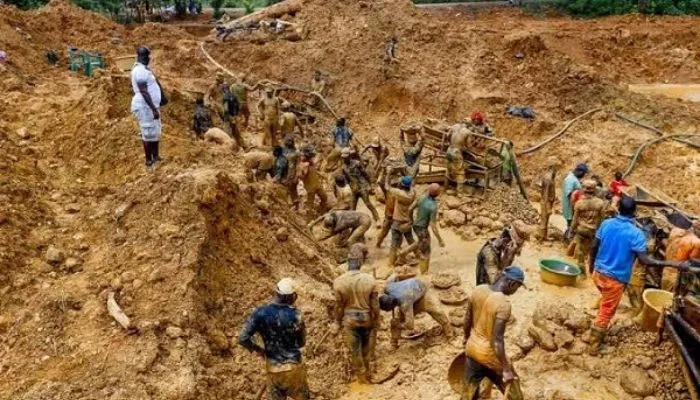
A global coalition of 34 civil society organisations has warned that illicit gold is rapidly becoming one of the world’s most dangerous financial conduits, financing wars, organised crime and human rights abuses, while accelerating deforestation and river pollution from mining frontiers such as Ghana, the Amazon and Indonesia.
The warning comes ahead of a UK-hosted Illicit Finance Summit in London on June 23–24, where gold will be discussed alongside “two other high-risk asset classes, crypto and property” during London Action Climate Week.
The coalition welcomed the UK government’s decision to place gold on the summit agenda but argued that the current level of ambition “is not on track to match the scale of the illicit gold threat,” urging the UK and international partners to adopt tougher transparency and verification measures across supply chains and trading hubs.
At the heart of the coalition’s case is a blunt reality: as geopolitical instability rises and demand for gold surges, the metal has become “increasingly attractive as a strategic financial vehicle” for criminal networks, sanctions evasion and corruption. The downstream impacts, the groups warn, extend far beyond money laundering: “river pollution, forest destruction and grave abuses against affected communities”.
The statement places unusual emphasis on London’s systemic role in global gold markets. With the UK described as “the centre of the world’s largest over-the-counter gold market,” the coalition argues the country is both exposed to illicit flows and uniquely positioned to reduce them through domestic regulation and international partnerships.
Helen Taylor, deputy director at Spotlight on Corruption, said record-high prices have turned gold into “the preferred currency for organised criminals, warlords and sanctions evaders,” warning that illicit flows threaten “our security and prosperity.” “Given London’s role as a major financial centre and gold trading hub, the UK can play a crucial leadership role,” she said, urging the summit to become “the starting point for ambitious collective action” to close regulatory loopholes that leave legal markets exposed.
A key part of the coalition’s argument is that illicit gold often enters legal channels not through one dramatic breach but through weak points in the plumbing of global bullion trade.
Sophia Pickles, senior analyst at the Global Initiative against Transnational Organised Crime (GI-TOC), said risks in bullion centres and trading hubs remain “under-scrutinised” despite vulnerabilities enabling increasingly sophisticated operations.
She pointed to “under-examined mechanisms” such as loco (location) swaps agreements to exchange equivalent quantities of metal in two separate locations and the practice of labelling metal as recycled gold, which she described as a “widely recognised loophole”.
Pickles also warned of “persistent data gaps” across producing countries and trading hubs that create opacity, enabling what she called “geocriminality,” the use of criminal networks by states to achieve policy priorities while keeping plausible deniability.
The statement draws a direct line from the global gold price boom to local ecological and social damage in Ghana and then back to major market centres.
Daryl Bosu, deputy national director for operations at A Rocha Ghana, said Ghana’s forests and rivers are being destroyed “by the global gold price boom”, with illegal and irresponsible mining poisoning water and degrading ecosystem services, exposing agricultural commodities and communities to increasing risk. “Gold linked to this destruction still reaches markets like London,” he said, calling for “full traceability from mine to market” and an end to loopholes that allow illicit gold to flow unchecked.
The coalition’s forest warning is global. Hannah Mowat, campaigns coordinator at Fern, said that from the Amazon to Ghana to Indonesia, rainforests are being razed for gold sold in international markets, adding that gold mining drives “more deforestation than any other mineral.”
The statement also notes that Ghana’s evolving domestic gold-trade governance is now part of a wider credibility test: can producer-country systems meet the traceability and verification expectations of major hubs and standards bodies?
Sam Mawutor, senior adviser for Africa at Mighty Earth, said Ghana’s status as Africa’s top producer creates the potential for gold to transform livelihoods, but this potential is being undermined by “poor governance of small-scale mining,” with severe environmental and health costs.
He highlighted Goldbod, the entity overseeing Ghana’s gold trade, saying it has “taken critical steps to control the domestic supply chain” while aiming to meet the London Bullion Market Association standard. But he cautioned that while traceability “from pit to port” is necessary, the system must be “credible and transparent” to protect artisanal producers, increase national value and safeguard forests and communities.
The coalition is urging the UK-hosted summit to go beyond recognition of the risk into practical measures that reduce opacity and validate compliance, particularly in international bullion centres.
Sasha Lezhnev, senior policy adviser at The Sentry, warned that record prices have increased the flow of “conflict gold” funding armed groups and criminal networks in the DRC, Sudan, Rwanda, the UAE and elsewhere. He said the summit is a “critical opportunity” especially if governments and industry can agree on mechanisms to monitor and validate bullion centres’ verification procedures and increase trade data transparency.

