

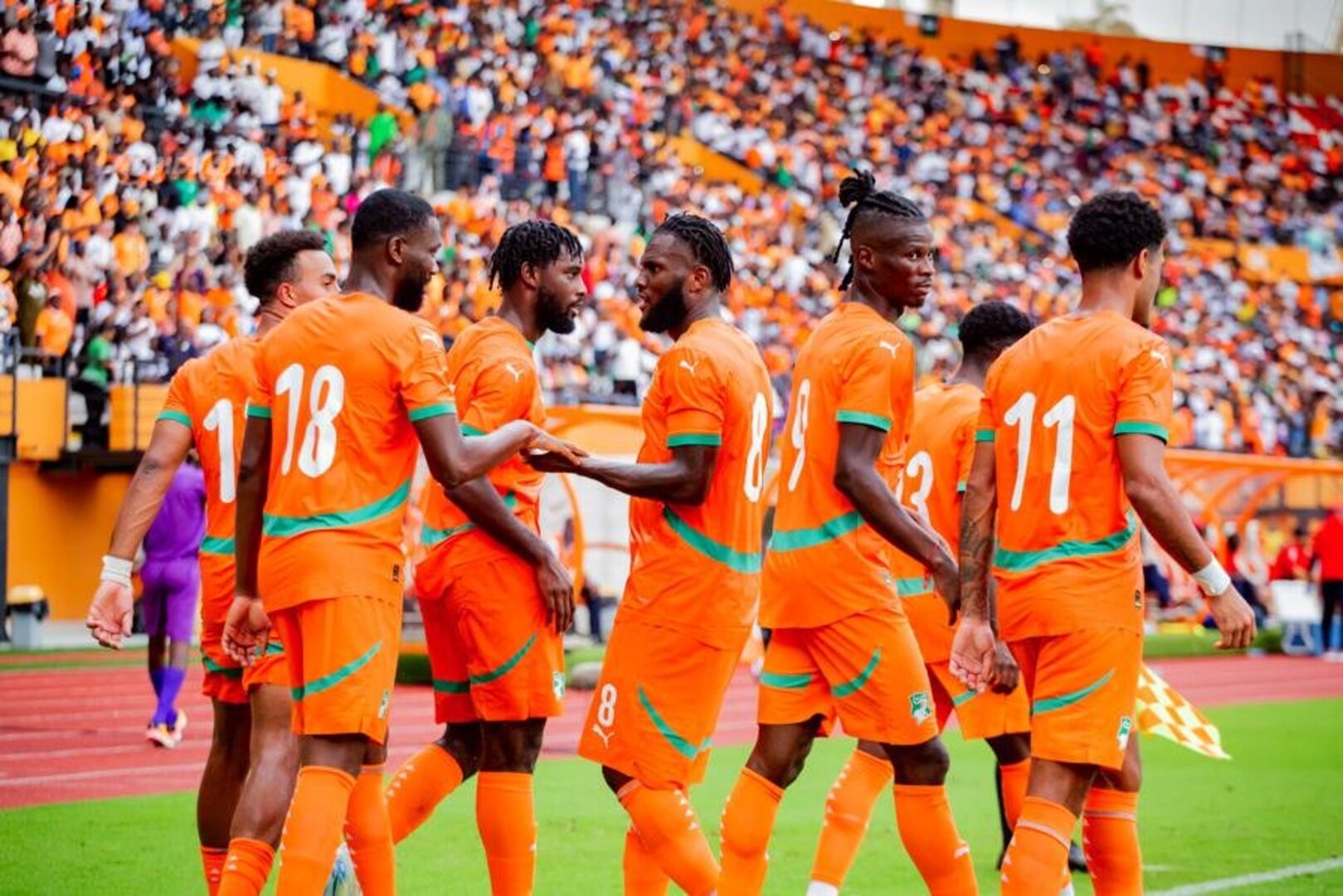

- Côte D’ivoire Tops Africa’s Elite Football Talent Ranking as West Africa Dominates
Côte d’Ivoire has emerged as Africa’s leading source of elite football talent, according to a new study by football predictions platform The Daily Punt, highlighting West Africa’s growing dominance in the global football talent economy.
The research, conducted in June 2026, analysed 25 of the world’s most prominent clubs and identified players holding African nationality. Countries were ranked by the number of players represented at those elite clubs, with goals, assists and estimated market values used to provide additional context on performance and commercial worth.
The findings place Côte d’Ivoire first with 17 players across top clubs, ahead of DR Congo and Nigeria, which recorded 16 players each. Senegal ranked fourth with 14 players, while Ghana completed the top five with 13 players.
The ranking reinforces West Africa’s status as the continent’s strongest football production zone, with four of the top five countries coming from the sub-region. Côte d’Ivoire, Nigeria, Senegal and Ghana together accounted for 60 players in the study, underlining the depth of elite talent emerging from the region.
The Daily Punt, which describes itself as a data-driven football predictions platform covering major leagues and competitions, said the research was designed to assess which African countries are supplying the most players to the upper tier of global club football.
Côte d’Ivoire’s lead reflects both depth and quality. The country recorded 17 players at elite clubs, with an average market value of US$38.59 million. Ivorian players in the study averaged 3.9 goals and 3.1 assists, showing a balanced contribution across attacking and creative roles.
The study cited Désiré Doué at Paris Saint-Germain and Johan Bakayoko at RB Leipzig among the names strengthening Côte d’Ivoire’s profile. The country’s football reputation has long been shaped by icons such as Didier Drogba and Yaya Touré, but the new data suggests the production line remains strong beyond its golden generation.
DR Congo ranked second with 16 players, though with a lower average market value of US$22.96 million. The report identified the Congolese talent pool as broad rather than dependent on a few star names, citing players such as Romelu Lukaku and Christopher Nkunku.
Nigeria also recorded 16 players, but with a stronger attacking profile. Nigerian players averaged 5.1 goals, the highest among the top five African nations in the ranking, and carried an average market value of US$38.58 million.
The study said Nigeria’s strength lies in producing dangerous forwards and wide players capable of commanding strong transfer interest. It cited Bukayo Saka, Noni Madueke and Karim Adeyemi as examples of Nigerian-linked elite talent operating at major clubs.
Senegal ranked fourth with 14 players and an average market value of US$25.88 million. Senegalese players averaged 2.4 goals and 1.6 assists, with the country’s profile reflecting a steady production of players across defence, midfield and attack.
The report cited Nicolas Jackson and Amadou Onana among Senegal’s leading names, pointing to the country’s continued ability to produce reliable top-level players following years of strong international performances.
Ghana ranked fifth with 13 players, but recorded the highest average market value among the top five countries at US$40.90 million. Ghanaian players averaged 2.9 goals and 2.4 assists, reflecting both technical quality and strong market recognition.
The study listed Kobbie Mainoo, Mohammed Kudus and Antoine Semenyo among the Ghanaian names contributing to the country’s high valuation. Ghana may have fewer players than Côte d’Ivoire, DR Congo, Nigeria and Senegal, but the market data suggests its elite exports carry significant commercial value.
Cameroon offered one of the most striking findings in the study. Although it ranked seventh by player numbers with seven players, it recorded the highest average market value at US$88.84 million per player and the highest average goals at 11.1. That suggests Cameroon’s smaller elite pool is heavily concentrated around high-value, high-output players.
Morocco placed sixth with seven players and an average market value of US$38.47 million, while Guinea-Bissau, Mali and Algeria completed the top 10. Algeria recorded the highest average assists in the table at 4.8, pointing to a strong creative profile among its elite representatives.
The findings come during a World Cup cycle in which African football is receiving increased global attention. The expanded 48-team tournament has increased African representation, with 10 African teams involved, raising expectations that the continent’s best players can translate club-level quality into stronger national-team performances.
For African football, the ranking raises a wider development question. Player exports to elite clubs are not only a sporting achievement; they are also evidence of scouting networks, academies, coaching systems, migration pathways and the ability of players to transition into European football markets.
A football analyst from The Daily Punt said the World Cup offers a useful measure of how national development systems are performing.
“As the World Cup unfolds, the squads on the pitch tell a story about which nations have built the strongest development systems. The countries that produce the most top-level talent are not the ones with the largest populations. They are the ones with the best infrastructure, coaching, and pathways to European clubs. Talent exists everywhere in Africa. The difference is whether that talent gets identified, trained, and moved up the ladder. The World Cup is not just a tournament. It is a report card on each country’s football development,” the analyst said.
That observation is important because the ranking does not simply reward population size. Nigeria, Africa’s most populous country, ranks third, but Côte d’Ivoire leads with fewer people. Ghana ranks fifth, while Cameroon records the highest average valuation despite having fewer players than the top five nations.
This suggests that elite football output depends on more than raw demographic advantage. The strongest systems are those able to identify young talent early, expose players to competitive environments, connect them to international scouts and develop the physical, tactical and technical qualities required by top clubs.
For Ghana, the findings are both encouraging and challenging. Ranking fifth confirms the country’s continued relevance in Africa’s football talent market. The high average valuation of Ghanaian players also shows that the country still produces footballers with strong global appeal.
However, the lower player count compared with Côte d’Ivoire, DR Congo, Nigeria and Senegal raises questions about depth, transition pathways and the consistency of domestic talent development. Ghana’s challenge is not only to produce valuable players, but to produce more of them at elite level.
For Côte d’Ivoire, the ranking confirms a remarkable football advantage. The country leads Africa in player numbers, combines that with strong average valuations, and continues to show that its football system can feed top clubs across Europe.
For West Africa as a whole, the conclusion is clear. The region has become Africa’s strongest football export corridor, supplying a large share of the continent’s elite talent to global clubs.
The economic implications are significant. Elite football talent generates transfer fees, wages, agent activity, brand value, academy investment and national visibility. For countries that organise their football ecosystems well, talent development can become both a sporting and economic asset.
The Daily Punt’s study therefore adds a commercial lens to African football’s global rise. Côte d’Ivoire may lead the current ranking, but the broader story is that West Africa continues to shape the future of elite football talent.
Data source: The Daily Punt.

