


- Dangote Refinery Offer Could Multiply Nigeria’s Active Investor Base Fivefold
Nigeria’s ambition to transform its stock exchange from a market followed by a relatively small investor class into a platform for mass ownership may be approaching its most important test. The proposed listing of Dangote Petroleum Refinery is not merely another capital raising exercise. It is an attempt to use one of Africa’s most recognisable industrial assets to bring millions of citizens into the capital market and connect Nigeria more closely with exchanges elsewhere on the continent.
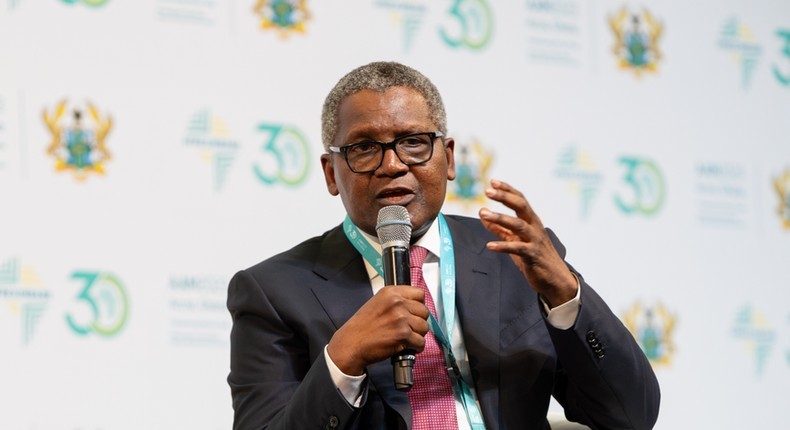
Temi Popoola, chief executive of Nigerian Exchange Group, believes the US$1.6 billion initial public offering could increase the country’s active investor population by between three and five times. Although roughly 12 million Nigerians, equivalent to about five percent of the population, participate in capital markets, only hundreds of thousands trade actively. That gap shows why the refinery’s public offer matters: Nigeria has financial savings, entrepreneurial energy and a large population, but participation in productive assets remains narrow.
Billionaire Aliko Dangote launched the offering earlier in October, with subscriptions scheduled to close at the end of the month. The proposed sale, described as Africa’s largest IPO, is designed mainly to attract retail investors. Marketing through WhatsApp, point-of-sale terminals and basic mobile phones reflects a recognition that traditional brokerage channels cannot deliver mass participation, while formal investing remains limited.
Popoola told Reuters that such distribution could allow the exchange to “leapfrog” years of investor outreach. That possibility is credible. Mobile money and fintech platforms have already shown that African consumers can adopt financial products rapidly when access is simple, pricing is transparent and transactions fit everyday behaviour. Bringing share ownership into familiar channels could make the stock market less remote to households that have historically associated equities with wealthy insiders or professional institutions.
Yet opening an account or buying shares once is not the same as creating an investing culture. The deeper test begins after allotment. New shareholders must receive clear information, reliable dividends where declared, efficient trading and protection from misleading promotion. If investors encounter poor liquidity, opaque disclosures or a sharp post-listing correction, the offer could deepen scepticism rather than confidence. Financial inclusion measured by registrations would then overstate the market’s real progress.
The refinery’s scale gives the transaction unusual power. A prominent industrial listing can broaden an exchange historically concentrated in banking, telecommunications and consumer companies. It can also give pension funds, insurers and households direct exposure to refining, petrochemicals and Africa’s growing energy demand. For Nigeria, which wants private capital rather than public borrowing to finance expansion, the IPO provides a practical demonstration of how domestic savings can support strategic infrastructure.
But size also creates concentration risk. A company valued at tens of billions of dollars could become disproportionately influential in market indices and investor portfolios. Its performance will depend on operating efficiency, crude supply, foreign-exchange availability, fuel pricing, regulation and regional export demand. These are significant variables in an economy where energy policy has repeatedly changed and currency volatility can reshape costs and returns. Investors therefore need a rigorous assessment of the refinery’s cash generation, debt, capital expenditure and related-party arrangements, not simply faith in its national importance.
Meaningful public ownership will matter as much as the headline valuation. A large market capitalisation accompanied by a small free float may raise the exchange’s statistical size without creating deep daily liquidity. The quality of the listing will consequently depend on how many shares are genuinely available, how ownership is distributed and whether governance gives minority investors confidence that their interests will be respected.
The transaction is also exposing the distance between the rhetoric of African financial integration and the reality confronting investors. Nigerian Exchange Group is building links with bourses in Egypt, Kenya, Botswana and Ethiopia, using depositary-receipt arrangements that are either operating or awaiting approval. Popoola said Africa was being connected through “real solutions on the ground,” rather than rhetoric. Those links could allow savings in one country to finance businesses in another while giving investors access to assets unavailable in their domestic markets.
However, the offer was not registered publicly across Africa, forcing interested investors to navigate separate regulations and limited channels. Kenya approved a depositary receipt only late in the subscription period. The episode shows that the African Continental Free Trade Area cannot achieve its full potential while capital remains trapped behind fragmented securities rules, incompatible systems and slow approvals. Trade integration requires investment integration: companies expanding across borders need pools of African equity capable of following them.
Popoola expects fewer than ten Nigerian companies to list during the coming year, partly because private capital allows large businesses to raise funds without accepting public-market disclosure and scrutiny. This makes the Dangote offer both an opportunity and a warning. One blockbuster transaction can revive interest, but it cannot substitute for a steady pipeline of well-governed businesses. Exchanges must make listing attractive without weakening investor protections, while policymakers must improve the economic conditions that encourage companies to finance growth publicly.
International connectivity is another part of that strategy. Seplat Energy, Airtel Africa and Guaranty Trust Holding Company already have secondary London listings, while Dangote Cement is considering one. Popoola argues that fungible shares allow capital to move more freely across markets. Properly structured, such links can expand the buyer base, improve price discovery and reduce dependence on any single pool of liquidity.
The refinery IPO could therefore become more than a corporate milestone. It may establish whether Nigeria can convert public enthusiasm into patient capital and whether African exchanges can cooperate around a genuinely continental asset. Success should not be judged only by the amount raised or the number of applications. The real measures will be sustained participation, credible governance, liquid secondary trading and evidence that capital reaches productive expansion.
If those conditions hold, Dangote Refinery could make share ownership more ordinary, help Nigeria finance industrialisation locally and give African markets a template for mobilising their own savings. If they do not, the excitement will fade after the closing bell. The difference lies in what comes after Africa’s biggest IPO.

