

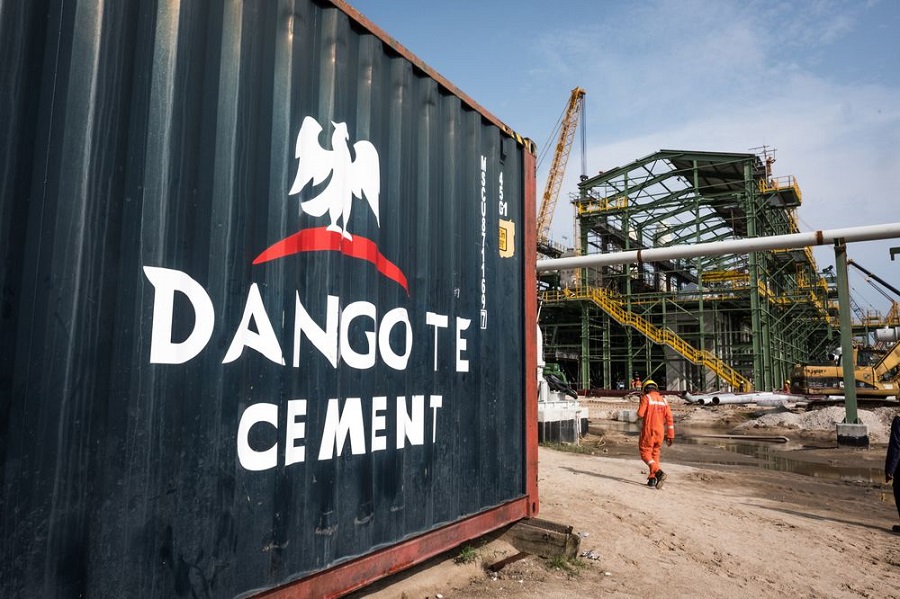

- Dangote Turns to China for Ships as Ghana Route Exposes West Africa’s Costly Logistics Gap
Dangote Group is looking to China for new vessels as the African industrial conglomerate prepares for a sixfold increase in annual cargo movements, highlighting the scale of the maritime logistics challenge confronting trade between Nigeria, Ghana and the wider West African market.
The group expects the number of vessel movements associated with its operations to rise from about 300 a year to as many as 1,800 as expansion across refining, cement, fertiliser, sugar, flour and petrochemicals generates significantly larger cargo volumes, according to Devakumar Edwin, Dangote Group Vice-President for Oil and Gas.
But behind the planned fleet expansion lies a more fundamental problem for regional integration: one of Africa’s largest industrial groups has found it difficult and expensive to move relatively small quantities of goods between two of West Africa’s biggest economies.
Dangote Industries previously struggled to secure shipping capacity for a 1,000-metric-tonne cement shipment from Nigeria to Ghana, prompting the group to consider acquiring vessels capable of serving West and Central African markets directly. Road transport offers no easy alternative, with taxes and associated costs in transit countries such as Benin and Togo raising the price of Nigerian exports.
Aliko Dangote has previously put the problem more starkly, saying it can cost more to ship goods from Lagos to Accra than from Spain to Lagos.
“It costs more to ship from Lagos port to Accra than from Spain to Lagos,” he said in an earlier interview, arguing that weak transport systems, fragmented trade corridors and other barriers continue to undermine intra-African commerce.
The comparison exposes one of the central challenges facing the African Continental Free Trade Area. Reducing tariffs and opening markets can encourage trade, but those gains risk being diluted if moving goods between neighbouring countries remains more expensive than importing them from outside the continent.
For Ghana, the issue is particularly relevant. Accra sits less than 500 kilometres from Lagos by air, yet commercial shipments between the two markets can encounter costly road corridors, limited coastal shipping capacity and logistical frictions that weaken the economic case for regional sourcing.
Dangote’s response is increasingly vertical integration. Rather than relying entirely on third-party shipping companies, the group is exploring the acquisition of additional vessels, including ships that could be built in China, allowing it greater control over cargo availability, shipping schedules and distribution costs as output expands.
China is a natural destination for the group’s vessel procurement ambitions because of its dominance of global commercial shipbuilding. Chinese shipyards accounted for 54.60% of worldwide shipbuilding output in 2024, according to UNCTAD data cited by Business Insider Africa, exceeding South Korea and Japan combined. China also controlled nearly two-thirds of the global shipbuilding orderbook at the beginning of 2025.
Dangote’s maritime requirements are set to grow particularly rapidly as its flagship Lagos refinery expands.
The group plans to increase refining capacity from about 700,000 barrels per day to 1.4 million barrels per day by 2029 under a US$14.3 billion expansion programme that will also lift petrochemical output and increase the volume of refined petroleum products available for African and international markets.
That growth will add to shipping requirements generated by Dangote’s cement, fertiliser and other industrial businesses, requiring larger volumes of crude oil, refined fuels, cement and agricultural inputs to move between production centres and customers.
A fleet capable of moving Dangote products directly between Nigeria, Ghana and other coastal markets could lower the conglomerate’s dependence on scarce third-party shipping capacity and potentially improve the reliability of regional supply chains.
But the strategy also highlights the weakness of indigenous maritime capacity.
Mr Edwin said Nigeria’s shipowners often lack the vessels and financing required to capture the cargo opportunities being generated by the country’s industrial expansion. Financing a vessel alone, he argued, does not necessarily create a viable shipping business without guaranteed cargo, supporting infrastructure, insurance, regulatory approvals, vessel-management capacity and long-term charter arrangements.
“Without assured cargo and supporting infrastructure, new vessel owners struggle and businesses fail, even when finance is available,” he said.
The concern points to a broader policy question for West African economies. If industrialisation expands without parallel investment in ports, coastal shipping, logistics finance and transport corridors, a growing share of the economic value created by regional manufacturing could continue to leak into expensive logistics and foreign-owned shipping services.
Dangote has argued that many vessels moving goods around Africa are not African-owned, leaving local businesses dependent on international operators even for trade between neighbouring countries. He has also highlighted long border delays and restrictions on the movement of people as additional obstacles to economic integration.
For AfCFTA, the lesson is increasingly difficult to ignore: manufacturing capacity alone will not create a genuinely integrated continental market.
Factories must be able to move goods predictably and competitively across borders. Without efficient maritime routes and road corridors linking markets such as Lagos and Accra, businesses can theoretically enjoy preferential access to neighbouring economies while still facing logistics costs that make regional trade commercially unattractive.
Dangote’s planned expansion therefore represents more than a corporate procurement decision.
The group is preparing to raise about US$1.63 billion through a planned initial public offering of its refinery, with proceeds expected to support its wider expansion ambitions. At the same time, its move towards vessel ownership reflects an attempt to remove a logistics constraint that could otherwise limit the benefits of that industrial growth.
For Ghana and the rest of West Africa, the significance lies in what prompted that decision. If Africa’s largest industrial groups conclude that they must own ships simply to move products efficiently between neighbouring markets, the region’s logistics deficit is no longer merely an infrastructure problem.
It is becoming a constraint on industrialisation, competitiveness and the promise of a single African market.

