

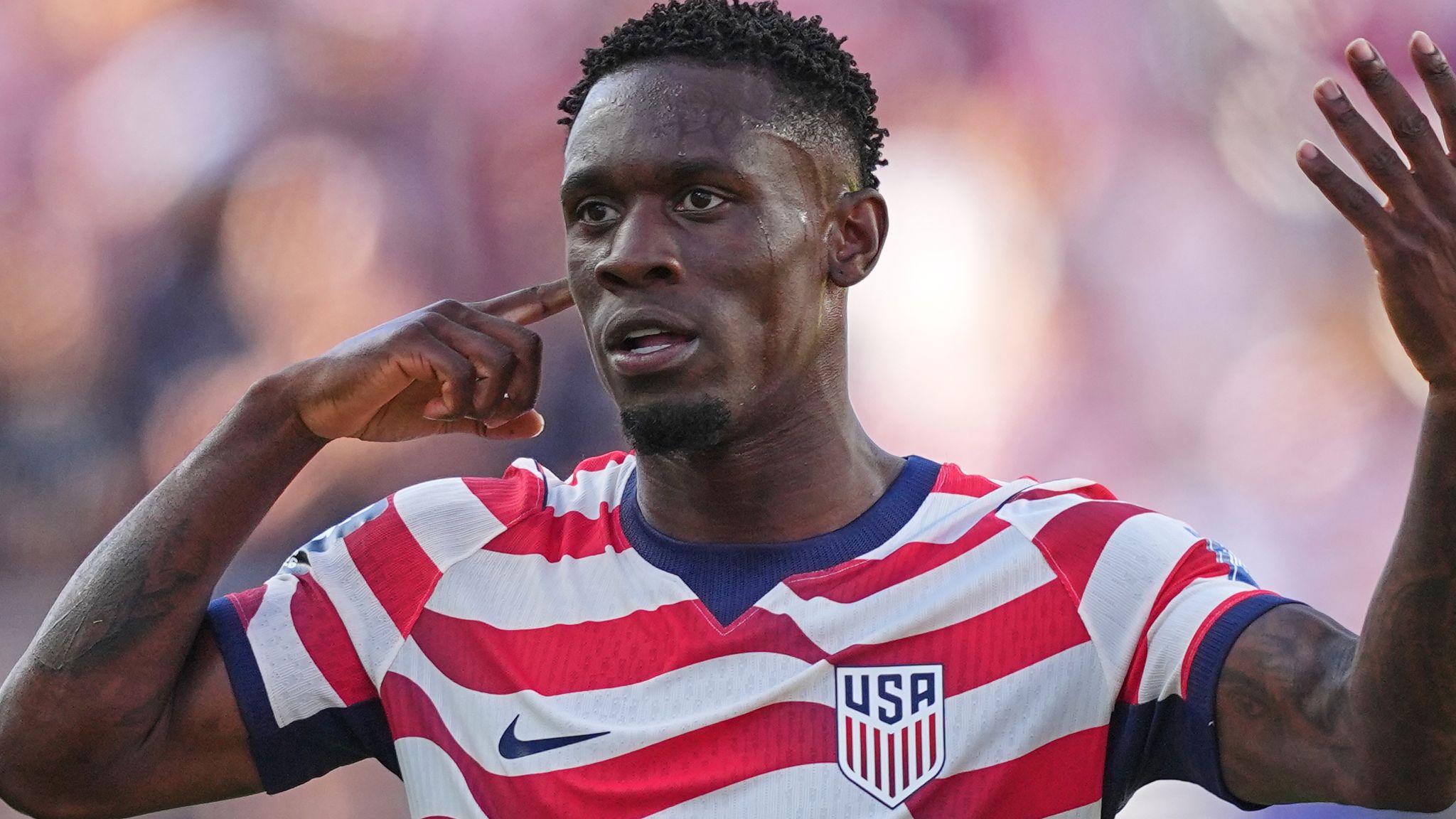

- Deadline Day Chaos as Balogun U-Turn Derails Everton and Chelsea Transfer Plans
Folarin Balogun’s proposed £40 million move from Monaco to Everton collapsed in dramatic fashion after the striker had a late change of heart, bringing an extraordinary end to a chain of Deadline Day deals that also wrecked Chelsea’s attempt to sign Lamine Camara.
Balogun had arrived on Merseyside around lunchtime to undergo a medical and complete formalities ahead of the transfer. But doubts emerged during the afternoon after an issue arose during the medical process, before Everton later renegotiated the structure of the agreement with Monaco.
The situation then became entangled with Chelsea’s efforts to sign Monaco midfielder Camara. Monaco had reached an agreement to sell Camara to Chelsea, but subsequently withdrew from that deal after Everton’s transfer for Balogun appeared to be back on, leaving the London club furious.
Just after midnight, however, the entire chain broke down again when Balogun decided not to complete the switch to Everton. The American international walked away from the deal despite a deal sheet having been submitted, leaving both Everton and Monaco with major problems after the transfer window closed.
The collapse is particularly damaging for Everton because it leaves the club with only one recognised senior striker, Thierno Barry, until the January transfer window. Beto has departed for Fiorentina, while Manchester United rejected Everton’s attempt to sign Joshua Zirkzee on loan.
Everton’s attacking options had already been weakened by the departure of Iliman Ndiaye to Manchester City, although Jack Grealish arrived on another loan deal. The failure to secure Balogun therefore leaves the club exposed in one of the most important positions on the pitch.
The transfer had appeared close enough to completion that Everton had brought Balogun to Merseyside for medical checks and final paperwork. The late reversal therefore represents a considerable recruitment setback after the club had seemingly committed much of Deadline Day to bringing the former Arsenal forward back to English football.
For Monaco, the consequences are equally awkward. The Ligue 1 club had been negotiating Balogun’s departure while simultaneously discussing the sale of Camara, creating a situation in which one transfer became commercially linked to the other.
Chelsea had previously seen several bids for Camara rejected before eventually reaching an agreement with Monaco. The London club had also agreed to sell Enzo Fernandez to Manchester City for £125 million, and was prepared to complete that transaction even if a replacement did not arrive.
When doubts emerged over Balogun’s Everton move, Monaco proceeded towards selling Camara. But after Everton renegotiated with Monaco and confidence returned that Balogun would leave, the French club withdrew from the Camara deal after the 11pm deadline.
Chelsea were particularly unhappy because, according to Sky Sports, the Camara agreement had been effectively completed. Sky Sports chief correspondent Kaveh Solhekol said the deal had been “written, agreed, signed” and that Camara was expected to travel to London.
Chelsea’s frustration was intensified by the fact that the club chose not to pull out of the Fernandez sale to Manchester City, despite having the opportunity to do so. Sky Sports reported that Chelsea proceeded with the deal in good faith even after the Camara transfer became uncertain.
The episode illustrates how fragile late-window transfer chains can become when several clubs and players are dependent on one another’s transactions being completed within a narrow deadline.
In this case, Everton’s pursuit of Balogun created space for Monaco to consider Camara’s departure. When Balogun’s move appeared uncertain, Monaco moved closer to selling Camara; when the Everton deal seemed revived, Monaco reversed course again.
That sequence left Chelsea without the midfielder it expected to sign and Everton without the striker it believed it had secured.
Balogun’s decision also adds another twist to what has already been an eventful year for the striker. Sky Sports noted that the United States international had previously found himself at the centre of controversy during the 2026 World Cup following a red-card dispute involving US President Donald Trump.
For Everton, however, the immediate issue is squad depth rather than the wider drama surrounding the player. The club will now have to navigate the first half of the season with Barry as its only recognised senior centre-forward unless other attacking players are repurposed.
That could have consequences for tactical flexibility, injury management and workload, particularly if Barry is unavailable for any sustained period.
The failed transfer also raises questions about Everton’s Deadline Day planning. Pursuing a major striker deal until the final hours always carries risk, but the club’s inability to secure either Balogun or Zirkzee has left it with little room for error.
Monaco may also face difficult internal discussions about how its transfer strategy unfolded. The club effectively pulled the plug on Camara’s move to Chelsea because Balogun’s proposed sale was back on, only for the striker to then abandon the Everton transfer after the deadline.
For Chelsea, the episode is less damaging in terms of squad numbers but significant in terms of planning. The club sanctioned Fernandez’s departure to Manchester City while expecting to strengthen midfield, only to see its preferred replacement disappear because of developments in a transfer over which it had no control.
Sky Sports described Chelsea as “really unhappy” with Monaco’s handling of the situation, with the club understood to believe that the way the deal unravelled was not how transfer negotiations should be conducted.
Deadline Day often produces late surprises, but the Balogun-Camara sequence was unusual because a single player’s change of mind affected the recruitment strategies of three major clubs almost simultaneously.
Everton lost the striker it had expected to sign, Chelsea lost the midfielder it believed was on his way to London, and Monaco ended the window with both players still on its books.
For Everton, the most serious consequence is sporting rather than reputational. The club entered Deadline Day seeking to strengthen its attack and emerged from it with fewer options than before.
Balogun’s late U-turn therefore became more than a collapsed transfer. It reshaped the final hours of the market for Everton, Monaco and Chelsea and left each club facing questions that will now have to be answered on the pitch.

