


Disconnected Port Platforms Are Raising Africa’s Trade Costs — IMO
African countries must connect their expanding port technologies into coherent national and regional systems or risk preserving costly trade bottlenecks in digital form, the International Maritime Organization has warned.
Issa Mwajita, Head of Africa at the IMO, said fragmented information-sharing arrangements, repeated documentation and weak coordination between maritime institutions continued to raise operating costs, delay cargo and weaken the competitiveness of regional supply chains.
A port is not necessarily more efficient because forms are electronic, approvals are automated or several government agencies possess modern platforms. The real test is whether information submitted once can move securely across the institutions responsible for a trade transaction.
“When information is repeated repeatedly and processed through various systems, or delayed between institutions, the consequences are normally felt throughout the transport chain,” Ms Mwajita said.
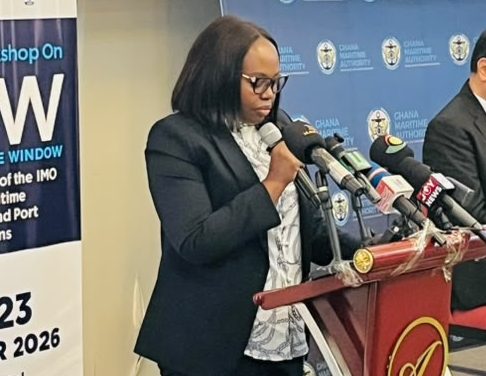
She was speaking at the Regional Workshop on Maritime Single Window, which brings together maritime administrations, port authorities, customs officials, regional institutions and development partners to examine practical approaches to digitalisation.
“Efficient maritime transport is essential to the economic development of West and Central Africa,” she said.
Landlocked countries depend on neighbouring ports, transit corridors and border agencies to connect their businesses with international markets. Inefficiency at a maritime gateway can therefore raise costs for consumers and producers hundreds of kilometres inland.
For firms operating on thin margins, delays are not merely inconvenient. They increase storage charges, transport expenses and the amount of working capital tied up in goods. Uncertain delivery dates also make manufacturers less reliable suppliers and discourage businesses from joining time-sensitive regional and global value chains.
But when each institution digitises independently, shipping companies may still submit similar information separately to port authorities, customs, immigration and maritime regulators.
Traders face multiple electronic windows, incompatible data fields and sequential approvals, while public institutions carry the cost of maintaining systems that cannot exchange information.
The Maritime Single Window is intended to address one part of that problem. It allows information required for a vessel’s arrival, stay and departure to be submitted through a single electronic point for use by authorised regulatory agencies.
A Port Community System performs a broader function by enabling information exchange among the public and private actors involved in maritime transport and logistics.
“Understanding the respective functions and ensuring that they work together is essential to achieving a coherent approach to port digitalization,” Ms Mwajita said.
The distinction matters because operating a Maritime Single Window does not automatically integrate the wider port ecosystem. A vessel may complete regulatory formalities electronically while freight forwarders, terminal operators, cargo owners and inland transport providers continue working through disconnected processes.
Genuine integration requires common data standards and agreement about how information is collected, accessed, validated and reused. It also requires agencies to accept data supplied through another institution instead of protecting separate procedures as expressions of statutory control.
The IMO Compendium on Facilitation and Electronic Business provides an important technical foundation by establishing common maritime-data definitions and harmonised standards.
Governments must determine institutional ownership, legal responsibility, access permissions and accountability when inaccurate data or system failures disrupt trade.
“Successful implementation requires clear institutional responsibilities and appropriate legal frameworks, as well as sustainable operating arrangements and people’s need to manage change,” Ms Mwajita said.
Technology procurement can be completed within a project cycle, but institutional reform requires agencies to revise processes, share authority and sometimes abandon procedures that have existed for years.
Without that reform, public investment can create an expensive electronic replica of the old administrative system. Governments pay for software, hardware and consultants, yet traders continue bearing delays and duplicated compliance costs.
Financial sustainability is another concern. The expense of an integrated platform does not end when it is commissioned. Ports and governments must finance maintenance, licences, upgrades, technical staff, user support and integration with systems operated by other institutions.
Short-term development assistance may help establish infrastructure, but domestic authorities must plan for operating costs over the platform’s full life. Systems that deteriorate when donor programmes close can quickly become new barriers to trade.
Cybersecurity and operational resilience must also be incorporated from the beginning. As ports concentrate critical information in interconnected systems, a successful attack or prolonged outage could interrupt vessel clearance, cargo processing, revenue collection and inland supply chains.
“As reliance on digital information grows, protecting the systems, managing access, and maintaining continuity of services become essential to building confidence among users,” Ms Mwajita said.
Trust is central to adoption. Shipping companies and other users will resist information-sharing arrangements if they are uncertain who can access commercially sensitive data or whether the platform will remain available during critical operations.
African countries are not starting from the same position. Some are developing basic Maritime Single Window infrastructure, while others are attempting to connect mature platforms with port community services.
Regional cooperation must recognise those differences. Countries need individual implementation roadmaps, but their systems should still communicate through recognised standards if Africa is to reduce friction across maritime gateways and transport corridors.
The Tema workshop builds on engagements in Dar es Salaam and Abidjan and is supported by partners including the World Bank and Korea–World Bank Partnership Facility. Such exchanges can help governments learn from successful programmes and avoid repeating expensive implementation failures.
For Ghana, the opportunity is to improve its ports while strengthening their role as regional gateways. Faster, predictable processes could attract shipping traffic, support transit trade and make the country a more effective platform for commerce under the African Continental Free Trade Area.
But the workshop’s relevance will ultimately be judged outside the conference room. Authorities should publish measurable targets covering vessel-clearance times, duplicate submissions, system availability, administrative costs and user satisfaction.
The IMO’s warning is therefore not an argument for less technology. It is a demand for technology governed as shared trade infrastructure.
Africa will not secure competitive ports by multiplying platforms that operate alone. Digital transformation will become economically meaningful only when institutions, standards and systems connect well enough to make the movement of information—and therefore goods—simpler, cheaper and more predictable.

