

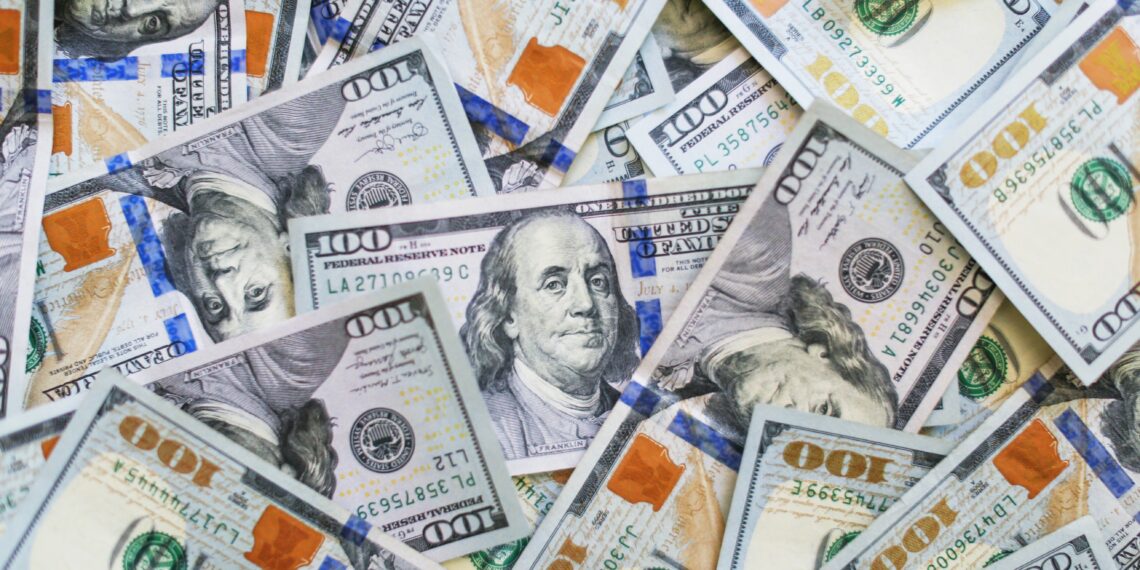

- Dollar Holds Near 18-Month High as Middle East Conflict Fuels Haven Demand
The US dollar traded near an 18-month high on Monday as escalating conflict in the Middle East, rising oil prices and persistent inflation concerns pushed investors towards safe-haven assets and strengthened expectations that the Federal Reserve would keep interest rates elevated.
The dollar index, which measures the currency against six major counterparts, rose to about 102.58, its highest level since April 2025. The advance extended a rally that has gathered momentum since September as investors reduced exposure to riskier currencies and increased holdings of dollar-denominated assets.
Renewed attacks involving Saudi Arabia and oil tankers intensified concerns about energy supplies over the weekend, lifting crude prices and adding another layer of uncertainty to an already fragile global economic outlook.
Brent crude futures rose more than 2 per cent to approximately US$106.80 a barrel. The increase raised fears that higher energy costs could slow the decline in global inflation and force major central banks to maintain tighter monetary policies for longer than markets had previously expected.
The dollar has benefited from both sides of that development. Geopolitical instability has increased demand for the currency as a haven, while the inflationary implications of higher oil prices have strengthened the case for maintaining relatively high US interest rates.
Investors are now awaiting the latest US consumer-price data, due on Wednesday, for clearer indications of whether inflationary pressure is becoming more entrenched.
Financial markets are pricing an approximately 81 per cent probability that the Federal Reserve will leave interest rates unchanged at its next policy meeting, compared with about 51 per cent a month earlier.
The sharp change in expectations reflects growing doubts that the central bank will be able to resume monetary easing while oil prices remain elevated and underlying inflation continues to exceed its target.
The Federal Reserve’s policy rate is currently in a range of 3.75 per cent to 4 per cent. Although policymakers have not ruled out future reductions, recent economic data and the energy-price shock have reduced the urgency for easing.
Cleveland Federal Reserve President Beth Hammack has argued that monetary policy should move into restrictive territory relatively quickly, warning that inflationary pressure is broadening beyond energy and affecting companies’ pricing decisions.
Her comments reinforced expectations that the Federal Reserve would prioritise price stability even if that meant maintaining pressure on economic activity and borrowing costs.
The increase in crude prices has become one of the most important variables facing central banks and currency markets.
Higher oil prices raise production and transportation expenses, which can eventually feed into consumer prices. They can also weaken household purchasing power, reduce corporate margins and slow economic growth.
That combination creates a particularly difficult policy problem. Central banks may need to keep interest rates high to contain inflation even as expensive energy undermines economic activity.
The latest oil rally followed attacks on Saudi Arabia and tankers, developments that revived concerns about supply disruptions from one of the world’s most important energy-producing regions.
Markets are also confronting uncertainty over the duration and geographical reach of the conflict. A prolonged disruption affecting shipping routes, production facilities or export infrastructure could maintain upward pressure on crude and refined-product prices.
Conversely, progress towards a ceasefire or the release of emergency oil stocks could reduce the immediate risk premium. For the moment, however, investors appear unwilling to assume that the disruption will be short-lived.
The dollar’s strength shows how quickly geopolitical and energy risks can reshape financial-market expectations. While the United States is not insulated from higher oil prices, its comparatively resilient economy, deep capital markets and globally dominant currency make the dollar a preferred asset during periods of uncertainty.
The euro weakened to around US$1.118 as investors weighed the region’s fragile economic performance against rising fiscal concerns in several European economies.
The single currency has lost about 5 per cent against the dollar during 2026, reflecting the widening contrast between resilient US growth and weaker conditions across parts of Europe.
Fiscal pressure, particularly in France and Italy, has added to concerns about government borrowing requirements and debt sustainability. Higher global bond yields could make those pressures more difficult to manage by raising the cost of refinancing public debt.
Dan Tobon, Citi’s head of Group-of-10 foreign-exchange strategy, said the market lacked a convincing near-term reason to increase exposure to European assets.
“There’s been no improvement and no real clear guidance as to what’s going to make things better in the short term,” he said.
“What’s the reason to buy European debt, to buy euro here? It’s hard to find one, and so we just kind of keep drifting off.”
The comments underline the extent to which the dollar’s advance is being supported not only by US developments but also by weaknesses in competing economies.
If European growth remains subdued while the European Central Bank faces pressure to support economic activity, the interest-rate advantage enjoyed by dollar assets could persist.
The Japanese yen also weakened, with the dollar rising to about ¥158.6.
The yen has struggled against the dollar as investors focus on the difference between US and Japanese interest rates. Although Japan has gradually moved away from years of exceptionally loose monetary policy, its borrowing costs remain below those in the United States.
This encourages investors to borrow in yen and purchase higher-yielding assets elsewhere, a strategy commonly known as the carry trade.
The yen can strengthen during periods of extreme global risk because of Japan’s large overseas asset holdings and the currency’s traditional haven status. But in the latest bout of uncertainty, relatively high US yields and expectations of restrictive Federal Reserve policy have given the dollar the stronger advantage.
The dollar was about 0.2 per cent higher against the yen at ¥158.66, keeping Japanese authorities alert to the possibility of excessive or disorderly currency movements.
Sterling also came under pressure, slipping to around US$1.32 as investors assessed the inflationary consequences of higher energy prices for Britain.
The Bank of England faces a similar challenge to the Federal Reserve: controlling persistent inflation without applying unnecessary pressure to growth. Markets are increasingly considering the possibility that the British central bank may have to tighten policy further if higher fuel and electricity costs spread through the economy.
Wednesday’s US inflation report is likely to determine whether the dollar’s advance continues or pauses.
A stronger-than-expected reading would support the argument that the Federal Reserve cannot afford to reduce interest rates. It could also increase expectations of another rate rise before the end of the year, strengthening Treasury yields and the dollar.
A weaker reading would ease some pressure on the central bank and could encourage investors to take profits after the currency’s recent rally. However, the effect could be limited if the Middle East conflict continues to drive demand for safe assets.
The interaction between oil prices and core inflation will be particularly important. Central banks often look through temporary changes in energy prices, especially when setting policy over the medium term. But they become more concerned when higher fuel costs influence wages, transport charges, services and corporate pricing decisions.
Evidence that energy inflation is spreading into the broader economy would make the Federal Reserve more cautious about easing.
US economic resilience has also helped the dollar. Consumer spending and labour-market conditions have remained stronger than in several other developed economies, allowing the Federal Reserve to focus more firmly on controlling inflation.
Global borrowing costs, meanwhile, have risen as investors adjust to the possibility that interest rates will remain high for longer. This has placed pressure on government bond markets and raised concerns about heavily indebted economies.
Despite the dollar’s immediate strength, foreign-exchange strategists remain divided over whether the rally can be sustained throughout the coming year.
A Reuters survey found that about 80 per cent of strategists considered the risks to their short-term dollar forecasts to be tilted to the upside. However, median projections continued to suggest a modest decline in the currency over the next six to 12 months.
That apparent contradiction reflects the difference between short-term momentum and longer-term economic fundamentals.
In the near term, war, elevated oil prices, relatively high US interest rates and weakness in Europe provide substantial support for the dollar. Over a longer period, slower US growth, eventual Federal Reserve easing or concerns about fiscal deficits could limit further gains.
The currency’s trajectory will therefore depend on whether the present shocks prove temporary or develop into lasting changes in inflation and monetary policy.
Investors will also watch developments at the IMF and World Bank Annual Meetings in Bangkok, where finance ministers and central bank governors are expected to discuss the effect of conflict, high public debt and rising financing costs on the global economy.
For now, the dollar remains supported by a combination of fear and yield. Geopolitical uncertainty is increasing demand for security, while persistent inflation is making dollar assets comparatively more rewarding to hold.
Wednesday’s US inflation report may determine whether the currency can extend its rally. Until there is greater clarity on the Middle East conflict, oil supplies and the Federal Reserve’s next move, investors appear reluctant to move decisively away from the dollar.

