

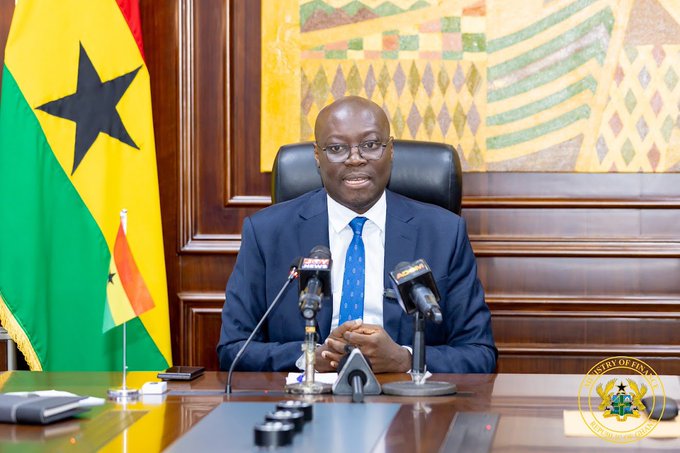

- Dr Ato Forson Declares Ghana Ready to Take Off After Rebuilding Macroeconomic Foundations
Finance Minister Dr Cassiel Ato Forson has declared Ghana ready to move from economic stabilisation towards sustained growth, saying the country has “turned the tide” after emerging from a period of severe macroeconomic distress.
His assessment presents the recovery as a turning point rather than a completed transformation. Ghana may have rebuilt the foundation for expansion, he argued, but the durability of every subsequent gain will depend on preserving the stability that made the turnaround possible.
“Today we have turned the tide. We are moving in the right direction,” Dr Forson said. “Based on the foundation that we have laid, this country is ready to take off.”
The statement is the Finance Minister’s clearest attempt to define the government’s economic narrative: the emergency phase is giving way to a development phase, but the transition must be managed without recreating the fiscal, debt and foreign-exchange imbalances that produced the crisis.
That distinction matters. Economic stabilisation can stop deterioration, restore confidence and provide space for planning. It does not automatically produce jobs, higher household incomes or the productive investment needed to change the structure of the economy.
For many Ghanaians, the recovery will become credible only when favourable macroeconomic indicators translate into lower business uncertainty, affordable credit, reliable public services and improved purchasing power.
Dr Forson acknowledged that Ghana’s progress remained conditional. The government, he said, would pursue economic take-off cautiously because the gains recorded so far were dependent on continued macroeconomic stability.
“And we will take off cautiously,” he said. “Bear in mind that all the gains we have made are dependent on us maintaining the macroeconomic stability.”
The warning places fiscal discipline at the centre of the next phase. A return to large unfinanced expenditure, persistent arrears or borrowing unsupported by productive returns could weaken confidence and place renewed pressure on inflation, interest rates and the cedi.
It also signals that the government faces a difficult sequencing problem. Citizens and businesses expect the recovery to deliver visible benefits, while the state must avoid expanding expenditure faster than revenue and financing conditions can sustainably support.
The temptation after a successful stabilisation period is to interpret improving conditions as permission for rapid spending. Ghana’s experience demonstrates why that can be dangerous. Macroeconomic credibility can take years to rebuild but may be undermined quickly if policy commitments are abandoned.
The Finance Minister’s reference to the “foundation” therefore extends beyond headline growth. It includes credible budgeting, controlled deficits, prudent debt management, lower inflation, stronger reserves and an exchange-rate environment in which businesses can make decisions with greater confidence.
Each element reinforces the others. Fiscal discipline reduces the government’s financing pressure. Lower financing needs can moderate interest costs. Greater price stability protects household incomes, while a more predictable currency helps businesses plan imports, investment and production.
The reverse is equally true. Fiscal slippage can increase borrowing needs, crowd out private-sector credit and damage confidence. If investors and businesses expect renewed instability, the cost of capital can rise even before the deterioration appears fully in official data.
Preserving stability should not, however, become an argument for indefinite restraint without a growth strategy. Ghana’s next challenge is to redirect the credibility gained from adjustment towards productive investment and private-sector expansion.
Public resources will need to be concentrated on infrastructure, energy reliability, agriculture, industrial capacity, skills and digital systems capable of raising productivity. The quality of spending will matter as much as its overall level.
A project financed within a disciplined budget can still become a fiscal burden if it is poorly selected, delayed or unable to generate economic value. Conversely, carefully chosen investment can expand the tax base and make future debt more sustainable.
The private sector will also determine whether Ghana genuinely takes off. Government can provide stability and essential infrastructure, but sustained employment and export growth require businesses willing to invest, innovate and enter new markets.
That makes access to credit particularly important. Stabilisation should gradually create room for lower financing costs, but banks will also consider credit risk, government borrowing requirements and the quality of business proposals. Macroeconomic gains must therefore be accompanied by reforms that improve the operating environment for firms.
Ghana’s recovery narrative will also be tested by the cedi. A stable currency does not require an artificial exchange rate; it requires confidence that foreign-exchange demand and supply can adjust without repeated disorder.
Export growth, remittances, investment inflows and credible reserve management will be important. So will reducing the economy’s dependence on imported fuel, food and manufactured products that intensify demand for foreign currency.
The Finance Minister’s language of take-off implies more than returning to the pre-crisis economic model. If Ghana resumes growth without expanding domestic production, exports and value addition, vulnerabilities could return even while gross domestic product increases.
Structural transformation must therefore accompany stabilisation. Gold, cocoa and oil will remain important, but the country needs to retain more value through processing, local supply chains and industries that can compete beyond the domestic market.
Dr Forson also placed the recovery within the political mandate received by President John Mahama and the governing party, reminding public officials that they were elected to respond to a country in crisis.
“We were elected to come and save a country in crisis. Don’t forget that,” he said. “President Mahama and his members of Parliament were elected to save this country because Ghana was in a crisis.”
The comments transform economic management into a question of accountability. If the government defines its mandate as rescuing the economy, it must demonstrate not only that key indicators have improved but that the benefits of recovery are being shared.
“Together, we have a responsibility a responsibility to work to the satisfaction of the people of Ghana,” Dr Forson said.
That standard is more demanding than meeting fiscal targets. Public satisfaction will depend on employment, incomes, healthcare, education, transport, energy and whether citizens believe sacrifices made during adjustment have produced a fairer and more functional economy.
The government must also manage expectations honestly. Declaring that the tide has turned creates optimism, but it risks disappointment if households expect an immediate improvement in every aspect of economic life.
Recovery normally reaches different groups at different speeds. Financial markets and large businesses may respond quickly to improved stability, while smaller firms and households experience the benefits only after credit, investment and employment expand.
Clear communication will therefore matter. Government must explain which gains have been secured, which vulnerabilities remain and how its growth strategy will translate stabilisation into measurable improvements.
Dr Forson’s central message is ultimately one of guarded confidence. Ghana is no longer being presented as an economy focused solely on preventing collapse; it is being positioned as a country capable of moving forward from a stronger base.
But take-off is not a single event. It is a sustained process requiring discipline across budgets, debt, monetary conditions and public investment. Ghana’s success will depend on whether policymakers can resist short-term pressures while accelerating reforms that make stability economically meaningful.
The tide may have turned, as the Finance Minister argues. The next test is whether Ghana can convert that change in direction into lasting growth without losing the foundation beneath it and withstand the shocks that will inevitably test future governments.

