

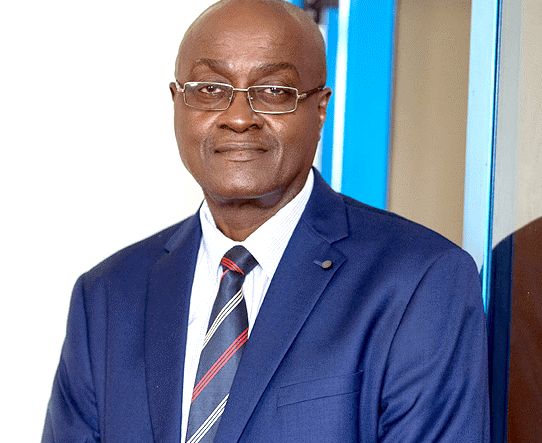

- Dr Atuahene Warns Cedi Gains May Be Overstating Strength of Ghana’s State Enterprises
Ghana’s stronger cedi and improving corporate balance sheets are providing welcome relief to the financial system, but the apparent recovery may be less durable than headline profit figures suggest, according to banking and corporate governance consultant Dr Richmond Atuahene.
His warning goes to the centre of Ghana’s current economic debate: how much of the improvement reflects stronger productivity and operational discipline, and how much has been produced by a favourable foreign-exchange environment that could reverse if the currency weakens again.
The concern follows the release of the State Interests and Governance Authority’s 2025 State Ownership Report, which showed state-owned enterprises swinging from a consolidated net loss of GH¢2.25 billion in 2024 to a net profit after tax of GH¢19.80 billion in 2025. Aggregate revenue increased from GH¢137.64 billion to GH¢176.43 billion, reinforcing the impression of a major turnaround in the state-enterprise sector.
Dr Atuahene argues that those numbers should be interrogated rather than celebrated in isolation. “If you dive deep into it, it’s not operational efficiency. It’s completely, it’s not operational efficiency,” he said, echoing concerns raised by other analysts about the quality of the earnings improvement.
The distinction matters because accounting profits generated by exchange-rate movements are fundamentally different from profits created through higher productivity, lower operating costs, stronger collections and improved service delivery. A favourable currency can strengthen an income statement without necessarily changing the underlying economics of the enterprise.
That effect is visible in the foreign-exchange numbers. SOEs recorded GH¢11.72 billion in net foreign-exchange earnings in 2025, compared with a GH¢12.01 billion foreign-exchange loss in 2024, implying a year-on-year swing of about GH¢23.73 billion.
The size of that swing is striking because it exceeds the GH¢22.05 billion improvement between the sector’s 2024 net loss and 2025 net profit. It does not mean the entire profit turnaround was caused by foreign exchange, because other operating and accounting factors also moved during the year, but it underlines how important currency conditions were to the reported results.
Finance costs also fell by 42.49%, providing further relief to highly leveraged enterprises. That is positive from a balance-sheet perspective, but lower financing costs do not in themselves establish that companies have become more productive or commercially efficient.
Dr Atuahene argues that this distinction should shape how policymakers read the results. “If you are moved by foreign exchange gains by 60%, then you are not talking about efficiency. So, for me, it’s not so much the profit, but are we talking about operational efficiency?” he said.
The warning extends well beyond the state-enterprise sector. Banks, utilities and large companies with material foreign-currency assets or liabilities can experience substantial changes in reported earnings when the cedi moves, even if the volume of goods or services they produce remains broadly unchanged.
A period of appreciation can reduce the cedi value of foreign-currency liabilities, lower financing pressure and generate revaluation gains. But those benefits can reverse quickly if the currency weakens, particularly for businesses whose revenues are primarily denominated in cedis while part of their debt or operating costs is linked to foreign currency.
“Should the cedi begin to go downwards, then you’ll begin to see that we have a big problem,” Dr Atuahene warned.
That scenario would matter directly to Ghana’s banking system. Banks sit at the centre of the country’s credit chain, with exposure to government securities, private businesses and state-owned enterprises, while many corporate borrowers remain sensitive to exchange rates, interest rates and public-sector payment cycles.
A renewed depreciation could therefore transmit stress through several channels at once. Foreign-currency liabilities would become more expensive in cedi terms, import-dependent companies could face higher operating costs and weaker borrowers could become less able to service bank loans.
That is why cedi stability is more than a macroeconomic headline. It is an important component of financial-sector stability, particularly in an economy where currency stress has historically affected government finances, corporate balance sheets and banking-sector asset quality simultaneously.
The deeper vulnerability, however, lies on the liability side of Ghana’s state-enterprise accounts. SIGA puts total SOE liabilities at approximately GH¢281.99 billion, while the Electricity Company of Ghana alone accounts for about GH¢82.31 billion, equivalent to roughly 29.19% of the total.
Dr Atuahene described the scale of the liability burden as a significant threat to the sustainability of the recovery. “If you run an economy with such a debt overhang, I don’t know what you can do,” he said.
It is important to distinguish liabilities from sovereign debt. Not every cedi recorded on an SOE balance sheet is guaranteed by government or destined to become a direct public obligation, but strategically important enterprises can create contingent fiscal risks if they become unable to meet liabilities without state intervention.
That is particularly relevant for utilities such as ECG because their financial condition affects a much wider economic ecosystem. Suppliers, power generators, fuel providers, banks and contractors can all be exposed to delayed payments or accumulated obligations within the electricity value chain.
The result is an uncomfortable contradiction. A state-owned enterprise can report an accounting profit in the same year that it carries substantial liabilities, weak cash flows or requires government support.
Profitability therefore does not automatically equal fiscal sustainability. For policymakers, the more useful question is whether SOEs are generating enough recurring operating cash flow to service obligations, finance capital expenditure and strengthen their balance sheets without relying on favourable exchange-rate movements or taxpayer support.
This is also where financial results need to be connected to service delivery. Citizens do not experience ECG through its profit-and-loss statement; they experience it through electricity reliability, billing, outages and service quality.
Dr Atuahene made the point directly: “Produce the figures, talk about profit, but the reality… what is the output? You’re not getting your light on. You’re not getting your water.”
The challenge is therefore one of measurement. A credible state-enterprise performance framework should combine profitability with operational indicators such as collection efficiency, output, service reliability, productivity per employee, debt-service capacity, arrears accumulation and dependence on government transfers.
That would allow policymakers to distinguish enterprises improving through genuine operational reform from those whose financial statements have simply benefited from macroeconomic conditions. It would also make it easier to identify institutions where restructuring is more urgent.
The broader reform agenda is difficult to avoid. Ghana’s recent debt crisis demonstrated how quickly weaknesses in one part of the public sector can migrate into other parts of the economy, particularly when government is ultimately expected to absorb losses or guarantee strategic entities.
Dr Atuahene argues that reforms under Ghana’s IMF-supported programme make SOE restructuring especially important. Better governance, stronger performance contracts, professional boards, disciplined borrowing and transparent financial reporting will all be required if the current recovery is to survive less favourable economic conditions.
Some enterprises may also require deeper restructuring, strategic private participation or divestment where the state cannot demonstrate a compelling commercial or strategic case for continued ownership. The political difficulty of such decisions should not obscure the fiscal cost of avoiding them.
The key policy opportunity is that Ghana currently has breathing space. A more stable currency and lower financing pressure have reduced some of the stresses that previously weakened public and private balance sheets.
That breathing space could be used to reduce foreign-currency exposure, refinance expensive obligations, improve cash collection and strengthen operating efficiency. If it is instead treated as evidence that structural weaknesses have already disappeared, the next bout of currency volatility could expose the same vulnerabilities again.
The banking sector has a direct interest in that outcome. Stronger SOEs mean better-quality borrowers and more reliable counterparties; weaker SOEs increase the probability that stress migrates through unpaid obligations, impaired loans or broader government intervention.
For Ghana’s economic managers, the lesson is therefore straightforward. Cedi stability is helping, but it should be treated as an opportunity for repair rather than proof that the repair is complete.
The GH¢19.80 billion SOE profit is a significant improvement, but the GH¢281.99 billion liability stock and the GH¢23.73 billion swing in foreign-exchange performance show why income statements alone cannot settle the debate.
Dr Atuahene’s warning is ultimately about resilience. Ghana’s recovery will be more credible when state enterprises remain financially and operationally strong even when the cedi is no longer moving in their favour.
Until then, the country risks confusing a favourable currency cycle with structural reform.

