


- €323mn Grant and Concessional Funding to Tackle Water Shortages in Tamale, Yendi and Damongo
Ghana has secured a €323 million financing package to tackle persistent water shortages in Tamale, Yendi and Damongo, combining substantial grant support with a highly concessional European Investment Bank facility.
Finance Minister Dr Cassiel Ato Forson said the Northern Ghana Water and Sanitation Project would be supported by €98 million in grants and €225 million in concessional financing from the EIB.
The European Commission will provide a €68 million grant, while Invest International, a Dutch government initiative, will contribute €30 million. Together, the grants represent approximately 30.3 per cent of the total package, reducing the amount Ghana must repay.
The remaining 69.7 per cent will come through the EIB facility. Although the Finance Minister described it as highly concessional, the eventual effect on the public finances will depend on its interest rate, grace period, maturity, currency denomination and repayment schedule.
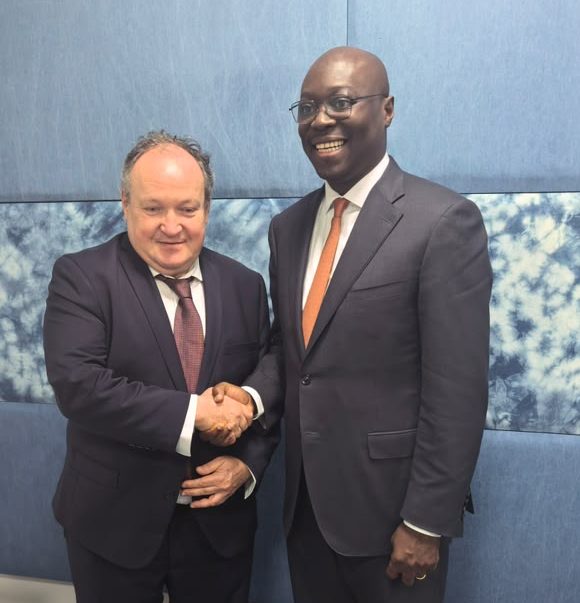
“I have just concluded a productive meeting with European Investment Bank Vice-President Ambroise Fayolle on the financing package for the Northern Ghana Water and Sanitation Project,” Dr Forson said.
When communities lack reliable water, families spend additional time and money securing it from alternative sources. Businesses face higher operating costs, schools lose instructional time and health facilities struggle to maintain sanitation standards. Women and children frequently bear the heaviest burden because they are often responsible for collecting water.
Reliable supply is therefore both social infrastructure and economic infrastructure. It supports public health, productivity, education, urban development and private investment. For Tamale, Yendi and Damongo, the project could remove a constraint that becomes more severe as populations expand and demand grows.
Tamale’s position as the principal commercial centre in northern Ghana makes the reliability of its water system especially important. A city expected to support manufacturing, healthcare, hospitality, education and regional trade cannot operate competitively if households and enterprises must regularly rely on expensive alternatives.
The structure of the package is also significant for Ghana’s debt management. Following the country’s debt crisis and restructuring, new borrowing must be assessed not only by the amount obtained but also by its cost, maturity and expected development return.
Using grants for more than 30 per cent of the project lowers the financing burden and improves affordability. The concessional character of the EIB component should also provide better terms than Ghana could obtain through commercial borrowing, particularly while international market access remains constrained and borrowing costs remain elevated.
Concessional finance, however, is not free money. It still creates repayment obligations, and because the facility is denominated in euros, future debt-service costs measured in cedis could rise if the domestic currency weakens substantially over the life of the loan.
The strongest defence against that risk is effective implementation. A water project that is completed on time, operates reliably and supports economic activity can generate social and fiscal benefits greater than its financing cost. A delayed or poorly maintained project leaves taxpayers servicing debt without receiving the expected benefits.
This makes procurement, project governance and contract management central to the financing decision. Government must publish sufficient information about the project’s scope, implementation timetable, executing agencies and expected service improvements so residents can assess whether delivery matches the commitments being made.
The package should also be evaluated through measurable outcomes. The relevant indicators are not merely the kilometres of pipelines installed or the number of treatment facilities constructed. Success should include additional households connected, hours of uninterrupted supply, reductions in waterborne disease, improved service to schools and hospitals, and affordable tariffs for low-income consumers.
Sanitation must not become the less visible component of a project whose public communication focuses mainly on water. Safe water supply and effective sanitation are inseparable. Expanding water access without adequate wastewater, drainage and hygiene systems could limit the health benefits the investment is intended to deliver.
Affordability will require careful attention. Water infrastructure needs revenue for treatment, electricity, maintenance and network expansion, but tariffs that rise beyond household incomes can push residents back towards unsafe sources. The financing model must therefore balance cost recovery with social protection.
Climate resilience is another critical consideration. Northern Ghana is exposed to changing rainfall patterns, prolonged dry periods and extreme weather. New infrastructure must be designed around future water availability and population needs rather than historical demand assumptions that may quickly become outdated.
The project also offers an opportunity to strengthen regional equity. Ghana’s economic activity and infrastructure have traditionally been concentrated in the south, reinforcing migration and uneven development. Reliable water in northern urban centres can support local enterprise, improve living conditions and make those areas more attractive for investment.
Dr Forson’s ability to assemble grant and concessional components is a positive feature of the financing. It demonstrates how development partners can share the cost of essential infrastructure without placing the entire burden on Ghana’s public debt.
The next challenge is to move from financing announcements to delivery. Residents who have experienced recurring shortages will judge the package by whether water reaches their homes and businesses consistently, not by the number of institutions participating in the transaction.
Transparency will therefore be essential from financial close through construction and operation. Cost changes, implementation delays and revisions to the project must be disclosed early, while communities should have channels to report disruption, poor workmanship or exclusion from planned connections.
The €323 million package gives Ghana an opportunity to address a longstanding public-service failure while demonstrating that carefully structured borrowing can support productive development. Its grant component provides valuable fiscal relief, and the concessional EIB facility offers a more sustainable funding route than expensive commercial debt.
Yet financing is only the first test. The decisive questions are whether the project is delivered efficiently, protected from cost overruns and maintained after completion. If those conditions are met, the investment could improve health, release household time, reduce business costs and strengthen northern Ghana’s economic prospects.
For Tamale, Yendi and Damongo, the true value of the agreement will ultimately be measured directly in reliable litres of safe water, better sanitation and hours no longer lost searching for a basic necessity.

