


- ECG’s GH¢7 million Loss Exposes the Deeper Cost of Ghana’s Power Imbalance
The Electricity Company of Ghana’s reported loss of more than GH¢7 million may appear modest against the enormous sums circulating through the country’s power sector, but its significance lies elsewhere. It provides another warning that Ghana’s principal electricity distributor remains caught between costly power purchases, politically sensitive tariffs and the expectation that it must operate as a financially sustainable commercial utility.
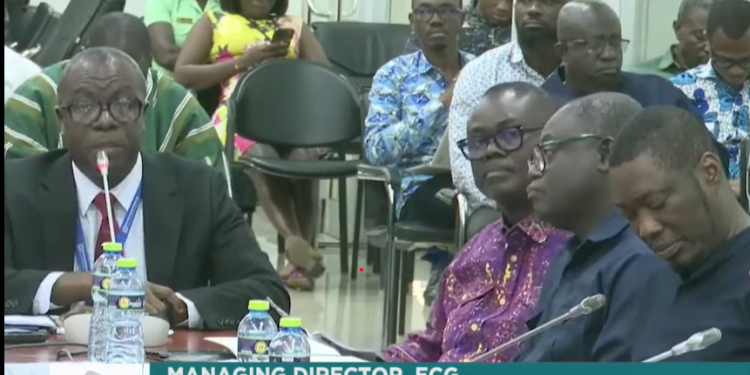
The company’s financial performance came under scrutiny before Parliament’s Public Accounts Committee as lawmakers examined the Auditor-General’s Report for the year ending 2024. Committee members questioned ECG’s management about the factors behind the loss and the measures being pursued to strengthen the utility’s finances.
The hearing moved beyond the reported figure and exposed the central question confronting Ghana’s electricity market: can ECG become financially viable if the cost at which it acquires electricity remains higher than the revenue it can realistically recover from consumers?
ECG Managing Director Julius Kwame Kpekpena identified power-purchase costs as a major driver of the company’s expenditure. He said the government had spent 2025 and 2026 negotiating with independent power producers to reduce those costs and had secured significant discounts.
“Throughout 2025 and 2026, the government has been making efforts to reduce the cost of power purchases through negotiations with IPPs, and we have received significant discounts from the negotiations,” he told the committee.
That explanation directs attention towards the upstream structure of the electricity value chain. ECG does not generate most of the power it sells. Its finances are therefore shaped before electricity reaches its network: by generation contracts, agreed capacity, fuel expenses and the price at which power becomes available for distribution.
If those underlying costs are excessive, improvements in billing and collection alone may not fully close the financial gap. Conversely, reducing generation costs without addressing commercial and operational weaknesses would merely treat one part of a larger problem.
Mr Kpekpena said competitive procurement for additional generation formed part of the government’s response. The objective is to introduce competition when new generating capacity is required, creating pressure for producers to offer electricity at more efficient prices.
“There’s also the law for competitive procurement of additional generation, meant to reduce the cost of production,” he said. “So there are a lot of measures the government is implementing to reduce the cost. The cost at which we buy the power is what is driving the cost.”
The argument is economically persuasive. Competitive procurement can reduce the risk of locking the country into expensive agreements negotiated without sufficient price tension.
However, competition over future generation cannot immediately erase obligations inherited from existing arrangements. The discounts reportedly secured through negotiations with independent producers could provide relief, but their ultimate value will depend on their size, duration and whether they permanently change ECG’s cost structure.
The Public Accounts Committee hearing also returned to electricity tariffs. ECG indicated that tariff adjustments might be necessary for the company to break even and establish a sustainable financial position.
This is where the discussion becomes more difficult. Tariffs are the most visible part of the electricity system for households and businesses, but they are also the instrument most frequently expected to absorb inefficiencies elsewhere in the chain.
For households already managing competing expenses, higher electricity prices can intensify financial pressure. For businesses, particularly manufacturers and smaller enterprises, energy costs affect production, competitiveness and employment. A tariff designed solely around the utility’s accounting requirements could therefore transfer unresolved sector problems directly to consumers.
It leaves ECG unable to meet obligations, weakens maintenance and investment, and ultimately forces the state to intervene. The apparent protection offered to consumers can then re-emerge as unreliable supply, public debt or reduced government spending elsewhere.
The relevant choice is therefore not simply between increasing tariffs and freezing them. It is between asking consumers to pay for an efficient service and asking them to finance accumulated inefficiencies. Parliament’s scrutiny should help distinguish the two.
That requires greater clarity about how the GH¢7 million loss was created.
The committee’s task is not merely to acknowledge the loss or accept assurances that corrective measures are underway. It must connect each identified weakness to a responsible institution, a specific intervention and a measurable deadline.
ECG’s management similarly faces the challenge of demonstrating how government initiatives translate into its accounts. If negotiations with independent producers have produced discounts, stakeholders should eventually be able to see lower purchase costs, improved margins or reduced financing pressures. Competitive procurement should also generate results that can be compared with previous contracting approaches.
The financial sustainability question extends beyond ECG itself. The company sits at the point where electricity supplied by producers is converted into cash from consumers. When that conversion fails, financial stress travels backwards through the power system and eventually reaches the public finances.
That makes ECG’s performance a national fiscal concern, not simply an internal corporate matter. The distributor’s losses can affect payments across the electricity chain, undermine confidence among suppliers and increase pressure for government support.
The hearing offers an opportunity to reset the debate. Consumers deserve protection from unnecessary tariff increases, but ECG cannot be expected to purchase expensive electricity and sell it indefinitely without recovering sufficient revenue. Producers deserve payment, but future generation must be procured competitively and transparently. Management requires tariffs that reflect legitimate costs, but it must also account for every controllable inefficiency.
The reported GH¢7 million loss is consequently less important than the system it exposes. Negotiated discounts and competitive procurement could improve the cost base, while carefully justified tariffs could strengthen revenue. Neither will be sufficient without transparent implementation and rigorous performance monitoring.
PAC’s scrutiny should therefore end with more than a diagnosis. It should establish whether power-purchase savings are real, whether tariffs reflect efficient costs and whether ECG is improving its capacity to convert electricity delivered into revenue collected.
Ghana’s electricity distributor will become sustainable only when cost reform, operational discipline and accountable pricing move together. Until then, every reported loss will remain another instalment in a much larger power-sector bill ultimately carried by

