
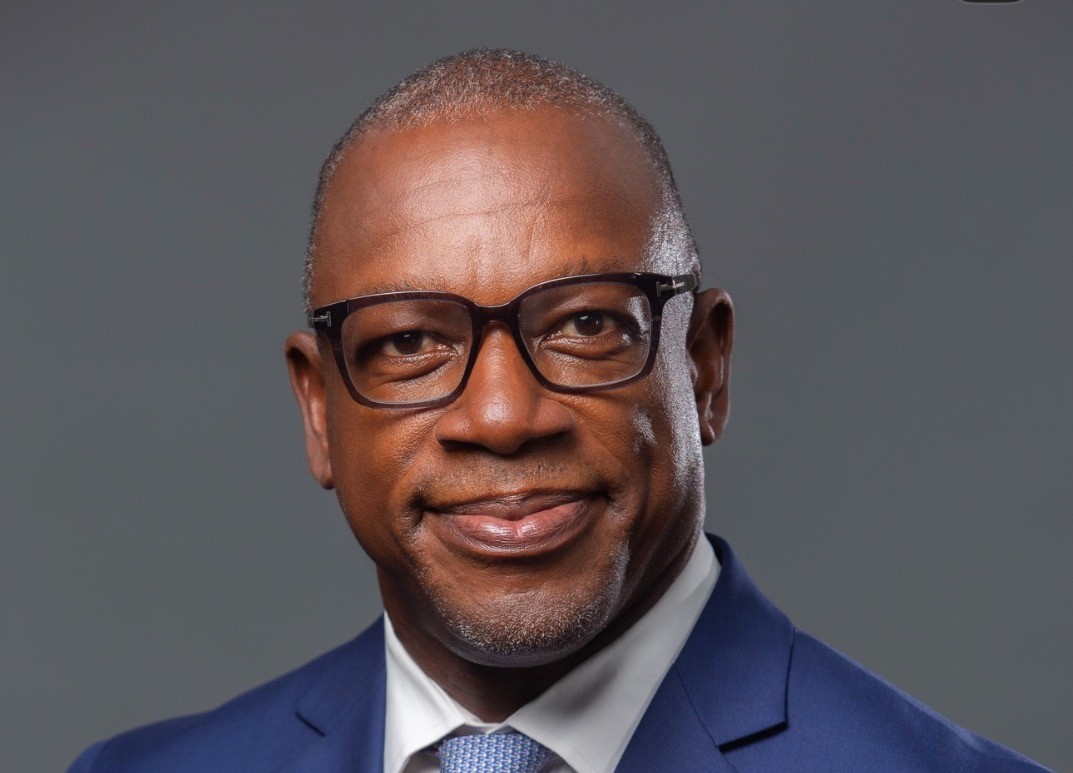

- Ghana Needs $25 Billion Investment Push to Become West Africa’s Industrial Hub — Edward Effah
Founder of Fidelity Bank Group, Edward Effah, has called for a structured compact between government and the private sector to accelerate Ghana’s economic transformation, warning that macroeconomic stability alone will not deliver jobs, exports and rising incomes unless it is matched with deliberate execution.
Speaking at the 10th Ghana CEO Summit on the theme, “The CEO-Government Compact 2026: Accelerating Ghana’s Economic Transformation,” Mr Effah said Ghana had regained a measure of economic stability, but must now convert that stability into industrial growth and employment creation.
“Ghana now needs more than stability. Ghana needs a Big Push for economic transformation: a bold national agenda that brings government and business into a structured partnership to build the future we want together,” he said.
According to him, the economy has shown resilience over the past decade, expanding from about $56 billion in 2016 to an estimated $115 billion, making Ghana the eighth-largest economy in Africa. But he cautioned that the structure of the economy had not changed enough to create jobs at the scale required.
Mr Effah said Ghana’s current economic indicators had created a window for transformation, citing the appreciation of the cedi in 2025, inflation falling to 3.3 per cent, gross international reserves rising to $13.8 billion, equivalent to 5.7 months of import cover, and debt-to-GDP declining to 45.3 per cent.
“Stability has been restored. It is now time for transformation. Stability creates the conditions for progress, but it does not guarantee progress,” he said.
He warned that Ghana had in the past achieved stability without achieving structural take-off, referencing the post-IMF Structural Adjustment period of the mid-1990s when the country was described as ready for take-off, only for that transformation not to materialise.
Mr Effah said the urgency of the compact was reinforced by Ghana’s youth unemployment challenge. He noted that about 1.5 million young Ghanaians are not in employment, education or training, while another 500,000 young people are expected to enter the labour market every year for the next decade.
He warned that without bold action, Ghana could face five million or more unemployed youth within a few years.
“If we are to create jobs at the scale this moment demands, then it cannot be business as usual,” he said.
He urged government and business leaders to prioritise job creation, technical and vocational education, digital skills development, entrepreneurship training, and stronger industry-academia partnerships.
Mr Effah also pointed to the regional trade opportunity, saying Ghana sits within a West African consumer market of more than 400 million people, with an estimated regional GDP of $650 billion. He said the African Continental Free Trade Area offers Ghana a chance to become a regional leader in pharmaceuticals, financial services, education, healthcare, energy, logistics, consumer goods and digital infrastructure.
But he cautioned that opportunity does not automatically become advantage.
“We will capture the opportunity if and only if we are intentional, coordinated and ambitious in a common transformation agenda,” he said.
On digital transformation, Mr Effah said Ghana’s next growth chapter would be shaped significantly by technology, data, analytics, artificial intelligence and digital platforms.
He welcomed the launch of Ghana’s National AI Strategy, but raised concerns about aspects of the proposed NITA Bill, which he said were not sufficiently private-sector, start-up or innovation friendly.
He said Ghana had already shown leadership in digital payments, mobile money, digital identity, paperless port systems, digital public service delivery and fintech innovation, noting that about 26 million Ghanaians now have active mobile money wallets.
To deliver the compact, Mr Effah proposed the establishment of a National Economic Transformation Council, ideally chaired by the President, to set national targets, remove bottlenecks, fast-track reforms, approve flagship projects and monitor delivery.
He also proposed a professionally staffed and well-resourced Transformation Delivery Unit to coordinate sector platforms in agribusiness, technology, digitalisation, industrialisation, manufacturing, energy, infrastructure and financing strategy.
“Strategy matters but it is delivery and execution that changes nations,” he said.
Mr Effah said the compact must be built to outlast political cycles, recommending statutory grounding through an Act of Parliament, operational independence, protected funding and transparent annual public scorecards.
He argued that the private sector had already demonstrated its ability to mobilise capital and execute national priorities, citing the GH¢48 million raised by the COVID-19 Private Sector Fund, which helped deliver 146,000 hot meals and build the Ghana Infectious Disease Centre within 100 days.
He also cited the role of the private sector in helping design the Energy Sector Levies Act and raising GH¢10 billion through ESLA bonds to clear energy sector debts.
Mr Effah said Ghana should aim to mobilise about $25 billion in investment into priority sectors over the next five years, equivalent to about 5 per cent of GDP annually over the period.
He said that scale of investment would be necessary if Ghana is to absorb half a million new labour market entrants every year, sustain 7 to 10 per cent economic growth and double its manufacturing and export base.
The financing model, he said, should be deliberately blended, involving government support for infrastructure and training, commercial bank lending, local development finance institutions, pension and insurance funds, foreign direct investment and support from international development finance institutions.
Mr Effah warned that Ghana does not lack local capital but rather faces a problem of capital allocation.
“Historically, too much of our local savings has been channelled into treasury bills, government bonds and non-productive assets, while the sectors that can transform the economy remain underfunded,” he said.
He said preserving fiscal discipline and sustaining a low-interest-rate environment would be critical to shifting capital toward productive sectors.
For Mr Effah, success would mean sustained GDP growth of between 7 and 10 per cent, a diversified export base, a larger manufacturing sector, lower youth unemployment, a stronger tax base, foreign exchange stability and Ghana firmly positioned as the digital and industrial hub of West Africa.
The challenge, however, is whether Ghana can convert another moment of macroeconomic relief into long-term structural change.
As Mr Effah put it, Ghana has restored stability. The question now is whether government and the private sector can build the delivery machinery required to turn that stability into jobs, exports, investment and prosperity.

