

- SOE Chief Executives Face Dismissal Over Failure to File Audited Accounts
President John Dramani Mahama has warned chief executives of state-owned enterprises that they risk losing their jobs if they fail to submit audited accounts and annual reports within the deadline set by the State Interests and Governance Authority.
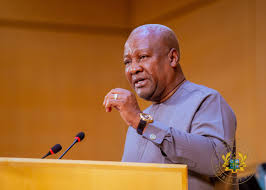
Speaking at a diaspora town hall meeting on Sunday, May 31, President Mahama said government was tightening oversight of state-owned enterprises as part of broader efforts to improve accountability, strengthen public financial management and protect the national balance sheet.
The President said several state institutions had operated for years without presenting audited accounts or annual reports, describing the situation as unacceptable and damaging to Ghana’s development agenda.
He noted that losses recorded by poorly managed state-owned enterprises eventually become liabilities for the state, adding pressure to public finances and weakening efforts to restore economic stability.
President Mahama said the submission of audited accounts and annual reports had now been made a key performance indicator for heads of state enterprises.
“We found out that some state-owned enterprises had not presented annual reports or audited accounts for seven years. I mean, who runs an organisation like that for seven years without audited accounts and annual reports?” he said.
“So we have made the submission of audited accounts and annual reports part of their key performance indicators. I’ve told the CEOs that SIGA has set a deadline, I think by the middle of this year. If you have not presented your audited accounts and you have not presented your annual report, the road is your face, you go home,” the President added.
The warning signals a tougher governance posture toward state-owned enterprises, many of which have long faced concerns over weak reporting, poor supervision, accumulated losses, procurement risks and political interference.
For government, the issue goes beyond administrative compliance.
Audited accounts are central to understanding the true financial position of state entities, including their assets, liabilities, profitability, cash flows and contingent obligations. Without timely reporting, policymakers are unable to properly assess fiscal risks or determine whether public enterprises are creating value or draining state resources.
The President, however, expressed optimism that several state-owned enterprises were beginning to show signs of improvement following increased monitoring and reforms introduced by government.
The renewed pressure on SOE chiefs also comes at a time when Ghana is seeking to consolidate recent macroeconomic gains and reduce the burden of public-sector inefficiencies on the national budget.
If enforced, the directive could mark a shift from routine calls for accountability to measurable consequences for non-compliance.

