

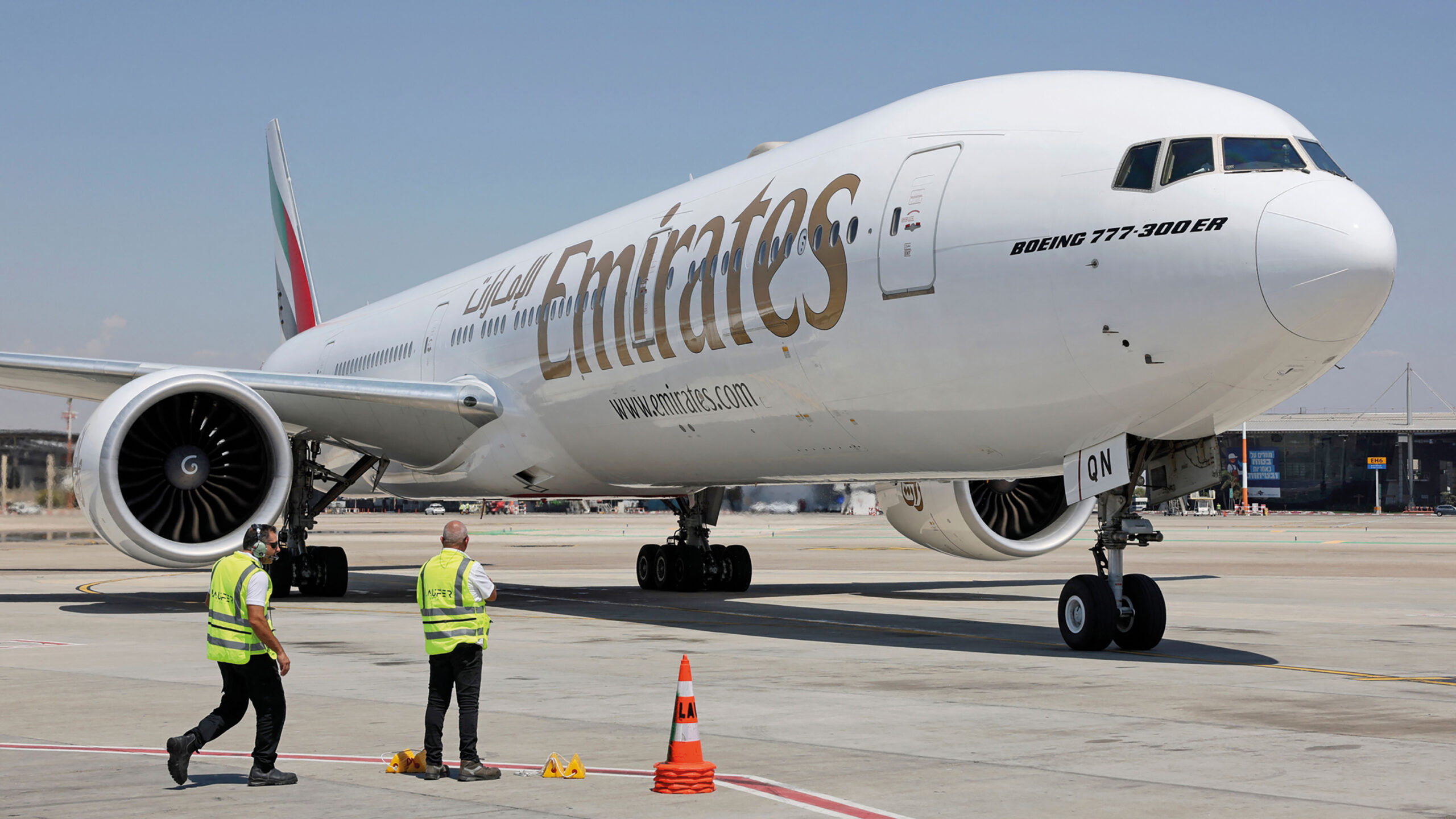

- Emirates Keeps Its Planes Full, But Fuel Costs Are Taking a Bigger Share of the Fare
Emirates is filling aircraft on routes to China, Russia and Africa, but strong demand has not protected its profits from a surge in fuel costs.
The airline’s president, Tim Clark, says the sector needs oil prices to fall towards US$70 a barrel to operate on more sustainable terms. Brent crude, which earlier this year reached US$120, was trading near US$93 in recent weeks.
That is the pressure point in the airline’s half-year results. Emirates remained profitable during the first six months of its 2026-27 financial year, but the airline’s profit before tax fell 68% to 3.7 billion UAE dirhams, or about US$1 billion.
Its revenue declined 13% to 56.9 billion dirhams. At group level, profit after tax fell 66% to 3.6 billion dirhams, while revenue dropped 12% to 66.2 billion dirhams.
Clark’s explanation is pointed: “It’s fuel, not people. We’re filling the airplanes.” The claim captures the tension facing carriers across the industry.
Travellers are still willing to fly, but airlines must spend more to operate each flight, and higher fares are not always enough to keep pace with rising costs.
Fuel’s effect on Emirates’ accounts has been substantial. The carrier’s fuel costs before hedging rose 60% from a year earlier, even though fuel uplift fell 12% as operations were reduced.
Gains of 7.1 billion dirhams from its fuel-price risk-management strategy helped limit the net increase in fuel costs to 13%. Fuel still accounted for 34% of the airline’s operating costs, making it the largest single expense.
The hedging gains softened the blow, but they could not eliminate it. Fuel hedging can protect an airline from part of a sudden price shock, yet it cannot control the market price indefinitely.
If elevated prices persist, new purchases eventually reflect the more expensive environment. For carriers with less cash, weaker balance sheets or limited ability to hedge, that lag may offer little protection.
The regional conflict has also disrupted where and how Emirates flies. The airline said it had restored 91% of its pre-disruption network by the end of September, but capacity in the first half remained lower: available seat kilometres fell 17%, while the number of passengers carried declined 22% to 21.8 million.
The average passenger seat factor the proportion of available seats filled—dropped to 72%, from 79.5% a year earlier.
That context helps qualify the claim of strong demand. Clark identified especially strong traffic on routes serving China, Russia and some African destinations, while saying Oceania needed support.
Demand can be robust in particular markets even as the airline’s overall passenger numbers and capacity fall. The two accounts are not contradictory: the route-level strengths are helping the airline manage a wider operational setback.
Cargo has been another buffer. Emirates SkyCargo transported 1.2 million tonnes in the half-year, 1% less than a year earlier, but cargo revenue rose 52%. Regional conflict reduced available airfreight capacity and disrupted marine transport, prompting some shippers to turn to air cargo.
The revenue increase shows how a business can benefit from scarcity even as the event that created that scarcity raises costs elsewhere in its operation.
The airline’s cash reserves provide further protection. The Emirates Group ended September with 54.1 billion dirhams, or US$14.7 billion, down from 59.6 billion dirhams at the end of March.
Clark said the company had no immediate need to borrow, though it could turn to debt markets if conditions worsened. The warning he issued is broader than Emirates: higher costs could push weaker airlines towards bankruptcy.
That is where the fuel squeeze becomes a question for travellers, not only investors. If oil prices stay high, airlines will have to decide how much of the increased cost to absorb, how much to pass through in fares and whether to reduce capacity.
Passing costs on can protect margins, but higher ticket prices may eventually weaken demand. Cutting flights saves operating costs but also reduces choice and available seats, potentially making some routes more expensive.
Airlines have different tools to manage that trade-off. A carrier with substantial cash, a broad network and strong premium-cabin sales can absorb shocks longer than a smaller competitor.
Emirates’ cash position and access to global markets leave it better placed than many rivals. But its results show that even a well-resourced airline cannot fully insulate itself when fuel prices and regional disruption hit at the same time.
For Africa, the strength Clark describes on some routes is a reminder of the continent’s place in long-haul airline networks. But demand alone does not determine how many seats an airline offers or at what price.
Fuel, aircraft availability, security conditions and the economics of each route also shape the service that travellers ultimately see. If fuel stays elevated, a strong market may still face constrained capacity or higher fares.
Emirates is not reporting a collapse in demand, nor has it slipped into loss. It is warning that the economics of carrying those passengers are worsening. That distinction matters: full aircraft can create the appearance of strength while rising input costs steadily erode the return from each flight.
Clark’s preferred oil price US$70 a barrel may be beyond the airline’s control. What remains within its reach is how it manages its network, protects cash, hedges future fuel requirements and balances fares against demand.
For the wider industry, the harder test is whether airlines can keep planes full and still make flying pay.

