

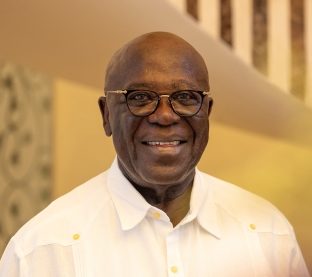

- Engineers And Planners Embody Ghana’s Mining Ambitions – Sir Sam Jonah Says
A country can own the ore beneath its soil and still fail to own the decisions that determine what that ore is worth. That is the tension at the centre of Sir Sam Jonah’s argument on Ghanaian ownership: state control, he says, should not mean shutting out foreign capital or expertise.
It should mean building a decisive Ghanaian voice in the companies that exploit national resources, developing the people who can lead them and giving domestic businesses the confidence to invest.
The argument is grounded in Jonah’s own career. At the Second General I. K. Acheampong Memorial Lecture on November 13, he said he had joined Ashanti Goldfields as an underground miner in 1969 and later rose through a management structure opened to Ghanaians under policies introduced in 1972.
He acknowledged that this made him a beneficiary of Acheampong’s decisions. That personal connection gives the argument force, while also making it important to distinguish his experience from a complete assessment of how the policy affected every company, worker or community.
The historical case he presented begins with a recommendation left dormant. In 1961, a commission under Kweku Boateng proposed that the state should hold at least 51% of mining companies.
Sir Jonah said three successive governments left the recommendation unimplemented until Acheampong’s government returned to it in 1972, taking controlling stakes in Ashanti Goldfields, the Consolidated African Selection Trust and major foreign timber companies.
The significance, in Jonah’s telling, lay not only in the percentage of shares held by the state. It was in the conditions attached to foreign participation. The foreign partners, their capital and expertise remained in place under management agreements.
But head offices were to be located in Accra, the state was to retain the controlling voice, and Ghanaians were to be trained and placed in senior management, with the expectation that leadership would eventually pass to them.
That arrangement offers a more complicated model than a choice between foreign ownership and state ownership. It recognised that extracting resources at scale requires capital, skills and operational expertise, while insisting that these should not eliminate local influence over strategic decisions. It tried to combine external capability with domestic control and professional advancement.
Jonah described the approach as pragmatic, noting that Acheampong had warned against expanding state control faster than the country’s managerial capacity could support.
That warning matters. Ownership without the ability to govern a company can become nominal control: the state may hold shares while lacking the people, information or institutions needed to shape decisions effectively.
This is where the lecture’s central distinction becomes important. “The lesson of Acheampong is not that the state should own everything,” Jonah said. The question is whether a country can secure the decisive voice over its resources without crowding out the investment and expertise needed to develop them.
The state’s shareholding in Ashanti was later sold down during structural adjustment. Jonah said the Republic now holds zero per cent of AngloGold Ashanti, the successor to the company.
He did not argue that taking Ashanti public was wrong. On the contrary, he said the company needed capital and a wider ownership structure to fund ambitious expansion plans. The loss, in his view, was that Ghana surrendered more than a shareholding: it surrendered a principle of control.
That is a distinction worth examining. The case for public ownership is not automatically a case for better public outcomes. A government stake by itself cannot ensure competent management, transparent returns or reinvestment in communities around a mine.
Sir Jonah explicitly acknowledged that local prosperity requires all three. A share certificate does not build a school, improve a road or create a skilled workforce unless the institutions governing the asset convert ownership into accountable decisions and visible public benefits.
But the opposite is also true: a company can operate efficiently and generate export earnings while the country where its resources originate has limited influence over strategic choices. The question is therefore not simply whether the state owns shares.
It is whether Ghana has the authority, capability and governance arrangements to influence the direction of a resource sector and to account publicly for what it receives.
Sr Sam Jonah’s three conditions local decision-making, a controlling voice and training for Ghanaian leadership connect ownership to capability.
His career is central to that point. He said his eventual position at Ashanti and the advancement of Ghanaian engineers, geologists and accountants followed the management pathway introduced under the 1972 policy.
His later leadership of an African operating company listed on the New York Stock Exchange, he argued, rested in part on a foundation laid in Accra.
The implication is broader than the mining sector. If local participation stops at shareholding, the country may own part of an asset without building the expertise to manage it.
If it stops at employment, Ghanaians may work in an industry without influencing investment, procurement or long-term strategy. If it stops at taxes and royalties, the state may collect revenue while leaving other forms of value skills, technology and business development underdeveloped.
Jonah’s argument about Ghanaian industrialists extends this idea from the mines to the wider economy. He said Acheampong’s government sought to build a class of domestic entrepreneurs, drawing inspiration from countries where public support had helped individual business leaders establish major companies.
He cited Joshua Kwabena Siaw’s Tata Brewery, Kofi Owusu’s KOWUS Motors and Neoplan Ghana’s bus production as examples of businesses that emerged during that period.
These examples are not merely a catalogue of firms. They illustrate a view of the state as a builder of conditions for private enterprise. Government support, licensing decisions and access to credit can determine whether local entrepreneurs are allowed to develop beyond small-scale activity.
In Sir Jonah’s account, Acheampong’s government saw Ghanaian business ownership as a national project, not as an incidental outcome of private initiative.
His example of credit for women traders carries a similar point. Jonah said the government extended credit after an aide found that women repaid loans more reliably and used the money productively.
The policy insight is that finance should respond to evidence about who can use it effectively, rather than relying on assumptions about who is creditworthy. It also suggests that domestic enterprise policy can widen participation when it recognises groups whose commercial activity is often overlooked.
Yet the most sobering part of Jonah’s account comes after the businesses were established. He said that following 1979 almost all of the enterprises were destroyed, while their founders were hunted, imprisoned or driven into exile.
He described the consequences not only as the collapse of companies but as a lasting chill on Ghana’s appetite for entrepreneurship.
That is the institutional fault line in the ownership debate. Public support can help create a domestic business class, but it cannot secure that class if the rules change violently when political power changes hands.
An entrepreneur investing in equipment, training workers or building a brand needs confidence that those assets will not become liabilities after a change of government.
Sir Sam Jonah acknowledged that Acheampong failed to create rules and institutions that could protect businesspeople through political transitions. This admission gives his broader argument greater weight: policy success cannot be measured only by what a government builds while in office.
It must also be judged by whether the next government can preserve, improve or fairly restructure what has been built without destroying the people and capabilities behind it.
The lesson is not that all state-backed companies should be protected from competition or scrutiny. It is that enterprise requires predictable rules. A government can champion Ghanaian businesses and still undermine them if it does not safeguard contracts, property and due process.
Domestic ownership is fragile when entrepreneurs must calculate not only market risks but also the political consequences of being associated with a previous administration.
Sir Jonah’s references to practical reforms the expansion of housing estates, the 1974 switch from driving on the left to driving on the right and the start of construction on the Kpong hydroelectric project serve as examples of a state capable of turning decisions into visible, lasting change.
The driving transition, in particular, involved public education and road adjustments, while Kpong was completed after Acheampong left office. The examples reinforce the idea that implementation matters: national direction has value when it produces systems and infrastructure that outlast the leader who initiated them.
They also point to the need for continuity. A project can span several administrations, as Kpong did, without belonging to only one government. The real test is whether public institutions can carry a project through changes in leadership.
The same principle applies to mining agreements, local-content rules and industrial policy. Investors need a reliable framework; citizens need assurance that continuity will not become an excuse for secrecy or unaccountable state influence.
Sir Sam Jonah said recent local-content laws and the emergence of Ghanaian mining contractors and Ghanaian-owned mines would have made Acheampong proud.
In his view, those businesses are descendants of a philosophy that domestic enterprise should be capable of participating at the centre of the mining industry.
But local-content participation should also be measured by the depth of that role: whether Ghanaian firms can compete on quality and scale, acquire new capabilities and move into more complex work over time.
That is the practical meaning of “our wealth, our decisions.” It is not necessarily a demand for the state to run every mine or for foreign investors to leave.
It is a demand that Ghana be able to shape decisions, develop leadership, build capable local suppliers and transparently convert resource wealth into lasting public value.
The challenge is to keep those goals together. State participation without competence can waste capital. Foreign investment without meaningful local capability can leave the country dependent on decisions made elsewhere.
Domestic enterprise without stable institutions can be destroyed before it matures. Ownership, expertise and continuity are not separate ambitions; each depends on the others. Sir Sam Jonah’s most compelling contribution is therefore not a call to restore the past exactly as it was. It is a reminder that Ghana has previously attempted to make foreign capital serve a national strategy while building local leadership and business capacity.
The model was imperfect, and the political system that produced it failed to protect many of its gains.
But the questions it raised remain urgent: who decides how Ghana’s resources are developed, who acquires the expertise to lead, and what institutions ensure the value created survives a change of government?
A country may sell shares to raise capital. It may bring in outside partners to supply technology and experience. It may choose different ownership structures for different sectors. But if it does not preserve the capacity to shape decisions and grow its own enterprises, it risks exchanging control for access and mistaking the presence of investment for the creation of national wealth.

