

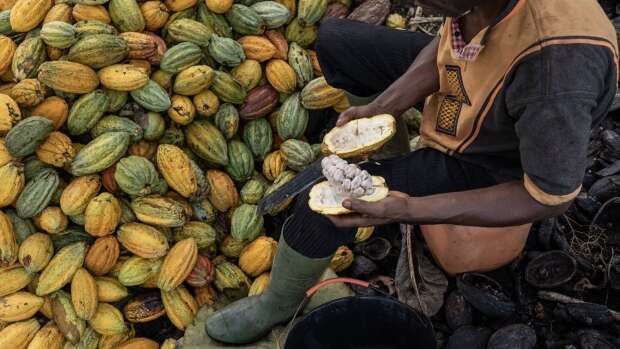

EU, French Partners Push Ghana, Côte d’Ivoire to Accelerate Cocoa Sector Reforms Amid Rising Sustainability Pressures
Ghana and Côte d’Ivoire are coming under renewed pressure from the European Union (EU) and French development partners to fast-track critical reforms in the cocoa sector, as new global sustainability standards threaten the long-term competitiveness of West African beans.
The call was reinforced during a two-day Cocoa4Future feedback workshop in Accra, where researchers shared findings from a five-year EU- and AFD-funded programme analysing agroforestry practices, disease control, certification schemes, farmer welfare and climate resilience in the two major cocoa-producing countries.
EU representatives cautioned that without urgent progress on agroforestry adoption, deforestation control and labour-related safeguards, cocoa from Ghana and Côte d’Ivoire risks facing stiff barriers under the EU’s emerging sustainability regulations and stricter procurement requirements from major buyers.
Research presented at the workshop exposed deep structural vulnerabilities across the cocoa value chain. One key finding showed that most farmers continue to favour low- to no-shade production systems to maximise short-term yields. While profitable in the immediate term, this practice compromises ecological stability, slows forest regeneration and leaves cocoa landscapes increasingly exposed to climate shocks.
On disease control, the studies confirmed that Cocoa Swollen Shoot Virus Disease (CSSVD) remains pervasive, causing yield losses of up to 202 kg per hectare on severely affected farms. Farmer-led approaches, including pruning infected trees or applying chemicals, were found to be largely ineffective. Researchers recommended scaling up rehabilitation efforts, increasing the supply of CSSVD-resistant seedlings and strengthening technical training for early detection and coordinated control.
The project’s assessment of certification schemes showed that Fairtrade and Organic models significantly enhance yields, incomes and rural employment. However, their broader impact on household food security and labour conditions varied, highlighting gaps in cooperative capacity, extension services and farmers’ access to affordable credit. Expanding farmer support networks and diversifying market opportunities were identified as essential to maximise certification benefits.
Across all research themes, the recommendations were consistent: accelerate input distribution, clarify tree tenure and land-use rights, promote hybrid cocoa varieties, incentivise agroforestry, and design structured livelihood support systems—including pensions, credit access and modernised farm equipment.
Development partners concluded that these actions are urgently needed as global markets pivot toward fully traceable, climate-resilient and ethically sourced cocoa. Without decisive reforms, they warned, Ghana and Côte d’Ivoire risk losing market share and bargaining power in a rapidly changing international cocoa economy.

