

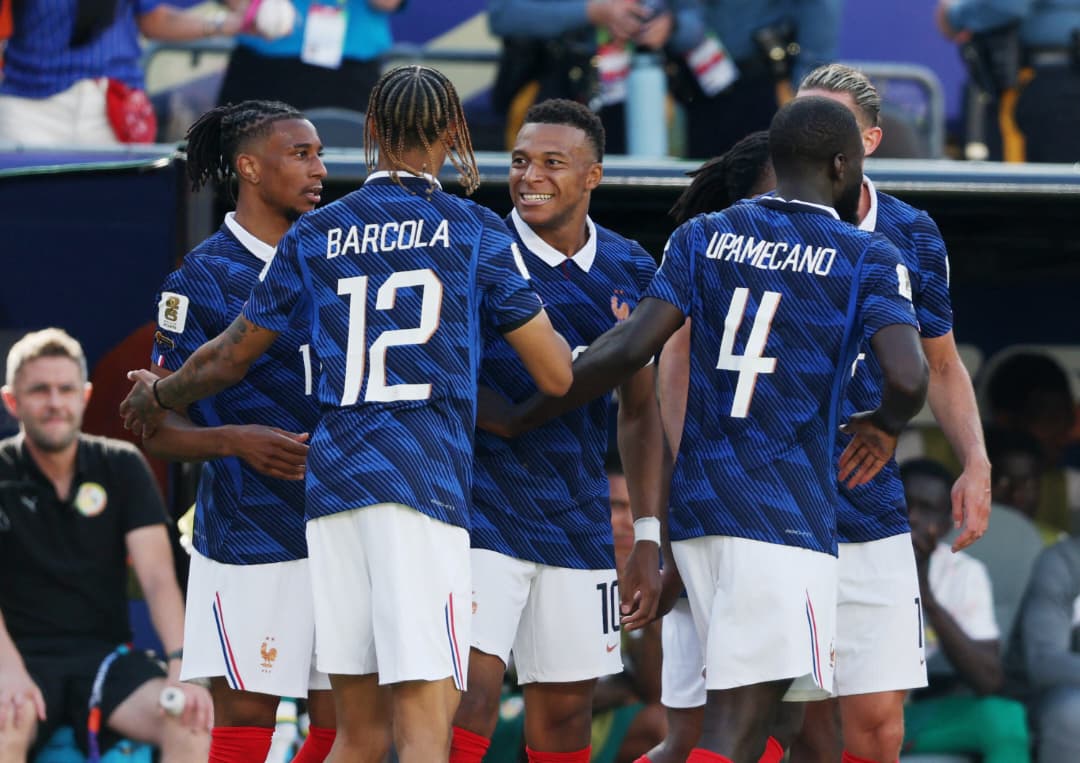

- Europe Tightens Grip on World Cup as African Rise Fails to Break Quarterfinal Dominance
European football has once again underlined its supremacy on the global stage, with six of the eight remaining teams at the 2026 FIFA World Cup coming from the continent despite another tournament filled with upsets, emerging nations and an expanded 48-team format.
As the competition heads into the quarterfinals, traditional powerhouses continue to dictate the race for the trophy, reinforcing the long-held belief that Europe remains the benchmark in world football.
The final eight features France, Spain, England, Belgium, Norway and Switzerland alongside Argentina and Morocco, leaving Europe with a commanding presence in the business end of the tournament.
Although several non-European nations have produced memorable performances, the broader picture suggests that the balance of power has changed far less than many anticipated.
One of the biggest surprises of the tournament has been the early elimination of three of football’s most successful nations Brazil, Germany and Italy. For the first time in World Cup history, none of the three reached the quarterfinals. Yet rather than signalling a shift away from European dominance, their exits have simply opened the door for other European sides to take centre stage.
Norway’s stunning victory over five-time champions Brazil has become one of the defining moments of the tournament, while Belgium also produced a major upset by eliminating Senegal. Those victories highlighted the strength and depth of Europe’s second tier rather than a decline in the continent’s footballing standards.
The expansion of the World Cup from 32 to 48 teams has, however, brought fresh opportunities for African nations.
Nine of Africa’s ten representatives advanced to the knockout stage, underlining the continent’s growing competitiveness and greater depth. Morocco have once again emerged as Africa’s standard-bearers after reaching another quarterfinal, while Cape Verde captured global attention with a remarkable campaign that included a goalless draw against Spain and an impressive performance against defending champions Argentina.
The tournament has also showcased encouraging displays from countries such as DR Congo, Algeria and Tunisia, demonstrating that African football continues to make significant strides.
However, despite those achievements, Africa has yet to produce a semifinal lineup capable of consistently challenging Europe’s elite.
Elsewhere, Asia’s search for a major breakthrough continues.
Japan once again showed promise but failed to advance beyond the knockout stage, while other emerging football nations have struggled to build on previous generations of success. The United States also fell short of expectations despite hosting the tournament, continuing a long wait to establish themselves among the world’s leading football nations.
Another notable feature of this World Cup has been the increasing influence of European football beyond its borders.
Many African and Caribbean squads rely heavily on players developed in European academies. Morocco’s squad, for example, includes a large number of players born and raised across Europe before choosing to represent their ancestral homeland. Similar patterns can be seen in the squads of DR Congo, Algeria, Cape Verde, Tunisia, Curaçao and Haiti.
That trend has strengthened several national teams but also reflects Europe’s unmatched investment in youth development, coaching structures and elite club competitions.
Analysts believe Europe’s continued dominance is built on more than just talent. The continent benefits from world-class academies, highly competitive domestic leagues, the UEFA Nations League and the European Championship, all of which expose players to high-pressure international football long before they reach the World Cup.
In contrast, many other confederations continue to struggle with inconsistent tournament structures and fewer opportunities for elite-level competition.
While the expanded World Cup has succeeded in giving smaller nations a platform to shine and produce memorable stories, the race for football’s biggest prize still appears to revolve around Europe.
With six European nations still standing and several considered favourites to lift the trophy, the 2026 World Cup has reaffirmed that, despite football’s growing global reach, Europe remains the continent setting the standard on the sport’s biggest stage.

