


- EXIM-Backed Northshore Factory Puts Northern Ghana at Centre of Labour-Intensive Manufacturing Push
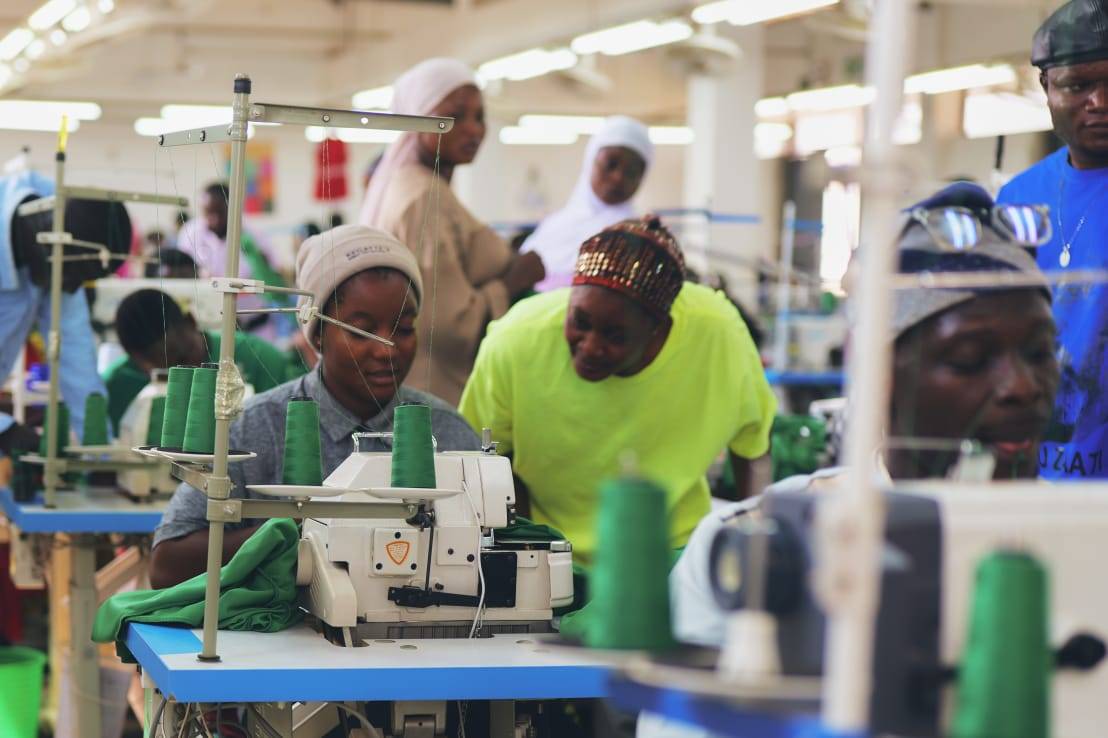
Ghana’s effort to shift more of its growth towards labour-intensive manufacturing has received a major boost with the commissioning of Northshore Apparel Ghana’s factory in Savelugu, a large-scale garment facility expected to employ as many as 10,000 workers when it reaches full operating capacity.
The first phase has already created 3,000 immediate jobs, potentially making the project one of the most significant private-sector employment investments in northern Ghana, where limited industrialisation has historically pushed many young people towards Accra, Kumasi and other southern economic centres in search of work.
Sylvester Adinam Mensah, Chief Executive Officer of the Ghana Export-Import Bank, said the employment potential illustrates the economic case for directing development finance towards productive and export-oriented enterprises.
“Phase One of this facility alone generates 3,000 immediate jobs upon commissioning. When the facility reaches full operational capacity, employment is projected to increase to 10,000 direct jobs,” Mr Mensah said.
“This is what transformative industrial investment looks like.”
Ghana has struggled for years to translate economic growth and an expanding youthful population into sufficient formal-sector employment. Manufacturing investments capable of absorbing thousands of workers therefore offer a potential route towards tackling unemployment while broadening the country’s productive base.
Northshore has already trained more than 2,000 prospective operators, according to GEXIM, providing skills intended to prepare them for permanent employment.
That human-capital investment is particularly important in garment manufacturing, where Ghana must compete with established production hubs in Asia as well as emerging African apparel centres on cost, quality, delivery times and workforce productivity.
The physical scale of the Savelugu facility points to ambitions beyond small-volume garment production.
The factory has 50 sewing lines, a 4,000-square-metre cutting and design centre and about 8,000 square metres of warehouse space for raw materials and finished products.
Supporting infrastructure includes a 500-kilowatt-peak solar installation, an on-site clinic and crèche, disability-friendly washrooms, a biodigester for waste management and a 600,000-litre underground mechanised water facility.
Those investments suggest the project has been designed around the operational requirements of large-scale production and, ultimately, international buyers.
For policymakers, however, the more important test will be whether Northshore develops into the centre of a broader industrial ecosystem rather than remaining an isolated factory.
Mr Mensah expects the project’s economic footprint to extend beyond the production floor through demand for transport, food services, accommodation, maintenance, packaging, logistics and other supporting activities.
“As the factory grows, it will create direct employment on the production floor and generate additional opportunities in transportation, food services and other vending activities, accommodation, maintenance, packaging, logistics and other supporting activities,” he said.
That multiplier effect could be particularly important for Savelugu and surrounding communities.
A factory employing thousands of workers creates concentrated purchasing power that can stimulate local commerce, housing, transport and service businesses, extending the economic impact beyond those directly employed.
The investment could also help alter the geography of Ghanaian industrialisation. Large-scale manufacturing has traditionally been concentrated around Accra, Tema and parts of the Ashanti Region. Building export-oriented industrial capacity in northern Ghana creates an opportunity to distribute productive investment more evenly and potentially reduce some of the economic pressures driving internal migration.
The location could become even more strategically important if Ghana succeeds in rebuilding its domestic cotton industry.
Stronger links between northern cotton production and domestic textile and apparel manufacturing could allow Ghana to retain more value along the production chain while reducing dependence on imported inputs.
“Every young person trained and employed here represents a life given a new stream of life, a new direction,” Mr Mensah said.
“That worker earns an income, supports a family and contributes to the local economy. The worker also pays taxes, contributes to social security and helps produce garments that can earn foreign exchange for Ghana.”
Foreign-exchange generation is central to the project’s broader economic case.
Ghana’s recurring external financing and currency pressures have strengthened the case for diversifying exports beyond traditional commodities such as gold and cocoa.
Garment manufacturing offers one avenue because it combines export earnings with relatively high employment intensity.
GEXIM said the factory has already attracted interest from prospective buyers in the United States and South Africa.
Turning that interest into sustained orders will, however, depend on Northshore’s ability to compete on price, quality and delivery while meeting international labour, environmental and sourcing standards.
The financing structure also highlights the role development institutions can play in industrial policy.
GEXIM partnered with the Investing for Employment facility of Germany’s KfW Development Bank and the project’s promoters to finance and operationalise the factory.
The model illustrates how public, development and private capital can be combined around enterprises expected to generate measurable employment, production and export outcomes.
Moving from 3,000 direct jobs to the projected 10,000 will require sufficient orders to keep production lines operating, dependable electricity, efficient logistics, competitive raw materials, strong management systems and continued workforce development.
The factory will ultimately have to show that its employment ambitions are commercially sustainable rather than dependent indefinitely on policy support or subsidised finance.
That distinction matters because Ghana’s industrial policy will be judged not by the number of factories commissioned but by how many can survive, scale and compete.
If Northshore succeeds, the Savelugu investment could become more than a garment factory.
It could provide evidence that Ghana can combine development finance, domestic entrepreneurship, skills development and international market access to build labour-intensive industries outside its traditional manufacturing centres.
For a country confronting the twin challenge of youth unemployment and an economy still heavily dependent on commodities, that would make the project strategically important.
The real measure of success will be whether Northshore can turn its 10,000-job ambition into a sustainable export business capable of anchoring a wider manufacturing ecosystem in northern Ghana.

