


- FAN Backs African Countries to Redesign Health Financing for Costly Long-Term NCD Care
The Financing Accelerator Network for NCDs is intensifying efforts to help African governments redesign health financing systems around the rising cost of chronic disease, as weak data, fragmented coverage and constrained public budgets threaten progress towards universal health coverage.
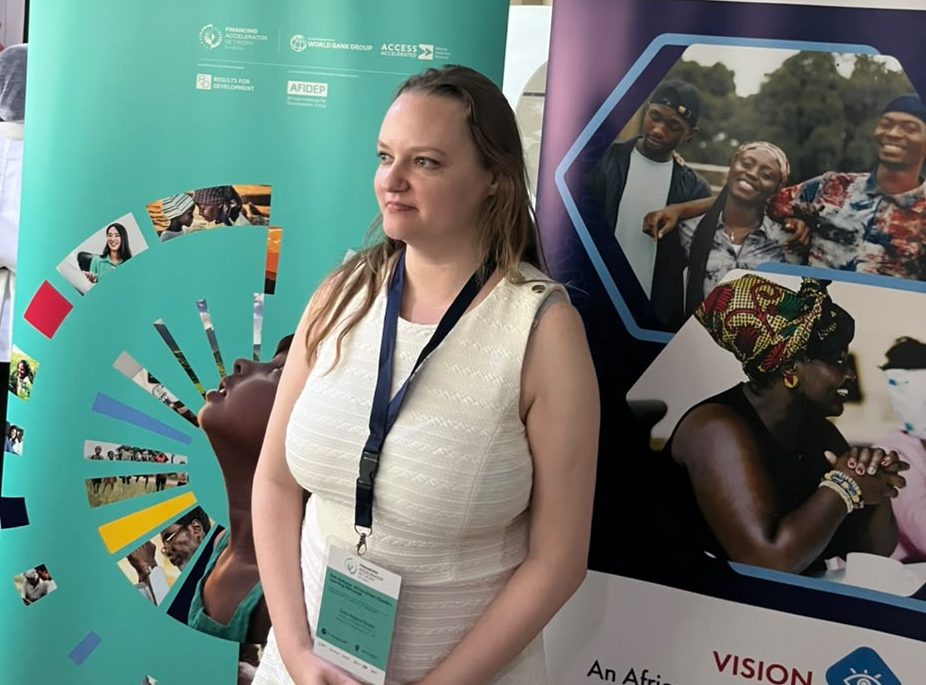
Leah Hughey Ewald, Associate Program Director at Results for Development in the United States, said FAN is bringing countries with comparable challenges together to identify practical financing solutions, test them domestically and share evidence on what works.
Speaking on the sidelines of the Sub-Saharan Africa Cross-Country Learning Workshop in Accra, she said the network deliberately avoids prescribing a single model to countries with different fiscal capacities and health-system structures.
“We bring together countries from similar contexts to help them identify common challenges, brainstorm creative and pragmatic solutions to those challenges, and then go home and test those solutions and come back to the network and share what they learned with the other countries so that we can disseminate that across the region,” she said.
The approach reflects an increasingly difficult reality for health policymakers. Non-communicable diseases such as cancer, cardiovascular disease, diabetes and chronic respiratory conditions often require continuous treatment over many years, creating financial demands that differ substantially from short-term health interventions and placing additional pressure on already stretched public budgets.
“Certain diseases are much more difficult to finance than others because they’re complex, they require a lot of ongoing continuous engagement with the health system, and they’re expensive to treat,” Ms Ewald said. She added that many financing arrangements initially concentrated on interventions that were easier and less expensive to deliver, leaving governments now confronting the harder question of how to finance complex chronic care sustainably.
That challenge has direct implications for universal health coverage. Expanding the number of people nominally covered by health insurance or public programmes will provide limited financial protection if some of the most expensive illnesses remain excluded, inadequately funded or subject to high out-of-pocket expenditure.
The financing question is consequently no longer only about how much governments spend on health, but how limited resources are pooled, prioritised and deployed. For NCDs, that increasingly means balancing prevention and early detection with the substantial recurring costs associated with medicines, specialist care and long-term disease management.
FAN is seeking to bridge the gap between policy design and implementation through catalytic financing. Ms Ewald said participating countries can apply for FAN Fund resources to test promising interventions generated through the cross-country learning process before attempting wider adoption.
“When countries get home, they’re going to have a chance to apply for FAN funds, which is our catalytic seed funding for promising initiatives, to test some of those solutions together,” she said. “We see this learning process as iterative and ongoing,” she added, describing FAN as a long-term learning community rather than a one-off technical assistance programme.
That model could prove important because health financing reforms often struggle at implementation stage even where the underlying policy objective is clear. Small-scale testing can allow governments to identify administrative, fiscal and behavioural obstacles before committing larger amounts of public money to nationwide programmes.
FAN works through country core groups that bring together stakeholders involved in financing and policy decisions. These typically include representatives from ministries of health and finance, civil society organisations, private-sector actors and other locally relevant institutions, creating a forum intended to connect technical health priorities with the fiscal decisions required to fund them.
The participation of finance ministries is particularly important because NCD policy cannot be sustainably expanded through health-sector planning alone. Governments must ultimately decide how much fiscal space can be allocated to chronic disease relative to other health priorities and wider public spending demands.
FAN itself is supported through a technical partnership involving Access Accelerated and the World Bank, with funding provided by Access Accelerated. “Certain members of that group contribute to FAN and pay for these events and our seed funding and all those activities,” Ms Ewald said.
Yet financing is only one part of the problem. Ms Ewald identified weak data as one of the most persistent constraints facing FAN member countries across both Sub-Saharan Africa and Latin America and the Caribbean.
“Data is definitely one of the biggest challenges that we hear from all of our FAN member countries,” she said. “Without data you can’t make effective decisions, you can’t set effective policies, you can’t budget well, you can’t plan well.”
Poor information on disease prevalence, treatment costs, utilisation and existing expenditure makes it difficult for governments to determine which interventions generate the greatest value or how much funding individual services require.
FAN is therefore supporting practical efforts to strengthen evidence, including work in Somalia to develop an NCD register and in Kenya to build a subnational NCD investment case.
Ms Ewald said available data still contain substantial gaps, although there are indications that government health expenditure and NCD coverage are generally increasing across participating countries. The key question is whether those increases are sufficient to keep pace with the growing burden and whether resources are reaching the services capable of preventing severe illness and protecting households from catastrophic expenditure.
FAN’s model also recognises that externally financed pilots cannot provide a permanent solution. Seed funding and technical partnerships may allow countries to test reforms, but sustainable NCD financing will ultimately require chronic disease services to be embedded within domestic budgets, insurance arrangements and broader universal health coverage systems.
For African governments, that transition is becoming increasingly urgent as health systems designed historically around infectious disease, maternal health and acute care confront a growing burden of conditions requiring continuous management.
The Accra workshop therefore represents part of a wider attempt to move NCD financing away from fragmented projects and towards durable national systems. Countries are expected to identify common bottlenecks, test proposed solutions, assess the results and return that evidence to the network for wider learning.
If the model works, FAN could help governments avoid repeatedly designing reforms in isolation and accelerate the adoption of approaches that have already demonstrated value elsewhere. But the ultimate measure of success will be whether learning and pilot financing translate into permanent domestic mechanisms capable of funding chronic care.
Africa’s universal health coverage ambitions will increasingly depend on solving precisely that problem. A health system cannot be considered financially inclusive if the diseases that require the longest and most expensive care remain the least reliably funded.

