

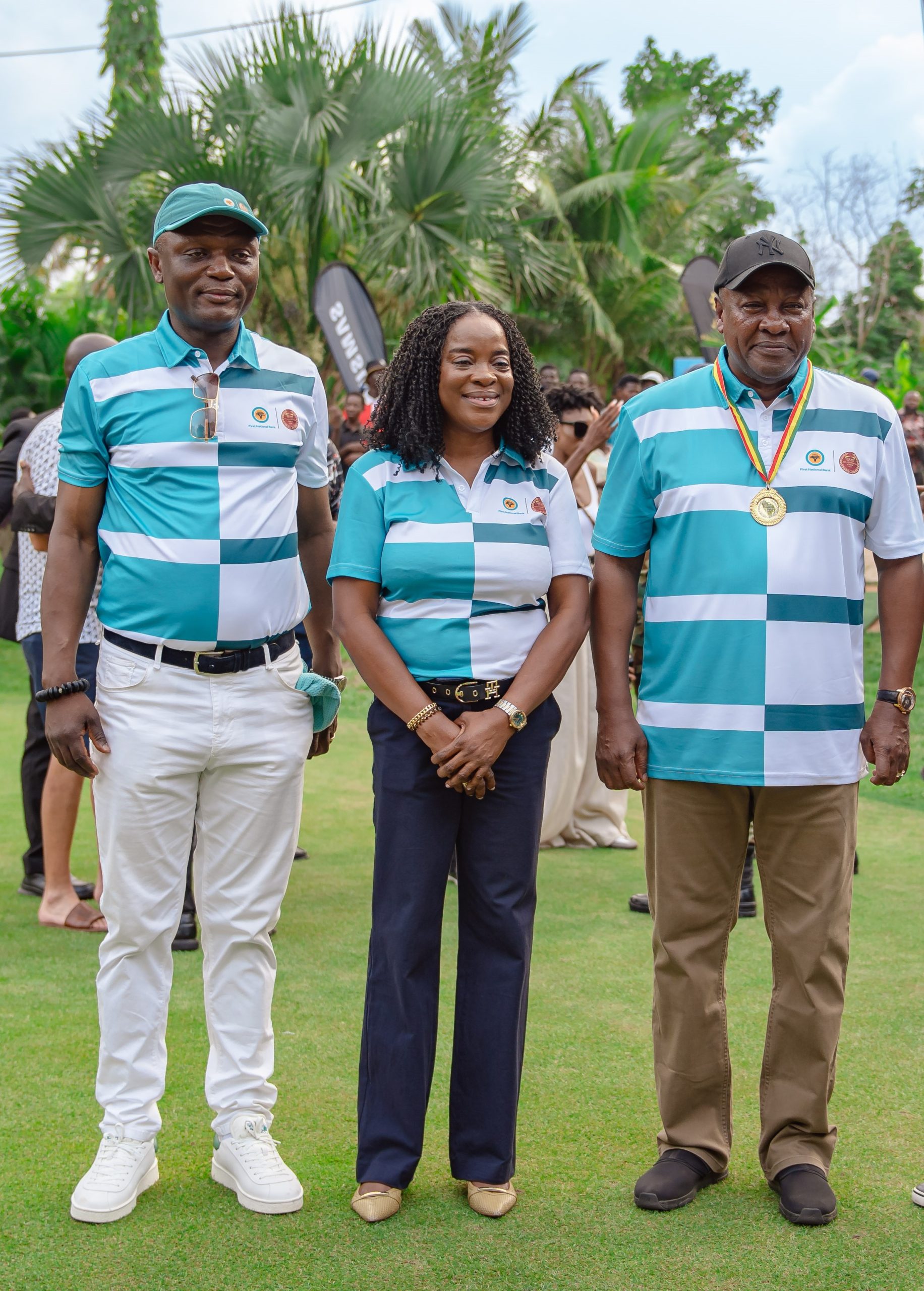

- FNB Ghana Renews Sponsorship of Head of State Invitational Golf Tournament
First National Bank Ghana has renewed its sponsorship of the Head of State Invitational Golf Tournament, positioning the event as more than a sporting contest and placing relationship-building, investment dialogue and economic collaboration at the centre of its corporate support.
The fifth edition of the tournament is scheduled for Saturday, November 21, 2026, at the Achimota Golf Club in Accra. It will be the second consecutive year that FNB Ghana has supported the event.
President John Dramani Mahama has been confirmed as Guest of Honour, while Sports and Recreation Minister Kofi Adams is expected to attend alongside business executives, policymakers, investors, diplomats and golfers from Ghana and abroad.
For FNB Ghana, the sponsorship provides access to a setting in which private-sector leaders and public officials can engage outside formal conference rooms. Golf may provide the immediate attraction, but the tournament’s wider value lies in the networks formed around the competition.
Sylvia Inkoom, chief executive of First National Bank Ghana, said sustainable economic growth required more than well-functioning institutions.
“At First National Bank Ghana, we believe that sustainable economic growth is driven not only by strong institutions but also by meaningful relationships and strategic partnerships,” she said.
“The Head of State Invitational Golf Tournament provides a unique platform that brings together business decision-makers, industry leaders, policymakers, investors, and diplomatic partners whose collective influence helps shape the future of our economy.”
Her argument highlights an often overlooked element of investment promotion. Policies, macroeconomic stability and regulatory certainty determine whether capital can operate successfully, but relationships frequently determine whether investors begin examining an opportunity at all.
The commercial value of such events, however, depends on what happens after the final round. Networking becomes economically meaningful only when conversations develop into partnerships, financing, policy improvements or investment commitments.
Sponsors and organisers should therefore resist measuring success only by attendance, visibility or the status of invited guests. The stronger measure would be whether relationships established through the tournament lead to identifiable opportunities for Ghanaian businesses and the wider economy.
FNB Ghana’s involvement is consistent with the role financial institutions play as intermediaries between capital and enterprise. Banks do more than receive deposits and issue loans. They connect clients with markets, advisers, investors and commercial partners.
A tournament attended by senior executives, diplomats and policymakers provides the bank with an opportunity to strengthen existing relationships and understand emerging financing needs. It may also help international participants identify a financial partner with local market knowledge.
Ms Inkoom said the bank’s continued support reflected its commitment to stronger dialogue, business networks and collaboration.
“We are proud to stand alongside stakeholders who are working to position Ghana as a competitive and attractive destination for business, innovation, and regional integration,” she added.
That ambition is particularly relevant as Ghana seeks to convert improving economic stability into higher private investment and employment. Attracting capital requires persistent engagement with investors who have competing opportunities across Africa and other emerging markets.
The presence of diplomatic representatives could broaden the tournament’s reach beyond Ghana. Francis Andoh, lead manager of the organising team, said President Mahama was expected to invite diplomatic allies from across Africa.
Senior executives from the FirstRand Group and other international guests are also expected to participate, creating opportunities for discussions that cross corporate, national and regional boundaries.
FirstRand’s participation could deepen the event’s financial dimension. As part of a wider African financial group, FNB Ghana operates within networks that can support trade, investment and business connections across markets.
Regional integration depends partly on institutions capable of helping companies move capital, manage payments and understand commercial risks in multiple jurisdictions. Informal engagement among executives and policymakers cannot replace formal systems, but it can help identify where those systems remain difficult to navigate.
The tournament’s organisers expect this year’s event to combine competitive golf with networking and cross-sector engagement. Mr Andoh welcomed the bank’s renewed participation.
“We are excited to have FNB Ghana support us once again,” he said.
Continuity matters in sponsorship. A single appearance may produce publicity, but repeated support allows an institution to build credibility with organisers, participants and stakeholders. FNB Ghana’s second consecutive year suggests that the bank sees strategic value in the platform beyond short-term brand exposure.
The challenge is ensuring that access does not become exclusivity. If the tournament aims to contribute to national development, its commercial opportunities should ultimately extend beyond the senior figures participating on the course.
Ghanaian small and medium-sized enterprises could benefit if the event creates supplier opportunities, business introductions or pathways into larger corporate and regional networks. Young professionals may also gain if organisers connect the tournament to mentorship or enterprise-development initiatives.
There is similarly room to make outcomes more visible. Organisers could track business introductions, investment enquiries and partnerships emerging from successive editions without disclosing confidential discussions.
Such reporting would strengthen the tournament’s claim to be a platform for investment and growth rather than simply a prestigious social occasion. It would also give sponsors a clearer picture of the economic impact associated with their support.
For Ghana, the combination of presidential participation, diplomatic attendance and private-sector leadership offers an opportunity to communicate investment priorities in a less formal environment. Yet credibility will depend on aligning those conversations with consistent policy and reliable execution after the event.
No tournament can compensate for regulatory uncertainty, weak infrastructure or difficult access to finance. It can, however, create relationships through which those problems are identified and possible solutions developed.
FNB Ghana’s sponsorship should therefore be understood as an investment in the networks surrounding economic activity. The bank gains brand visibility and stakeholder access, while the tournament gains financial and institutional support.
The national return will depend on whether that shared platform produces engagement that survives beyond November 21 in practice.
The fifth Head of State Invitational Golf Tournament will be judged immediately by the quality of its competition and participation. Its more enduring test will be whether discussions at Achimota translate into stronger business relationships, investible projects and partnerships that contribute measurably to Ghana’s development.

