

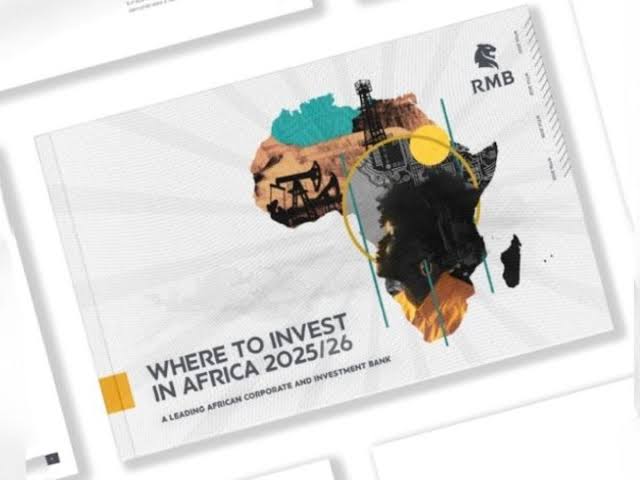

- From Crisis to Rebound: Ghana Must Turn Gold Windfalls into Lasting Growth – RMB Report
Ghana’s recovery from its 2022 economic crisis has outpaced expectations, but a rising dependence on gold is sharpening the question facing policymakers and investors: can a commodity-fuelled rebound become durable, broad-based growth?
The country has regained economic momentum after a period marked by runaway inflation, a steep cedi depreciation, heavy debt and the loss of access to international capital markets. Real gross domestic product grew by 5.8 per cent in 2024 and 6 per cent in 2025, supported by services and an agricultural recovery, the RMB report says.
Growth reached 6.4 per cent year on year in the first quarter of 2026, helped by a stronger performance in industry, including mining and quarrying.
That rebound has coincided with a sharp rise in gold’s contribution to export earnings. Gold bullion generated 62.9 per cent of export revenue in 2025, with its share rising by 7.6 percentage points as prices rallied.
Gold, cocoa beans and crude petroleum together accounted for 79.8 per cent of total exports, up from 78.2 per cent in 2024.
The figures capture both the strength and the vulnerability of Ghana’s recovery. Gold has supported the current-account surplus, helped build foreign reserves and contributed to a stronger cedi.
But when a single commodity generates nearly two-thirds of export revenue, the country’s external position becomes more exposed to changes in global prices, production and investor demand.
The rebound followed a severe loss of confidence. Ghana’s debt-to-GDP ratio reached 92.4 per cent during the crisis, alongside soaring inflation and a currency that lost roughly half its value at its trough in 2022. The government turned to a US$3 billion, 39-month programme with the International Monetary Fund, approved in May 2023, built around fiscal adjustment, debt restructuring and structural reforms.
Progress under the programme has been substantial. The IMF reported that inflation, which exceeded 23 per cent at the start of 2025, fell to 5.4 per cent by December that year.
It reached 3.2 per cent in March 2026, its lowest level since the consumer price index was rebased in 2021 and below the Bank of Ghana’s target band of 8 per cent, plus or minus two percentage points.
Inflation edged up to 5.3 per cent in June as fuel prices rose.
Gross international reserves stood at about US$14.4 billion in mid-May 2026, equivalent to more than five months of import cover. The cedi appreciated by about 41 per cent against the US dollar in 2025, a sharp reversal after the crisis-era losses.
But that appreciation partly unwound: the currency depreciated by around 8 per cent between January and May 2026 as corporate demand for dollars, dividend repatriation and higher oil prices put pressure on the exchange rate.
The reversal underscores why the Bank of Ghana has cautioned against treating currency strength as a policy objective in itself. Governor Johnson Asiama said “stability does not mean fixing the cedi”.
The task, he argued, is to secure sustainable stability rather than short-term gains a challenge that will require turning gold-related foreign-exchange inflows into broader competitiveness.
Debt restructuring has been central to restoring confidence. Ghana completed a Eurobond exchange in October 2024 and signed a memorandum of understanding with its official creditors under the G20 Common Framework in January 2025. It subsequently concluded bilateral debt-relief agreements with several creditors.
IMF programme reviews recorded progress in restructuring and improvements in the fiscal position, while negotiations with some remaining external commercial creditors were still ongoing.
Fiscal performance will remain a key measure of whether the recovery is durable. The IMF’s fifth review said the primary balance the budget balance before interest payments recorded a surplus of 1.1 per cent of GDP in the first eight months of 2025, and authorities were on track to meet a full-year target of 1.5 per cent.
Yet the IMF also warned that pre-election spending in late 2024 had led to a large build-up of payables. It identified continued fiscal adjustment, energy-sector reform and the clearance of related arrears as important to containing risks.
The programme’s institutional role is also changing. The IMF completed its sixth and final review of the Extended Credit Facility arrangement in July 2026, bringing total disbursements to about US$3 billion.
Ghana then requested a successor 36-month Policy Coordination Instrument, a non-financing framework intended to support policy monitoring. The transition marks a shift from crisis financing towards sustaining reforms and credibility without further IMF lending under the completed arrangement.
The government has framed its wider economic agenda as an “economic reset”. Finance Minister Cassiel Ato Forson told Parliament: “Ghana is back, strong, credible, and open for business,” adding that “the story of Ghana is no longer one of crisis but of recovery and renewal.”
The scale of that ambition will be tested by whether investment reaches productive businesses and creates jobs beyond commodity extraction.
The 24-Hour Economy and Accelerated Export Development Programme, launched in July 2025, aims to move the economy from exporting raw materials towards value-added production.
It envisages round-the-clock activity across manufacturing, logistics, production and tourism, led by the private sector. Its success, the report notes, depends on the government’s ability to generate revenue and sustain the macroeconomic conditions investors need.
A second initiative, the AgriConnect Compact launched in June 2026 with the World Bank, the International Fund for Agricultural Development and the African Development Bank, targets more than 2.6 million jobs and lower food imports across cocoa, palm oil, rice, maize and poultry value chains.
Those goals address two structural weaknesses: reliance on imported food and limited domestic processing of agricultural goods. They remain targets, however, and their impact will depend on investment, execution and market access.
There are signs of renewed activity in domestic capital markets. First Atlantic Bank listed on the Ghana Stock Exchange in December 2025. In June 2026, Kasapreko’s initial public offering attracted bids of GH¢1.72 billion, about US$153 million, and was 146 per cent oversubscribed.
The report describes the result as evidence of broadening domestic equity participation. But a successful offering is not by itself proof that companies across the economy can raise affordable capital or expand production.
Ghana’s near-term outlook is encouraging, with the government maintaining a 2026 growth target of at least 4.8 per cent. The African Development Bank projected 5 per cent growth and the World Bank 5.1 per cent.
The IMF’s medium-term projection is around 5 per cent, while warning that fiscal discipline, energy-sector reform and debt management must continue.
For investors, the country’s recovery has improved the case for Ghanaian assets, but the quality of that opportunity depends on what comes next. Gold has provided foreign exchange and breathing room.
The harder task is using that space to widen exports, deepen domestic production and prevent fiscal pressures from returning.
Ghana has moved from emergency stabilisation towards a new growth strategy. Whether that becomes a lasting revival will depend on how much of the gold windfall is converted into economic capacity that can endure when the commodity cycle turns.

