


- From Mobile Money Access to Financial Security: Ghana Sets a New Inclusion Agenda
Ghana is preparing to shift its financial inclusion policy from expanding access to accounts towards improving how households use financial services to manage money, withstand shocks and plan for the future.
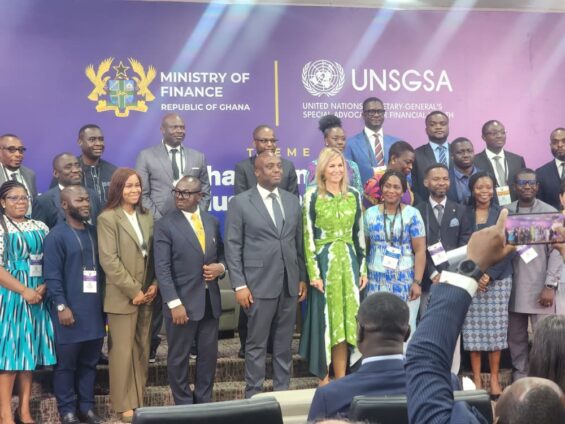
The Ministry of Finance has inaugurated a technical working committee to develop the country’s second National Financial Inclusion and Development Strategy, covering 2027 to 2031. The strategy is expected to be launched in the first half of 2027.
It will build on wider access to bank and mobile money accounts, while placing financial health, consumer protection and resilience at the centre of the next phase.
The shift is backed by a striking gap in the available indicators. The World Bank’s Global Findex 2025 reports that 81 per cent of Ghanaian adults had a financial account in 2024.
Yet Ghana’s 2021 Demand Side Survey found that just 22 per cent of adults were financially healthy. In that survey, 44 per cent were coping and 34 per cent were financially vulnerable.
The two figures should not be treated as a direct comparison of the same population at the same moment: they come from different surveys and different years. But together they underscore the policy question confronting the committee: how can access to an account translate into greater financial security?
“We must now become better at making accounts improve lives,” Deputy Finance Minister Thomas Ampem Nyarko said, capturing the government’s stated ambition.
The task is to turn that ambition into a strategy with clear targets, credible measurement and products that respond to the financial pressures people actually face.
Financial health is broader than account ownership or the ability to send and receive money digitally. Queen Máxima of the Netherlands, the UN Secretary-General’s Special Advocate for Financial Health, described financial inclusion as “a means to an end”.
She identified that end as people being able to manage day-to-day finances, prepare for unexpected costs, pursue financial goals and feel more confident about their financial future.
That definition gives the new strategy a more demanding test than counting newly opened accounts. A person may have an active mobile money wallet yet lack savings for a medical emergency, insurance against a failed harvest or a pension for old age.
A small business may receive digital payments but still struggle to access affordable, responsible credit for equipment or expansion.
The government says the strategy will prioritise responsible financial services, digital innovation, consumer protection, financial literacy and resilience, particularly for women, young people, farmers, informal sector workers and small businesses.
It also plans a Financial Inclusion Council to improve coordination and accountability, alongside a financial health framework to measure household well-being.
The implementation challenge will be to make those priorities specific. Financial literacy, for example, cannot carry the whole burden if incomes are irregular, financial products are costly or people cannot access appropriate insurance and credit.
The strategy will need to distinguish between problems that require information, those that require better-designed products and those that demand stronger consumer safeguards.
The survey’s detail suggests why a refreshed baseline matters. In 2021, 48 per cent of adults scored low on building and maintaining reserves, while 61.7 per cent scored low on managing risks.
Those findings point to practical gaps in savings and protection, but they are now several years old. As the new strategy begins in 2027, decision-makers will need updated evidence to establish whether conditions have changed and which groups remain most exposed.
The proposed financial health framework should therefore set measurable outcomes and publish progress regularly. It could track whether people can meet essential expenses, build emergency savings, access suitable insurance and pensions, use credit responsibly and recover from shocks.
The exact indicators will require careful design, but the principle is clear: account ownership and transaction volumes alone cannot show whether people are becoming more financially secure.
The council’s effectiveness will depend on whether it can coordinate regulators, financial institutions, government agencies and development partners around shared responsibilities. Financial health spans banking, digital payments, insurance, pensions and credit.
Without agreed targets and public reporting, a coordinating body risks becoming another forum without the authority or accountability to change outcomes.
Financial institutions also face a shift in how success is assessed. The strategy calls for them to understand customers’ needs and develop useful products, including savings that help people set money aside regularly.
But product innovation should be judged by whether it is affordable, transparent and appropriate not simply by the number of customers enrolled or accounts opened.
The design must also address risks that accompany digital expansion. As more people use digital financial services, effective consumer protection, clear complaint channels and safeguards against fraud become part of financial health.
A strategy that celebrates access without monitoring these risks could increase exposure even as participation grows.
The 2027–2031 plan is still being developed, so its final targets and policy commitments are not yet settled. The committee’s work will determine whether the change in language produces a meaningful change in policy.
Ghana has made substantial progress in connecting adults to financial services. Its next test is to show, with current data, that those services help households withstand setbacks and build security over time.

