


- From Stabilisation to Inclusion: Northern Ghana Exposes Unfinished Business of Economic Recovery
Ghana’s improving macroeconomic indicators are beginning to strengthen the country’s recovery narrative, but persistent poverty across the Northern, Upper East and Upper West regions is exposing a harder reality: economic stabilisation does not automatically translate into better livelihoods for households.
The World Bank’s assessment that poverty remains significantly higher across northern Ghana highlights one of the country’s most enduring development challenges — the benefits of growth, infrastructure and formal economic activity remain unevenly distributed.
That makes the northern poverty divide more than a social-policy concern. It is a test of whether Ghana can convert macroeconomic recovery into geographically inclusive economic transformation.
The critical question is no longer simply whether the economy is growing. It is where growth is occurring, who is benefiting from it and whether it is creating durable sources of income in communities that have historically remained outside Ghana’s strongest centres of economic activity.
Accra, Kumasi and other southern commercial centres benefit from relatively deeper markets, denser infrastructure, larger concentrations of businesses and stronger access to formal employment.
Much of northern Ghana remains considerably more dependent on agriculture, informal employment and climate-sensitive livelihoods. That structural difference matters because poverty is rarely caused by low income alone. It is also shaped by limited access to productive assets, finance, infrastructure, technology, education and markets.
A household earning very little has less capacity to invest in improved seeds, irrigation, machinery, education or a small business. Low investment constrains productivity. Low productivity limits income.
And weak income leaves the household unable to make the investments required to escape poverty. That is how deprivation becomes structural rather than temporary. For Ghana, this means the response cannot consist only of expanding welfare programmes.
Social protection, school feeding, livelihood support and targeted cash transfers remain essential in preventing vulnerable households from falling into extreme deprivation.
But welfare can cushion poverty without necessarily transforming the economic conditions that produce it. The more difficult policy challenge is moving from poverty management to poverty transformation.
For northern Ghana, that requires a much stronger economic infrastructure around agriculture.
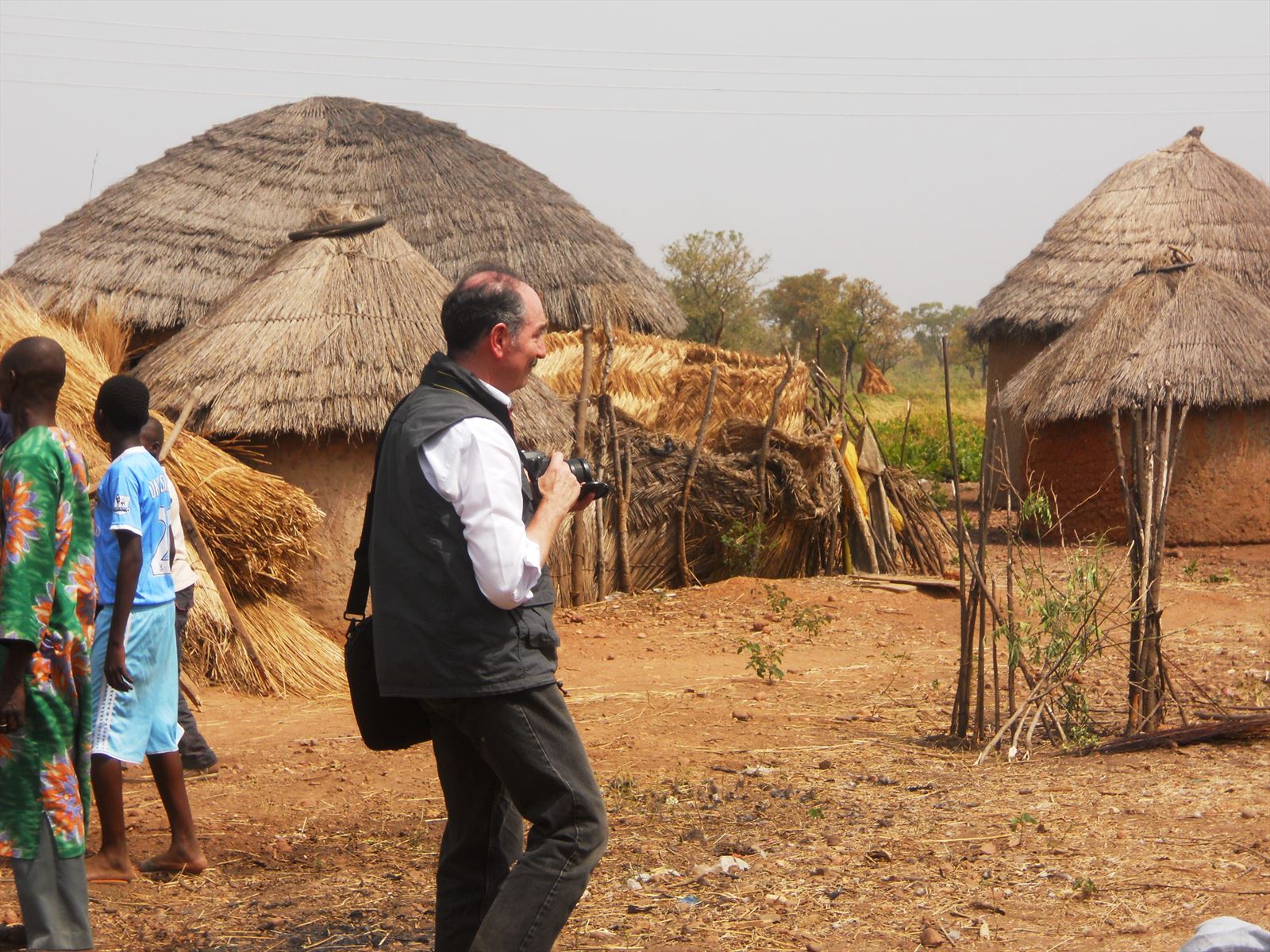
The region possesses significant agricultural land and a large youthful population, yet farmers continue to confront unreliable rainfall, limited irrigation, weak storage systems, poor rural roads, inadequate processing capacity and difficulties accessing finance and larger markets.
This creates one of Ghana’s most striking development contradictions. A region with substantial productive potential can remain among the poorest parts of the country because its economic system captures too little of the value generated from what it produces.
A farmer who sells an unprocessed commodity receives only a fraction of the value ultimately created once that commodity is processed, packaged, transported and sold. Bringing more agro-processing closer to production centres could therefore have a deeper poverty-reduction impact than isolated interventions.
Cassava, maize, rice, shea, livestock, vegetables and other agricultural products become significantly more economically valuable when linked to processing, storage, logistics and organised markets. That is where industrial policy and poverty reduction should intersect.
- Infrastructure is equally important.
- A processing factory without reliable electricity will struggle to remain competitive.
- A farmer without irrigation remains exposed to changing rainfall patterns.
- A productive district without good road connections cannot easily move goods to market.
- A young entrepreneur without affordable finance cannot scale a viable business.
The lesson is that transformative development requires ecosystems rather than standalone projects.
Employment presents another major challenge. Northern Ghana has a youthful population, but economic opportunities outside agriculture remain relatively limited.
That helps explain sustained migration towards Accra, Kumasi and other southern cities, where young people search for jobs and incomes unavailable in their home communities. Labour movement is part of economic development. The problem arises when migration becomes an economic necessity rather than a genuine choice.
A more balanced Ghanaian economy would allow young people in Tamale, Wa, Bolgatanga and smaller northern towns to choose whether to remain, migrate or return because viable employment and business opportunities exist in all regions.
Government can build roads, provide electricity, develop industrial parks and create incentives.
But sustained employment growth ultimately depends heavily on businesses capable of producing competitively, expanding markets and hiring workers. Northern Ghana should therefore increasingly be viewed not as a recipient of state assistance but as an underdeveloped economic frontier.
Its agricultural base, youthful population, proximity to Sahelian markets and expanding urban centres create significant commercial potential. The challenge is creating the conditions required to convert that potential into investment. This is where Ghana’s economic recovery narrative faces its most important test.
Inflation can decline without immediately reversing the erosion in purchasing power experienced during periods of high prices. Fiscal deficits can improve while particular communities remain without jobs, irrigation, decent roads or basic services.
Macroeconomic stabilisation is therefore necessary, but it is not sufficient. For lower-income households, especially those spending a large share of earnings on food, transportation, housing and energy, improvements in national indicators may take considerable time to translate into visible economic relief. That gap between statistical recovery and household experience can also become politically significant.
Governments are often judged less by the direction of GDP or public debt than by whether citizens believe their economic circumstances are improving. The continued concentration of poverty in northern Ghana therefore has implications for social cohesion as well as economic policy.
- There is also a fiscal cost to allowing regional deprivation to persist.
- Poor educational outcomes weaken the future labour force.
- Low incomes narrow the tax base.
- Weak infrastructure discourages investment.
- Limited employment opportunities increase migration pressures.
- Low agricultural productivity contributes to food insecurity and import dependence.
- Northern poverty is therefore not simply a northern problem.
It constrains Ghana’s overall economic potential. Closing that gap should consequently be understood as an investment in national productivity rather than merely a redistribution programme.
The World Bank’s assessment should push policymakers towards a more geographically targeted model of development in which public investment, infrastructure and incentives are deliberately directed towards areas where market failures and development deficits are greatest.
A cedi invested in irrigation capable of supporting several production cycles could have a stronger long-term income effect than repeated emergency support after crop failure. A road connecting agricultural communities to processing centres can lower transport costs for years.
Digital infrastructure can connect northern entrepreneurs to markets far beyond their districts. These are the kinds of investments capable of changing the geography of poverty. The private sector should also be encouraged to see northern Ghana through a commercial rather than charitable lens.
Investment opportunities in agro-processing, renewable energy, logistics, tourism, housing, technology, education and financial services can generate returns while simultaneously widening economic opportunity.
Government’s role should be to reduce the structural disadvantages that make those investments harder or more expensive than equivalent projects elsewhere.
Ultimately, the success of Ghana’s recovery cannot be judged solely in Accra. It must also be tested against the experience of a farmer in the Northern Region, a trader in Bolgatanga, a graduate in Wa and a young entrepreneur trying to build a business in Tamale. If national growth improves while their incomes, productivity and opportunities remain largely unchanged, recovery will remain incomplete.
Ghana’s next economic challenge is therefore moving from stabilisation to productive inclusion directing capital, infrastructure and investment towards the places where the development deficit is deepest. The northern poverty gap has survived successive governments and multiple economic cycles.
Closing it will require something more durable than another programme or political promise. It will require treating northern Ghana as an integral part of the country’s growth strategy. Until the geography of opportunity begins to change alongside the national economic numbers, Ghana’s recovery story will remain only partially told.

