


- Fuel Second Window Splits as Motorists Gain and LPG Consumers Face Steep Increase
Ghanaian motorists could receive modest relief at the pumps from October 16, but an expected 18.5 per cent increase in liquefied petroleum gas prices threatens to transfer the pressure from transport budgets to household kitchens and small businesses.
The Chamber of Oil Marketing Companies projects petrol prices will decline by almost 2 per cent to GH¢17.67 per litre during the next pricing window, while diesel could fall by 3.32 per cent to GH¢19.30 per litre.
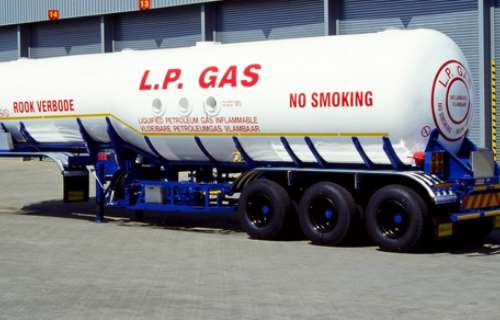
LPG is moving sharply in the opposite direction. Its price is expected to rise to GH¢20.60 per kilogram, creating a divergence in a market where all three products remain exposed to international prices, foreign-exchange movements, taxes and domestic policy interventions.
The contrasting projections underline the uneven way Ghana’s energy shock is being distributed. Motorists and commercial transport operators may benefit from slightly lower petrol and diesel costs, while households, restaurants, food vendors and other LPG-dependent enterprises absorb a substantial increase.
For a household purchasing a 14.5-kilogram cylinder, the projected price implies a refill cost approaching GH¢299 before any distributor-level variations. That would deepen pressure on families whose incomes have not recovered at the same pace as headline inflation has eased.
The increase could also undermine Ghana’s effort to persuade households to move away from charcoal and firewood towards cleaner cooking. LPG adoption depends not merely on access to cylinders and filling stations but on whether consumers can afford to refill them consistently.
When prices rise sharply, lower-income households often respond by reducing usage, partially refilling cylinders or returning to biomass fuels. The economic consequence then becomes an environmental and public-health problem for women and children who are more exposed to household air pollution.
The expected decline in petrol and diesel, meanwhile, should be interpreted cautiously. A reduction of almost 2 per cent in petrol and 3.32 per cent in diesel provides relief, but it does not reverse the broader rise in energy costs or automatically produce equivalent reductions in transport fares and consumer prices.
Commercial drivers typically adjust fares after sustained increases rather than every pricing window. Once fares have risen, marginal fuel-price declines rarely trigger immediate reversals because operators continue to face higher costs for spare parts, insurance, maintenance and vehicle financing.
Diesel’s projected fall is economically important because it powers freight vehicles, industrial equipment, generators and parts of Ghana’s agricultural and construction economy. Keeping its retail price below GH¢20 per litre could limit cost pressures across supply chains.
The October outlook also reveals the influence of government intervention on what consumers pay. During the October 1 window, most oil marketing companies maintained prices after a GH¢2 diesel levy and an arrangement under which Tema Oil Refinery and Sentuo Oil supplied refined products at previous prices.
COMAC attributed the latest adjustments to international-market developments and subsidy measures. Average crude oil prices increased by 2.03 per cent to US$126.73 per barrel for the October 16 window amid renewed concerns about global supplies.
The crude increase would place upward pressure on refined-product prices. The fact that petrol and diesel are expected to decline suggests that government support, product-specific market movements or other pricing variables are offsetting some of that pressure.
That cushion raises an important fiscal question. Subsidies can protect consumers and slow the transmission of global shocks into inflation, but their cost must eventually be carried by the budget, petroleum-sector institutions or another category of energy consumer.
If support is poorly targeted or maintained indefinitely, it can create payment arrears, distort competition and obscure the true cost of imported fuel. The immediate political benefit of stable pump prices must therefore be weighed against the medium-term cost to public finances and sector liquidity.
The LPG increase creates an equity concern because it appears to leave cooking-gas consumers with less protection than diesel users. Government may reasonably prioritise diesel because of its importance to transport and production, but cleaner cooking is also a public policy objective with environmental, health and social benefits.
Allowing LPG prices to jump by 18.5 per cent while subsidising other fuels risks sending contradictory signals. Ghana would be encouraging households to adopt LPG while making continued use considerably more difficult for consumers most sensitive to price changes.
Policymakers must therefore determine whether the divergence is temporary or evidence of a structural weakness in the pricing framework. A one-window adjustment may be absorbed, but repeated LPG increases could reverse adoption gains and expand dependence on charcoal.
The inflation implications are mixed. Lower petrol and diesel prices may ease direct transport and logistics pressures, while the LPG increase could raise food-production costs for restaurants, bakeries, schools, hospitals and street vendors.
Because prepared food carries a significant weight in household expenditure, businesses may pass part of the additional cooking cost to customers. The net inflation effect will depend on how widely LPG is used and whether the diesel decline translates into lower distribution expenses.
Competition among oil marketing companies may also influence the final prices. COMAC’s projections represent an industry outlook rather than a compulsory retail schedule, and individual companies may absorb portions of the adjustment, offer discounts or delay changes depending on inventory costs and commercial strategy.
The picture is therefore one of selective relief rather than a broad reduction in Ghana’s energy burden. Petrol and diesel users may gain modest breathing space, but LPG consumers face a shock large enough to alter household and business decisions.
For government, the challenge is to make temporary interventions consistent with longer-term energy objectives. Protecting transport and production matters, but so do clean cooking, fiscal transparency and the financial health of the downstream petroleum industry.
The October 16 window will be judged not only by whether petrol falls to GH¢17.67 and diesel to GH¢19.30. Its deeper test is whether Ghana can shield consumers from extraordinary global volatility without shifting disproportionate costs onto the households least financially equipped to carry them.
Cheaper fuel for vehicles will be welcomed. But if cooking gas becomes unaffordable, the relief at the pump may simply reappear as a heavier bill in the kitchen.

