


- GH¢255bn Fixed-Income Rebound Opens New Window for Corporate Financing in Ghana
Ghana’s fixed-income market has staged a striking recovery from the disruption caused by the country’s domestic debt restructuring, with the value of securities traded reaching GH¢255 billion by the end of July 2026, already exceeding the GH¢245 billion recorded for the whole of 2025.
The rebound provides one of the clearest signs yet that liquidity and investor activity are returning to a market that suffered a dramatic contraction following the Domestic Debt Exchange Programme, although the larger test will be whether that recovery can now be converted into meaningful financing for Ghanaian businesses rather than remaining concentrated in sovereign debt.
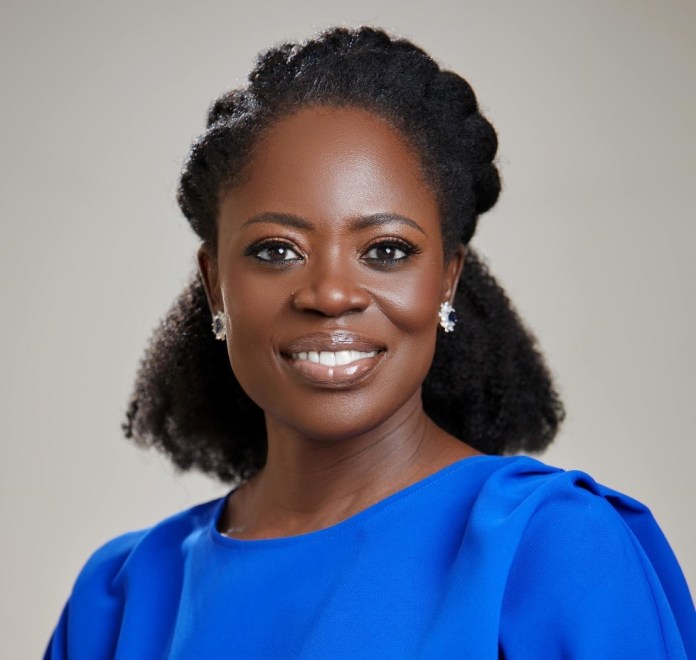
Abena Amoah, Managing Director of the Ghana Stock Exchange, disclosed the figures on Monday during the admission of PetroSol Platinum Energy PLC’s GH¢200 million Note Programme Series 1 and 2 onto the Ghana Fixed Income Market.
“The market has been very resilient, ladies and gentlemen,” Ms Amoah said.
Fixed-income trading reached GH¢283 billion in 2022 before collapsing to GH¢98 billion in 2023 as the debt restructuring disrupted market activity and fundamentally altered investors’ relationship with government securities.
Turnover subsequently recovered to GH¢174 billion in 2024 and GH¢245 billion in 2025.
“And I’m very pleased to share that as at the end of July 2026, we have surpassed all the volume we created in 2025, and we are at GH¢255 billion volume of securities traded on the fixed-income market,” Ms Amoah said.
While Ms Amoah referred to “volume”, the figures are monetary values and therefore represent traded value or turnover, rather than the number of securities exchanged.
From the GH¢98 billion trough in 2023, fixed-income turnover has increased by more than two-and-a-half times, suggesting that investors are gradually returning to a market whose liquidity was severely impaired by the restructuring.
But recovery in trading activity does not necessarily mean the scars of the DDEP have disappeared.
Investor confidence in sovereign debt was fundamentally tested when holders were required to exchange existing securities for instruments with longer maturities and altered payment structures. Rebuilding a functioning secondary market after such an event requires not merely transactions, but renewed confidence that securities can be priced, bought and sold with reasonable predictability.
The more consequential question, however, is what Ghana does with that recovering liquidity.
If most of the GH¢255 billion continues to circulate predominantly through government securities, the fixed-income market may become deeper without materially broadening access to capital for private enterprise.
That is why PetroSol’s GH¢200 million programme carries significance beyond the company itself.
The transaction provides another test of whether established Ghanaian businesses can increasingly access domestic institutional savings through market-based debt rather than relying overwhelmingly on commercial bank financing.
“Your note programme, substantially oversubscribed, arrives at the right time,” Ms Amoah told PetroSol executives.
“Proven Ghanaian businesses can look to Ghana’s capital markets to finance their ambitions, while opening new avenues for investors to share in your growth.”
It suggests that investor appetite exists for corporate paper where the issuer, pricing and risk profile are sufficiently attractive.
That could become increasingly relevant as Ghana moves into a lower-interest-rate environment and pension funds, insurers and asset managers search for alternatives to government securities that previously offered unusually high nominal yields.
For years, the economics of investment tilted heavily towards the sovereign.
When short-term government paper offered exceptionally attractive returns, corporate borrowers had to pay substantially more to compensate investors for additional credit and liquidity risk.
Corporate issuers with strong cash flows, credible governance and transparent financial reporting may increasingly be able to raise longer-term capital at commercially viable rates.
According to Ms Amoah, 50 companies have raised a cumulative GH¢24 billion since Ghana’s corporate bond market was established in 2015.
“Whilst we are proud of this progress, we recognise that there is considerable room for growth,” she said.
Her message to companies was direct: “The market is open. The capital is here.”
GH¢255 billion worth of fixed-income securities changed hands in only seven months of 2026, yet cumulative corporate issuance since 2015 stands at GH¢24 billion.
That does not mean the two figures are directly comparable one measures secondary-market trading while the other represents cumulative primary-market fundraising but it demonstrates how much larger Ghana’s fixed-income ecosystem is than the corporate debt segment sitting inside it.
A deeper corporate bond market would give companies access to longer-tenor financing, reduce dependence on bank balance sheets and create more instruments for pension funds and insurers seeking assets matched to their long-term liabilities.
It could also allow Ghana to mobilise more domestic savings for factories, energy, housing, logistics and infrastructure rather than repeatedly depending on external borrowing.
Ms Amoah described the fixed-income market as an important component of the wider capital market and argued that both debt and equity markets create mechanisms through which savings can be transformed into corporate expansion and investor wealth.
She said companies listed on the Ghana Stock Exchange had distributed approximately GH¢37 billion in dividends over the past 12 months, while investors in corporate bonds and commercial paper received almost GH¢800 million in coupon payments.
“It shows the importance of our capital market as an important tool to wealth generation,” she said.
“And these monies paid back come back into the market to invest in other investor-ready companies.”
Capital markets become self-reinforcing when returns generated by established companies provide investors with cash that can subsequently finance other issuers.
But the process depends on the quality of the companies entering the market. An increase in corporate issuance without strong disclosure, credible governance and repayment capacity could simply move risk from banks to pensioners and other investors. The next stage of Ghana’s debt-market development must therefore be about quality as much as quantity.
Ms Amoah said financing options now include equities, conventional corporate bonds, commercial paper and green and sustainable bonds.
The exchange’s recently introduced environmental, social and governance reporting framework is intended to support greater issuance of sustainability-linked instruments.
“We are ready to receive green and sustainable bonds on the market,” she said.
That could become increasingly important as Ghana confronts large financing requirements in energy, transport, climate resilience and other infrastructure while government fiscal space remains constrained.
Mobilising institutional capital into commercially viable sustainable projects could help bridge part of that funding gap. Ghana needs a consistent pipeline of credible issuers willing to accept the transparency and governance demands that accompany public-market financing.
Ms Amoah acknowledged the effort required to bring companies to market, recalling repeatedly following up with PetroSol chief executive Michael Bozumbil as the transaction progressed.
“Michael, you know how many times I harassed you, WhatsApp messages late at night,” she said.
Many Ghanaian businesses still regard capital-market financing as more complicated than bank borrowing because it requires disclosure, documentation, ratings, governance processes and continuing obligations to investors.
Those requirements are precisely what make public-market capital more transparent but they can also discourage companies accustomed to private financing relationships.
PetroSol therefore matters partly because it provides another demonstration that a Ghanaian-owned company can navigate those requirements and attract institutional capital.
“Today PetroSol has not only raised capital,” Ms Amoah said. “It has also demonstrated what is possible.”
For the Ghana Stock Exchange, that is the message it will want more companies to absorb. The fixed-income market has already demonstrated that it can recover trading activity after one of the most disruptive episodes in Ghana’s financial history. It must prove that the liquidity returning to the market can finance more than government debt.
If Ghana can connect its large pools of pension, insurance and investment savings to credible corporate issuers, the recovery from GH¢98 billion in turnover in 2023 to GH¢255 billion in just seven months of 2026 could become more than a story about a debt market returning to life. It could mark the beginning of a broader shift in how Ghanaian companies finance growth.
That will be the real test of the rebound: not how much fixed-income paper changes hands, but how much of that capital ultimately finds its way into productive businesses capable of creating jobs, expanding capacity and generating the returns that keep investors coming back.

