


- Ghana Eyes Fuel Self-Sufficiency as TOR, Sentuo Expand, but Dollar and Oil Risks Remain
Ghana’s expanding petroleum refining industry could materially strengthen energy security and reduce dependence on imported finished fuels, but it will not automatically protect motorists and businesses from global price shocks, according to the Centre for Environmental Management and Sustainable Energy.
Benjamin Nsiah, Executive Director of CEMSE, estimates that Ghana’s existing refineries, even if they operated at full capacity, would currently meet only about 60.00% of national petroleum demand. With consumption estimated at between 120,000 and 140,000 barrels a day, the country would still require imports to close the supply gap.
“At full capacity, looking at our current consumption of about 120,000 barrels a day to 140,000 barrels a day, they are likely going to do about 60 per cent of our daily demand,” Mr Nsiah said.
His assessment introduces an important qualification into Ghana’s increasingly ambitious refining strategy. Government has positioned domestic refining as a way to improve supply security, retain more petroleum-sector value locally, reduce dependence on imported products and potentially establish Ghana as a processing hub for West Africa.
But producing fuel locally does not mean producing it independently of the international market. Petroleum remains a globally traded commodity, and the economic value of crude feedstock is still heavily influenced by international prices, irrespective of whether the refining takes place in Tema, Rotterdam or elsewhere.
Ghana’s deregulated downstream market further reinforces that exposure. Pump prices are influenced by international refined-product benchmarks, the cedi-dollar exchange rate, freight, insurance, taxes and statutory levies, meaning a refinery located inside Ghana does not by itself sever the link between international market movements and domestic prices.
Foreign exchange is particularly important because crude oil and petroleum products are fundamentally priced in dollars. Even if international prices remain unchanged, a weaker cedi can increase the local-currency cost of feedstock and imported products, eventually feeding into prices paid by consumers.
This is why Mr Nsiah cautions against the assumption that additional refining capacity would immediately insulate Ghana from international fuel-price volatility. The more realistic near-term gain is likely to be greater security of supply and a reduction in some of the logistical costs associated with importing finished products.
Domestic refining can shorten supply chains, reduce some freight exposure and make Ghana less vulnerable when international product markets experience temporary disruption. It could also retain refining margins, employment and associated industrial activity within the Ghanaian economy rather than transferring much of that value overseas.
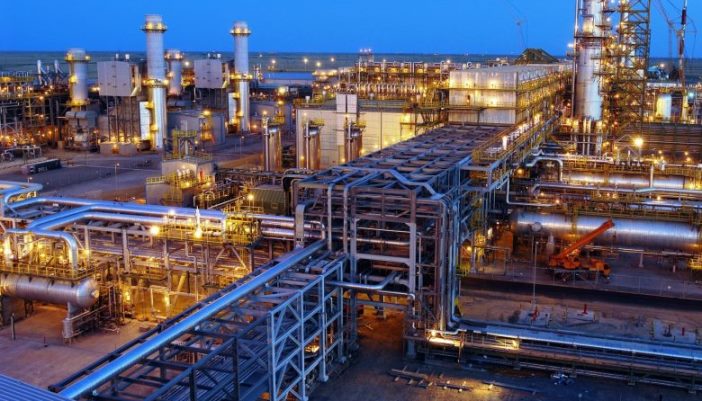
Recent developments at Tema Oil Refinery and privately owned Sentuo Oil Refinery have strengthened expectations that domestic production could expand significantly. Sentuo is pursuing a second phase expected to increase processing capacity from about 40,000 barrels per day to 100,000 barrels, while government is attempting to restore TOR as a commercially sustainable refinery.
TOR has also reported profit after tax of GH¢1.24 billion following operational reforms, according to the information cited, offering policymakers some encouragement after years in which the state-owned refinery struggled with debt, maintenance constraints and intermittent operations.
For Mr Nsiah, the arithmetic becomes far more interesting if both refinery expansion plans materialise. “If they are able to do, as TOR has proposed, about an additional 100,000 barrels, and Sentuo is also adding, then these two companies will likely be able to exhaust our daily demand and even export,” he said.
Such an outcome would fundamentally alter Ghana’s petroleum balance. Instead of remaining heavily dependent on imported finished products, the country could eventually develop enough processing capacity to satisfy domestic consumption and sell surplus production into regional markets.
West Africa could provide a natural destination for those exports. Several economies in the sub-region remain dependent on imported refined products despite being crude producers themselves, creating a potentially attractive market for efficiently operated refineries with access to reliable ports, storage and regional transport infrastructure.
But the operative phrase is “efficiently operated”. Refining capacity stated on paper is not the same as sustained output, and TOR’s history provides a clear reminder that installed capacity means little if crude supply, working capital, maintenance, management and commercial discipline are inadequate.
Refineries require substantial capital simply to keep crude flowing through their systems. They must procure feedstock, maintain equipment, finance inventories and operate at utilisation rates high enough to spread fixed costs across sufficient output.
This means Ghana’s refining strategy should ultimately be judged not by how many barrels of nominal capacity are announced, but by how many barrels are reliably processed at competitive cost. A refinery that operates intermittently or requires continued financial support can become another burden rather than an instrument of energy security.
There is nevertheless a potentially important macroeconomic dividend if domestic refining expands sustainably. Lower imports of finished petroleum products could reduce one source of foreign-exchange demand, while domestic refining could stimulate storage, transportation, petrochemicals and other downstream industries.
Government has already sought to connect domestic crude production more directly with local refining, including through the allocation of Jubilee crude to domestic facilities. Such arrangements could help provide greater certainty over feedstock availability, although the economic value of that crude would still need to reflect commercial realities.
Mr Nsiah argues that greater domestic production should eventually lead policymakers to reconsider aspects of Ghana’s petroleum-pricing architecture. As local refining becomes more significant, he believes pricing could gradually reflect domestic refining economics more closely rather than relying overwhelmingly on international product benchmarks.
That is where the policy challenge becomes considerably more difficult. Moving away from international benchmarks may sound attractive when world prices are high, but any domestic pricing system must still allow refiners to recover legitimate costs, remain competitive and finance future investment.
There is also a danger that the pursuit of cheaper locally refined fuel could evolve into an implicit subsidy for inefficient plants. If refiners are protected from competition or guaranteed prices unrelated to their actual efficiency, consumers could ultimately pay for industrial weaknesses through higher prices, taxes or government support.
The better objective is therefore not simply to refine every barrel consumed in Ghana. It is to build a domestic refining industry that can compete with imported products on cost, reliability and quality while giving the country greater flexibility during external supply disruptions.
That distinction matters because energy independence is often confused with price independence. Ghana may eventually produce or refine enough petroleum to satisfy domestic demand, but that does not mean it can determine the international opportunity cost of crude oil.
If crude prices rise sharply because of geopolitical conflict, Ghanaian refineries will still face that economic reality. If the cedi depreciates significantly against the dollar, the cost of petroleum inputs will still respond.
What Ghana can change is the structure of its vulnerability. Instead of relying heavily on finished-product imports, it can build refining, storage and logistics capacity that gives the country more options when international supply chains become strained.
That is a meaningful strategic gain, even if it does not guarantee permanently cheaper fuel.
The success of Ghana’s refining push will therefore depend less on the headline size of new plants than on operational reliability, competitive margins, crude availability and disciplined pricing. If TOR and Sentuo can deliver those conditions, the country could move closer to fuel self-sufficiency and potentially become a regional supplier.
But consumers should not expect domestic refining to make global oil markets irrelevant. Ghana can increasingly control where its petroleum is processed; controlling what it ultimately costs will remain a far more difficult proposition.

