
- Ghana insurers caution against exclusivity in state insurance placements
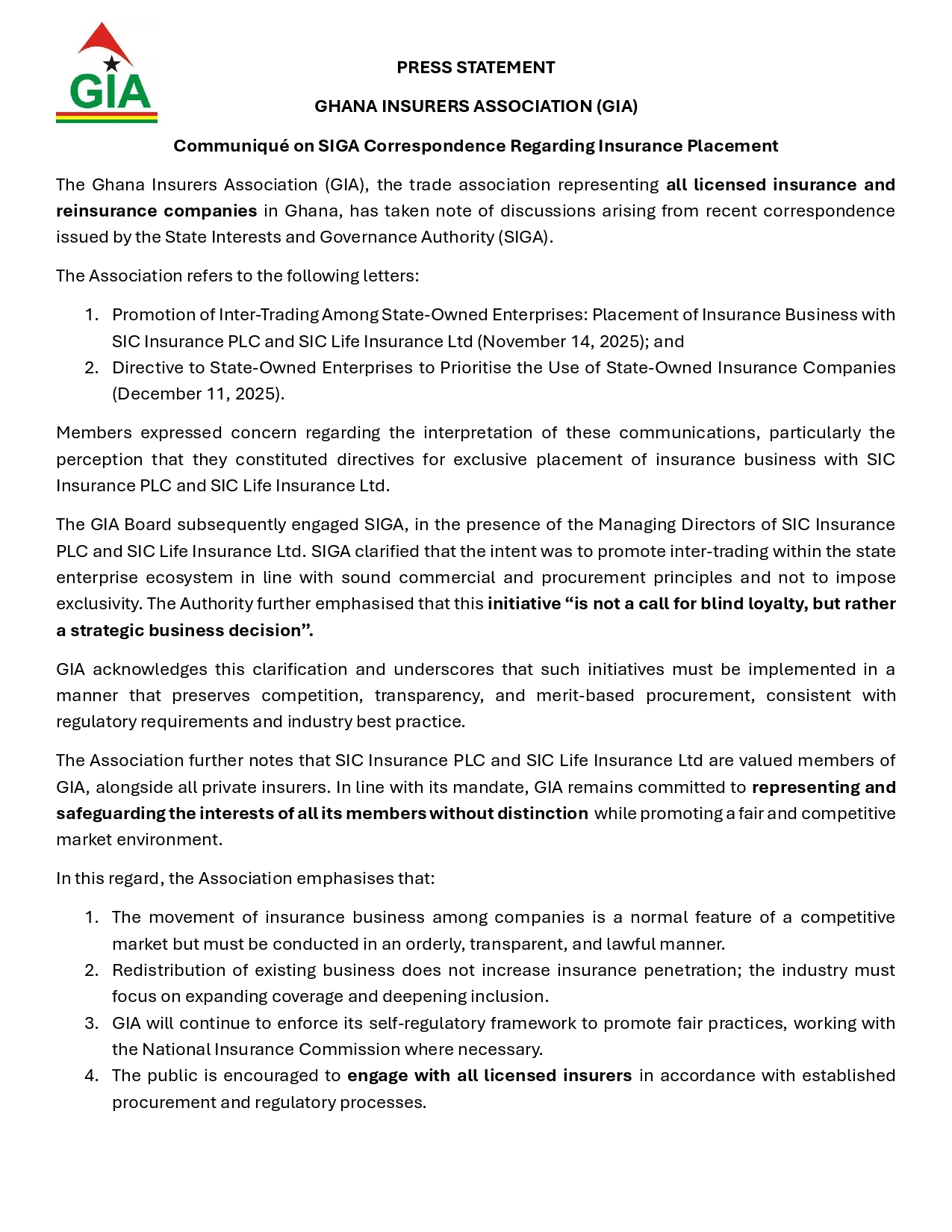
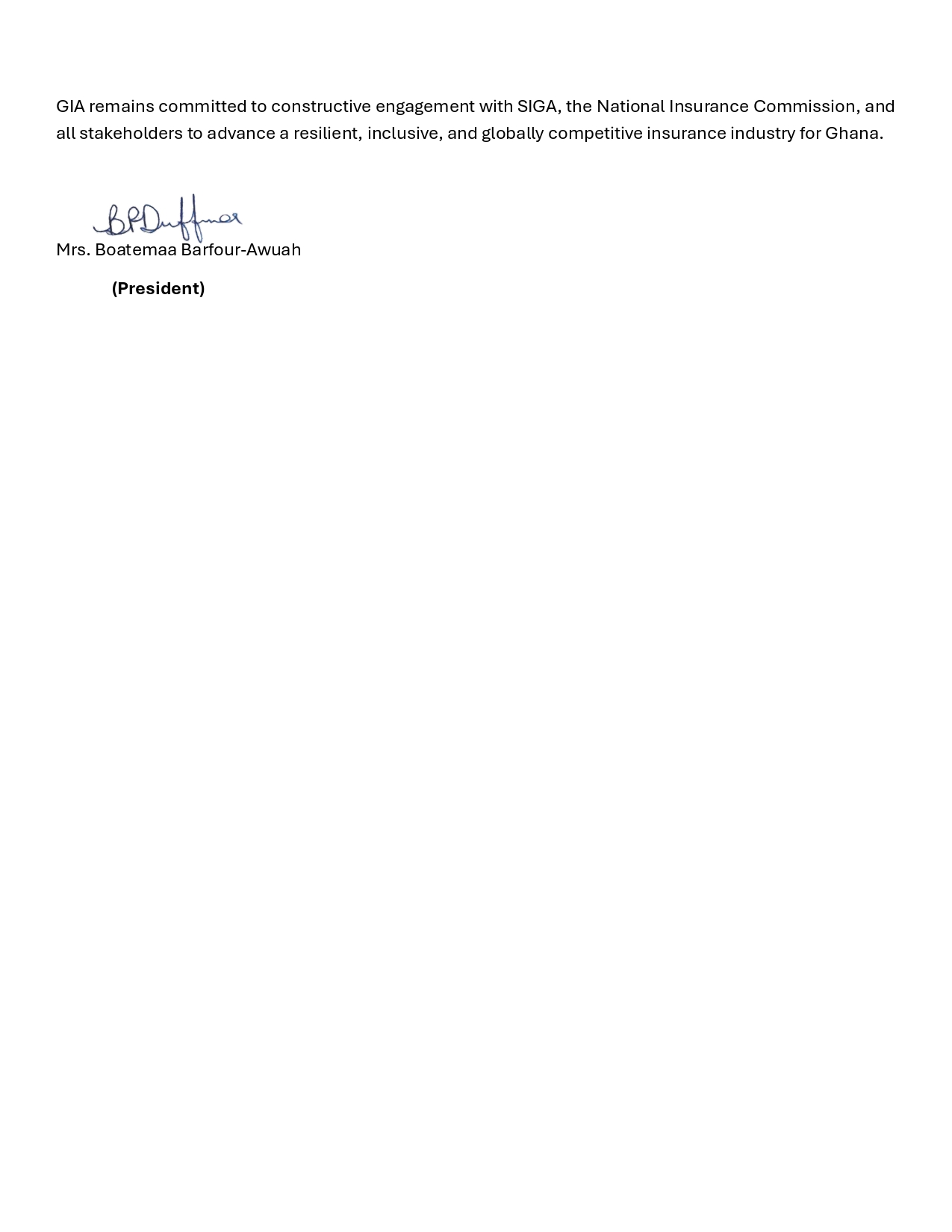
Ghana’s insurance industry is seeking to cool tensions over the placement of state-owned enterprise insurance business after the Ghana Insurers Association (GIA) said recent correspondence from the State Interests and Governance Authority (SIGA) should not be interpreted as a directive for exclusive use of SIC Insurance PLC and SIC Life Insurance Ltd.
In a communique issued after discussions with SIGA, the association said its members had raised concerns that two letters from the authority, one on promoting inter-trading among state-owned enterprises and another urging priority use of state-owned insurers, had created the impression that public entities were being steered exclusively toward SIC. That reading, the industry body suggested, risked unsettling competition in a market where procurement discipline and regulatory neutrality remain central.
The association said SIGA later clarified, in a meeting attended by the managing directors of SIC Insurance and SIC Life, that the intention was not to impose exclusivity but to encourage inter-trading within the state-enterprise ecosystem in line with commercial and procurement principles. According to the GIA, SIGA described the initiative as “not a call for blind loyalty” but rather a strategic business decision.
That clarification matters because the dispute goes beyond one pair of letters. At stake is the balance between public-sector commercial coordination and competitive market integrity. Ghana’s insurance market includes both state-owned and private underwriters, and any perception that government-linked business is being channelled administratively rather than competitively is likely to sharpen industry concerns over fairness, pricing and access.
The GIA’s statement tries to hold both lines at once. On one hand, it acknowledges SIC Insurance and SIC Life as valued members of the association and accepts SIGA’s explanation. On the other, it insists that any such initiative must be implemented in a way that preserves competition, transparency and merit-based procurement, and remains consistent with regulatory requirements and industry best practice.
The association also used the moment to make a broader industry point: shifting existing insurance business from one company to another does not, by itself, deepen insurance penetration. In its view, the more important challenge is to expand coverage and inclusion, rather than merely redistribute business within the current market. It added that it would continue to apply its self-regulatory framework and work with the National Insurance Commission where necessary to promote fair practice.