


- “Ghana is in a Very Good Place” – IMF Africa Director Commends Economic Turnaround
Ghana’s economic recovery has received a strong endorsement from the International Monetary Fund, with the Director of its African Department, Zeine Zeidane, describing the country’s performance under its reform programme as an example for other economies.
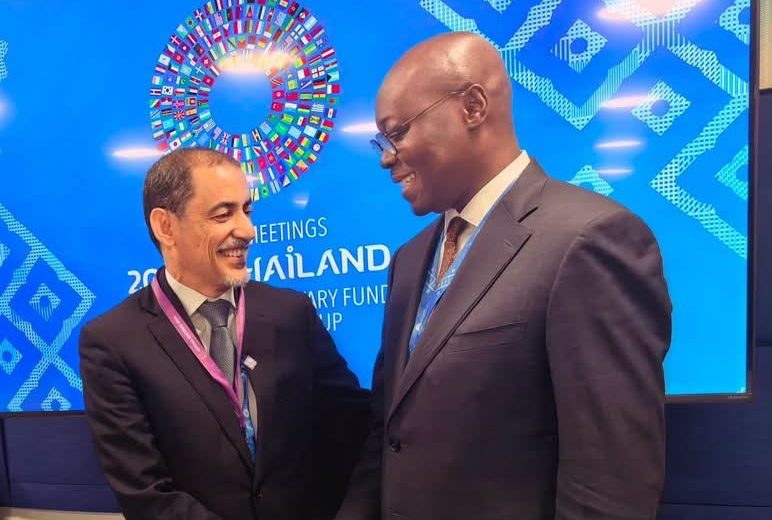
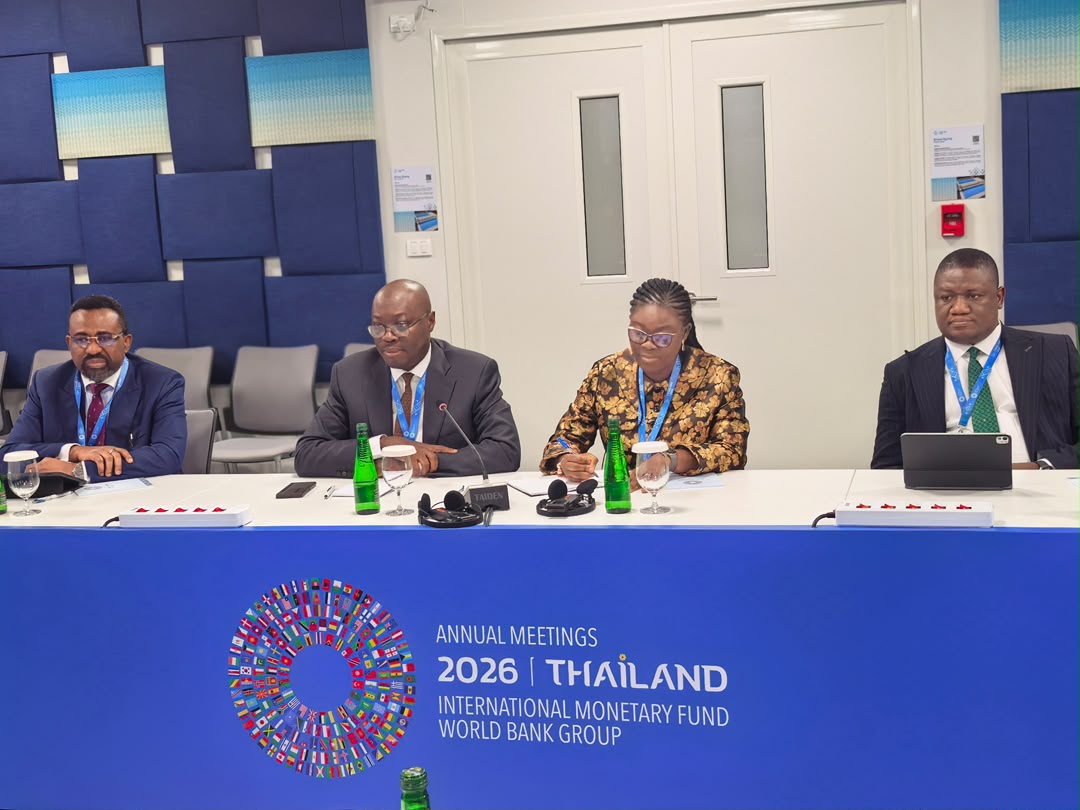
Mr Zeidane declared that “Ghana is in a very good place” during a meeting with Finance Minister Dr Cassiel Ato Forson on the sidelines of the IMF–World Bank Annual Meetings in Bangkok, Thailand.
He praised the government’s progress under the Extended Credit Facility programme and the broader reforms introduced to strengthen fiscal management, customs administration and oversight of state-owned enterprises.
“I want to first commend you on how you are performing. The ECF was a great success,” Mr Zeidane said.
He indicated that Ghana’s progress had become a reference point in the Fund’s engagements with other member countries confronting difficult economic adjustments.
“We tell others to follow your steps,” he stated.
The assessment represents more than a routine diplomatic compliment. Ghana entered the IMF-supported programme after losing access to international capital markets, defaulting on parts of its public debt and experiencing severe inflation, rapid currency depreciation and a sharp deterioration in investor confidence.
For the IMF’s senior official responsible for Africa to describe the programme as a success suggests that Ghana has moved beyond the most dangerous phase of its economic crisis.
The Fund’s endorsement is reinforced by its latest economic outlook. The IMF has raised Ghana’s 2026 growth forecast from 4.6 per cent in April to 5.7 per cent, an upward revision of 1.1 percentage points.
That revision is significant because it comes while the government is implementing fiscal consolidation and structural reforms that could ordinarily restrain economic activity in the short term.
Instead, the economy has proved more resilient than expected, suggesting that macroeconomic stabilisation has begun to restore confidence and support activity across important sectors.
Dr Forson told the IMF official that the government expected Ghana’s economy to grow substantially faster than the Fund’s latest projection. He also reaffirmed the administration’s commitment to maintaining fiscal credibility and discipline.
The Finance Minister’s confidence, however, raises the benchmark against which the government will be measured. Exceeding the IMF’s forecast will require economic momentum to remain broad-based rather than being driven by a small number of extractive or capital-intensive industries.
A growth rate above 5.7 per cent would strengthen Ghana’s recovery narrative, but the figure will matter more if it produces employment, higher household incomes, stronger private investment and sustainable tax revenue.
Mr Zeidane also praised Ghana’s use of artificial intelligence in customs administration. The intervention is important because the government is seeking to improve domestic revenue mobilisation without relying solely on higher tax rates.
Artificial intelligence can help customs officials analyse declarations, detect undervaluation, identify unusual trading patterns and direct inspections towards consignments carrying the greatest revenue or compliance risk.
When properly designed, such systems can increase customs collections while reducing delays for compliant traders. They can also limit discretion in cargo assessment, potentially reducing opportunities for manipulation and revenue leakage.
Technology alone cannot eliminate institutional weaknesses. Its effectiveness will depend on the quality of the data, the integrity of officials supervising the system and the availability of transparent processes through which businesses can challenge inaccurate assessments.
Ghana must therefore ensure that technology-led customs enforcement does not create new administrative barriers or increase unpredictability at the ports.
The broader objective must be to collect the correct revenue while facilitating legitimate trade, particularly as ports in neighbouring countries compete with Ghana for transit and regional cargo.
Mr Zeidane’s recognition of work on state-owned enterprises is equally important. Several public entities continue to present substantial fiscal risks through operating losses, debt, payment arrears and contractual obligations that may ultimately fall on the central government.
Weaknesses within the energy, transport, cocoa and other strategic sectors can undermine fiscal consolidation even when the government meets its formal budget targets.
Reforming state-owned enterprises will require more than publishing their financial results. Boards and management teams must be held accountable for performance, borrowing must be subjected to effective oversight and government guarantees must be transparently disclosed.
Loss-making institutions that perform essential public functions may continue to require state support, but those transfers should be properly budgeted and linked to measurable service obligations.
The IMF official also welcomed Ghana’s work on stock-flow adjustments, an area of public finance that receives limited public attention but has significant implications for debt credibility.
Stock-flow adjustments explain differences between reported budget deficits and changes in public debt. They can arise from exchange-rate movements, the clearance of arrears, financial-sector interventions, off-budget obligations and the recognition of previously undisclosed liabilities.
When these adjustments are large or poorly explained, public debt may increase faster than the annual fiscal deficit suggests. Improving transparency in this area would give Parliament, investors and citizens a clearer picture of how government liabilities are created.
The IMF’s commendation suggests that Ghana is making progress in identifying and controlling such fiscal risks. The true test will be whether improved reporting produces corrective action and prevents new liabilities from accumulating outside the budget.
The Fund’s endorsement could strengthen investor confidence at an important point in Ghana’s recovery. IMF assessments influence the decisions of development partners, rating agencies and institutional investors evaluating a country’s policy credibility.
However, Ghana’s history also demands caution. The country has successfully completed IMF programmes before, only to return after fiscal slippages, excessive borrowing and weakened external buffers triggered another crisis.
The decisive question is therefore whether the discipline associated with the current programme has become embedded in Ghana’s institutions or remains dependent on IMF monitoring.
That question will become more pressing as Ghana moves towards the end of the ECF arrangement and attempts to shift from stabilisation towards economic transformation.
The 2027 Budget will offer an early indication of whether the government can finance infrastructure, social protection and job-creation programmes without compromising the fiscal restraint that restored stability.
Coordination between the Ministry of Finance and the Bank of Ghana will also remain essential. Fiscal discipline can reduce inflationary pressure and create room for lower interest rates. Fiscal slippage could weaken the cedi, renew inflation and force monetary policy to remain tight.
For businesses and households, Ghana being “in a very good place” must eventually become visible through predictable prices, affordable credit, reliable public services and productive employment.
The IMF’s assessment confirms that Ghana has travelled a considerable distance from the depth of its economic crisis. But it should be treated as recognition of progress, not permission to relax.
Ghana’s ultimate success will be determined by whether it sustains fiscal discipline, reforms state-owned enterprises and maintains growth after intensive IMF supervision ends.
Only then will the country’s current position represent a durable economic turning point rather than another temporary recovery between recurring crises.

