


- Ghana Moves to Reduce Tomato Imports with Solar Irrigation and Farmer Support
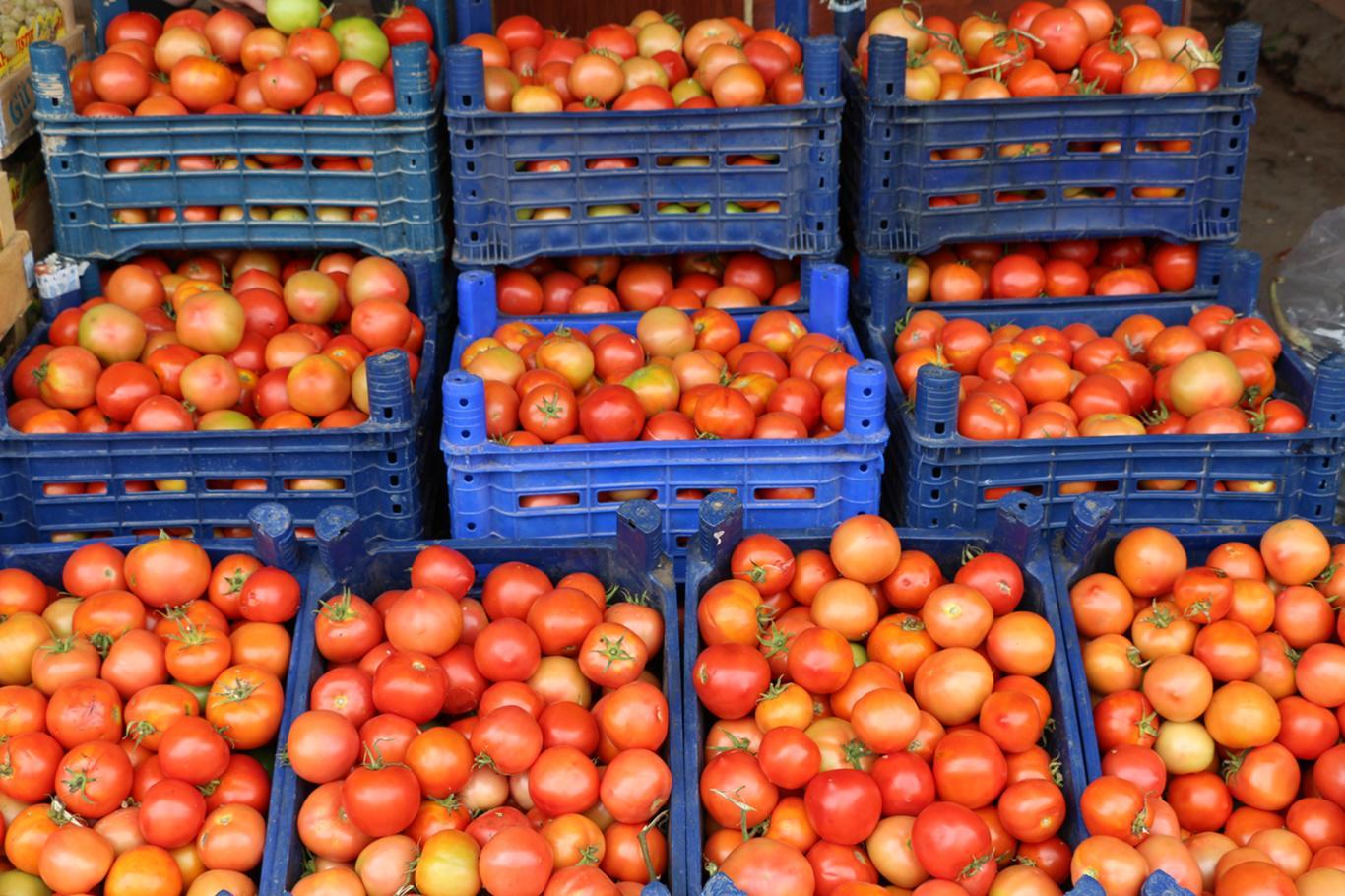
Ghana is targeting a sharp reduction in tomato imports within the next four months as the government accelerates investment in irrigation infrastructure and year-round domestic production in a renewed push to strengthen food security and reduce dependence on supplies from neighbouring Burkina Faso.
Minister for Food and Agriculture, Eric Opoku, told Parliament’s Select Committee on Assurances that the Mahama administration had started implementing a coordinated programme to expand local tomato cultivation through solar-powered irrigation systems, borehole development and improved farm protection in key producing areas.
According to the Minister, the interventions are already underway and are expected to produce measurable results within three to four months.
The ambition, if achieved, would mark a significant shift in Ghana’s food import substitution agenda. Tomato remains one of the country’s most important food commodities, widely consumed across households, restaurants, food processors and informal markets. Yet Ghana has for years depended heavily on imports from Burkina Faso and other neighbouring markets to meet domestic demand, especially during periods when local production declines.
Mr Opoku said President John Dramani Mahama had placed particular emphasis on ending tomato imports as part of the government’s wider agricultural transformation programme.
The government’s strategy focuses on addressing one of the central weaknesses in Ghana’s vegetable production system: seasonality. Local tomato production often rises during the rainy season and falls sharply during the dry season due to limited irrigation access, weak water infrastructure and post-harvest losses. This seasonal production gap creates room for imports, exposes consumers to price volatility and weakens the bargaining power of local farmers.
By investing in solar-powered irrigation and boreholes, government is seeking to allow farmers to cultivate tomatoes throughout the year rather than depend mainly on rain-fed production. If the irrigation systems are well managed, they could help stabilise supply, reduce seasonal shortages and support more predictable pricing.
The initiative is also expected to have broader macroeconomic benefits. Reducing tomato imports would lower food import expenditure, reduce foreign exchange demand, improve Ghana’s agricultural trade balance and strengthen domestic value chains. In an economy where food prices remain central to inflation dynamics, increased domestic production could also help cushion households against external supply shocks.
However, the four-month timeline is ambitious and will be closely watched by farmers, traders, food processors and policy analysts. Ghana’s tomato import dependence is not only the result of low production. It is also linked to weak storage, poor aggregation, limited processing capacity, transport bottlenecks, inconsistent quality and the absence of structured market systems that can absorb output when supply rises.
That is why the Minister’s comments on falling food prices are important.
Mr Opoku acknowledged that the recent decline in food prices had created a difficult policy balance between consumer welfare and farmer profitability. While lower food inflation has eased pressure on household budgets, many farmers are struggling to recover production costs as increased supply pushes market prices downward.
This is the classic agricultural paradox: consumers benefit from cheaper food, but farmers may lose the incentive to produce if prices fall below profitable levels. If not carefully managed, today’s surplus can become tomorrow’s shortage because farmers may reduce production in the next cycle.
To address this risk, the Minister disclosed that government had submitted proposals to Cabinet, including the provision of free fertiliser as an immediate support measure. The objective is to lower production costs and prevent declining market prices from discouraging farmers.
The government is also seeking to accelerate investment in agro-processing and structured market systems that can absorb surplus production. This will be critical if the tomato self-sufficiency plan is to succeed beyond short-term production gains.
Tomatoes are highly perishable. When output rises without adequate processing, storage and market coordination, farmers can suffer heavy losses. Increased production alone, therefore, will not guarantee food security or farmer income stability. Ghana must also build the systems that convert fresh tomatoes into paste, puree, canned products and other value-added goods that can be stored, transported and sold over a longer period.
The long-term strategy, according to Mr Opoku, is to expand value addition, strengthen food processing industries and create reliable markets that stabilise producer incomes while sustaining affordable food prices for consumers.
That approach is necessary because Ghana’s tomato challenge is both a production problem and a market-structure problem. Farmers need water, fertiliser, improved seeds and protection from pests. But they also need predictable buyers, processing facilities, cold-chain systems and fair pricing arrangements.
For consumers, the success of the programme could mean more stable tomato prices and reduced exposure to imported supply disruptions. For farmers, it could mean improved production capacity and access to better markets. For the wider economy, it could support import substitution, reduce pressure on foreign exchange and deepen local agribusiness investment.
The policy also has implications for Ghana’s relationship with regional food markets. Imports from Burkina Faso have historically played an important role in filling domestic supply gaps. Reducing reliance on those imports may strengthen Ghana’s food sovereignty, but it must be done in a way that improves domestic competitiveness rather than simply replacing imports with higher-cost local production.
The real test will be whether Ghana can produce tomatoes at sufficient scale, quality and consistency to meet market demand throughout the year.
If the irrigation drive succeeds, it could become a model for other food commodities where Ghana remains import-dependent despite having domestic production potential. But if processing and market systems are not developed alongside production, farmers could face gluts, falling prices and post-harvest losses.
For now, government’s message is clear: Ghana wants to move from seasonal tomato production to year-round supply, and from import dependence to domestic self-sufficiency.
The next four months will show whether the ambition can move from policy assurance to market reality.

