


- Ghana Must Process More Gold, Cocoa and Oil to Transform Balance of Payments — BoG Governor
Governor of the Bank of Ghana, Dr Johnson Asiama, has called for an expansion of local processing capacity for Ghana’s key natural resources, arguing that the country has delayed for too long in capturing greater value from exports such as gold, cocoa and crude oil.
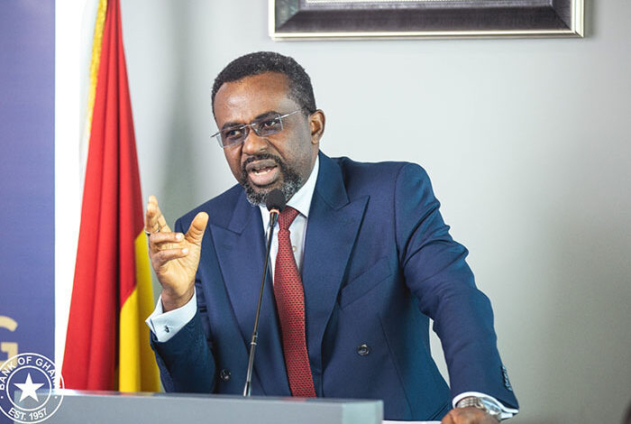
Speaking at the signing ceremony of the second gold refining partnership between the Ghana Gold Board and Royal Ghana Gold Limited, Dr Asiama said Ghana’s long-term economic resilience would depend heavily on its ability to process more of its natural resources domestically rather than exporting raw commodities.
“For us, processing our national resources is a strategy that is long overdue. Not just gold, but also cocoa, and of course, oil. If we can process these three, our balance of payments will experience a drastic turnover,” he stated.
The Governor’s comments come as policymakers intensify efforts to strengthen Ghana’s industrial base, improve foreign exchange inflows and reduce the vulnerabilities associated with a commodity-dependent export structure.
Ghana remains one of Africa’s leading producers of gold and cocoa, while crude oil has become an important part of the country’s export base since commercial production began. But much of the country’s export earnings still come from raw or semi-processed commodities, limiting value retention, industrial linkages and job creation.
Dr Asiama said expanding local refining and processing would generate broader economic gains beyond export earnings.
“The advantages are clear. Jobs, greater revenues for government, much more oversight on the entire processing value chain,” he said.
His comments point to a broader economic argument: Ghana’s external position cannot be transformed sustainably by commodity exports alone. The country must capture more value along the production chain if it is to build stronger reserves, reduce import dependence and create a more resilient balance of payments framework.
For gold, local refining could help Ghana retain more value before export, improve traceability, strengthen formal oversight of the mineral trade and support the government’s reserve accumulation strategy.
For cocoa, deeper processing could shift the country from dependence on raw bean exports toward higher-value products such as cocoa liquor, butter, powder and chocolate, creating more jobs and expanding industrial output.
For oil, greater domestic processing capacity could reduce dependence on imported refined petroleum products, ease pressure on foreign exchange demand and strengthen energy security.
The Bank of Ghana chief further assured investors and industry participants of the central bank’s support for initiatives aimed at deepening domestic value addition and enhancing export competitiveness.
“And so therefore, in whatever way we can support, as a central bank, we will support,” Dr Asiama added.
The latest refining agreement forms part of a broader government strategy to expand Ghana’s local gold processing capacity and retain more value within the domestic economy before export.
The initiative also aligns with ongoing efforts to reposition the gold sector as a strategic anchor for external stability, reserve accumulation and industrial transformation.
But the success of Ghana’s value addition agenda will depend on more than policy ambition. It will require reliable infrastructure, affordable energy, credible financing, technical capacity, regulatory consistency and strong private-sector participation.
For investors, the message from the central bank is significant. Ghana is seeking to move beyond the traditional model of exporting raw commodities and importing finished products. The new policy direction is to build domestic processing capacity that can support jobs, government revenue and foreign exchange stability.
If Ghana can process more of its gold, cocoa and oil locally, the economy could capture a larger share of global commodity value chains. If not, the country risks remaining exposed to the same cycle that has long defined its external accounts: exporting raw materials, importing finished goods and bearing the cost through currency pressure and weaker industrial growth.
Dr Asiama’s message was therefore not merely about gold refining. It was about Ghana’s development model.
The country’s next phase of economic resilience, he suggested, will depend on whether it can convert natural resource wealth into industrial strength, stronger public revenues and a more durable external position.

