


- Ghana Steps Up Fight Against Undeclared Foreign Currency as BoG Warns Of FX-Market Distortions
The Bank of Ghana has intensified its scrutiny of undeclared cross-border foreign-currency movements, warning that undocumented cash flows are undermining transparency in the country’s foreign-exchange market even as the central bank deploys billions of dollars to support liquidity and orderly price discovery.
Governor Dr Johnson Pandit Asiama said intelligence available to authorities suggests that substantial amounts of foreign currency may be passing through Ghana’s airports and other entry and exit points without the required declarations and supporting documentation.
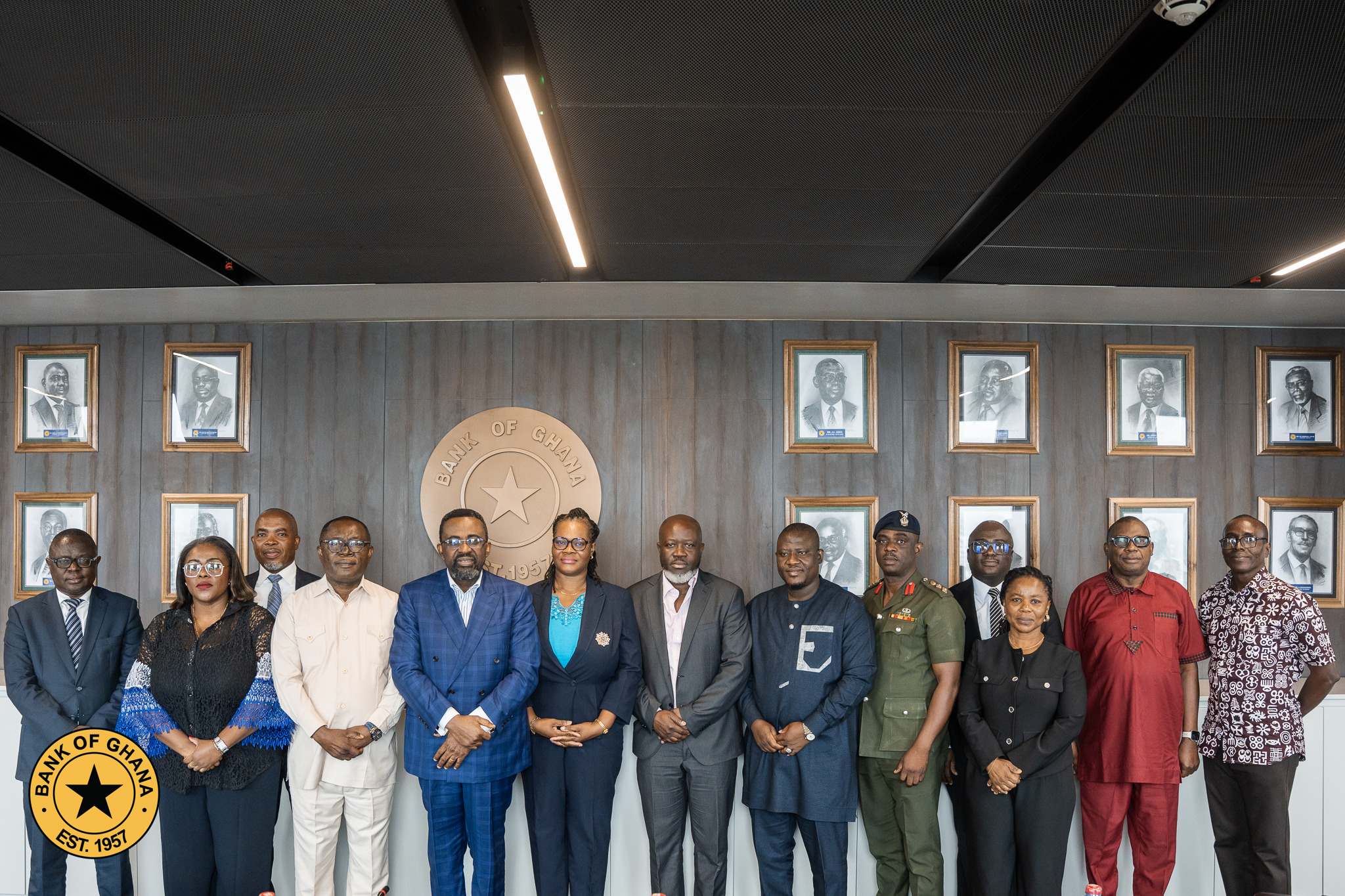
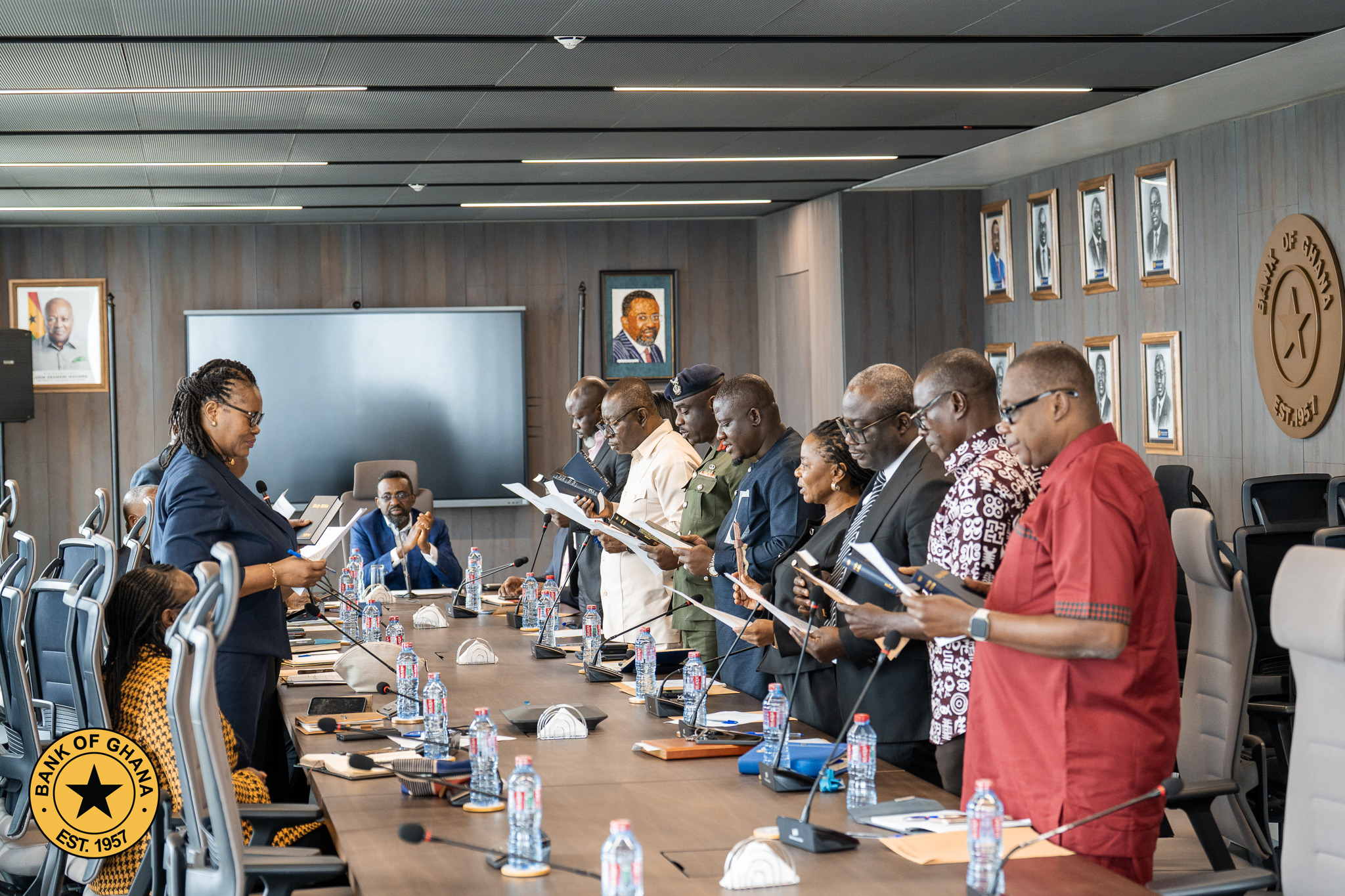
Speaking at the inauguration of a Preliminary Investigation Committee on Seized Foreign Currency on August 28, the Governor said the issue had moved beyond a customs-compliance concern and now presented risks to the integrity of Ghana’s foreign-exchange and financial systems.
“The mere possession or movement of foreign currency is not, in itself, unlawful,” Dr Asiama said.
He cautioned, however, that when large amounts cross Ghana’s borders outside the declaration system, authorities lose visibility over the source, ownership and intended use of the funds.
That lack of transparency, he said, creates opportunities for money laundering, tax evasion, corruption, smuggling, organised crime and other unlawful activities while complicating the management of Ghana’s foreign-exchange market.
The scale of the concern becomes clearer when measured against the amount of foreign exchange the central bank has deployed through regulated channels.
From January 2026 to August 26, the Bank of Ghana’s total foreign-exchange market operations amounted to US$9.05 billion, according to the Governor.
Those operations have supported legitimate demand for petroleum products, medicines, machinery, industrial inputs and other essential goods and services.
But Dr Asiama argued that the central bank cannot continue injecting large amounts into the regulated market while significant foreign-currency flows are potentially being concealed, diverted to informal channels or moved across Ghana’s borders without documentation.
“The country cannot channel more than US$9 billion into the regulated foreign-exchange market while significant amounts of currency are simultaneously concealed, diverted into informal markets or moved across our borders without documentation,” he said.
He described that situation as a policy contradiction in which authorities are seeking to improve foreign-exchange availability through official channels while undocumented cash movements potentially weaken those same channels.
The intervention sharpens a broader question around Ghana’s efforts to stabilise the cedi.
Central-bank FX operations can improve market liquidity and reduce episodes of disorderly trading, but they cannot permanently compensate for leakages from official channels.
According to the Governor, every undeclared movement of foreign currency makes it more difficult to determine whether demand is legitimate, speculative or illicit, while weakening financial intelligence and potentially supporting the growth of informal FX markets.
Dr Asiama stressed that Ghana continues to operate a flexible exchange-rate regime.
He drew a distinction between FX intermediation the recycling of available foreign currency through competitive market mechanisms and intervention, which is used to address excessive short-term volatility and disorderly conditions. Neither, he said, is intended to artificially fix the cedi.
“The Bank’s role is to support market liquidity and orderly functioning, not to guarantee a particular exchange rate or provide subsidised foreign currency,” the Governor said.
That distinction is important because it shifts attention away from the amount of dollars the Bank of Ghana can inject and towards the structure of the market itself.
If foreign-currency inflows are not consistently captured within regulated banking and FX channels, the central bank has a weaker picture of actual supply and demand. It may then be required to commit additional reserves to address pressures partly created by leakages outside the formal system.
For Dr Asiama, sustainable cedi stability therefore requires more than central-bank operations. He said it must be supported by strong exports, sustained formal remittance inflows, prudent fiscal and monetary policy, adequate reserves, public confidence and stronger action against illicit financial flows.
The Governor cited analysis by the Inter-Governmental Action Group against Money Laundering in West Africa, or GIABA, estimating illicit-money flows of about US$73.00 billion annually across seven West African jurisdictions.
Tax evasion accounts for a substantial share, while corruption, smuggling and the region’s heavily cash-based informal economy add to the vulnerability. GIABA has also identified weak inter-agency cooperation as a major obstacle to tracing illicit funds and detecting criminal financial activity.
At the continental level, Dr Asiama pointed to UNCTAD estimates that approximately US$88.60 billion, equivalent to around 3.70% of Africa’s GDP, leaves the continent annually through illicit capital flight.
That is money that could otherwise support infrastructure, healthcare, education, productive businesses and employment. Illicit financial flows also weaken domestic revenue mobilisation and foreign-exchange availability, increasing pressure on legitimate taxpayers and businesses.
Ghana’s immediate enforcement framework centres on rules governing the importation and exportation of foreign currency and monetary instruments. Under Bank of Ghana Notice No. BG/GOV/SEC/2025/27, travellers may carry up to US$10,000, or its equivalent, without making a declaration.
Amounts above that threshold must be fully declared and supported by the prescribed documentation. Inbound travellers carrying more than US$10,000 must additionally provide evidence that the amount was declared at their point of departure.
Outbound travellers carrying more than US$50,000 face additional documentation requirements, while breaches can result in seizure, fines and possible prosecution. The newly inaugurated committee is intended to bring together the different institutions required to investigate seized foreign currency.
The Ghana Revenue Authority will handle customs enforcement and seizure documentation, while Ghana Airports Company will provide relevant airport information and surveillance support.
National Security and the Economic and Organised Crime Office will provide intelligence and investigative expertise, while the Financial Intelligence Centre will assess possible links to suspicious financial transactions.
The Office of the Attorney-General will advise on prosecutions, forfeiture and court proceedings, while the Bank of Ghana will provide FX expertise, regulatory oversight and secure custody arrangements.
A large amount of undeclared cash may involve legitimate business activity, tax evasion, proceeds of crime, informal currency trading or another explanation entirely. No single institution has sufficient authority or information to make that determination alone.
The Governor therefore cautioned against treating seizure itself as proof of wrongdoing.
“A seizure is the beginning of an investigation; it is not, by itself, proof of criminal conduct,” he said.
The committee, he added, must avoid both releasing suspicious funds merely because an explanation appears plausible and presuming that everyone carrying undeclared currency is automatically guilty of money laundering or another offence. That due-process safeguard will be important if the enforcement drive is to retain public and investor confidence.
One that treats legitimate business travellers as criminals risks creating uncertainty around Ghana’s financial system and investment environment.
The central bank says enforcement must therefore be accompanied by public education, clear declaration notices, easily available forms and consistent guidance at entry and exit points. Once those requirements are understood, however, non-compliance should attract an effective and proportionate response.
Dr Asiama said the committee’s success should not ultimately be judged by how much money it seizes. Large seizure volumes may indicate stronger enforcement, but they could equally point to continued failure of prevention and compliance.
More meaningful indicators, he argued, would include higher declaration rates, faster and fairer resolution of cases, better intelligence sharing, stronger evidence preservation, successful prosecutions where justified and a measurable reduction in attempts to move currency illegally.
The challenge is not simply to intercept cash at Kotoka International Airport or other border points. It is to ensure that legitimate foreign currency flows into transparent, regulated channels where policymakers can see, measure and intermediate it.
With more than US$9.05 billion already deployed through Bank of Ghana FX operations this year, the cost of weak visibility over informal and undocumented flows is becoming increasingly difficult to ignore.
Ghana’s long-term cedi stability will therefore depend not only on how many dollars the central bank can supply. It will also depend on how effectively the country prevents the dollars it already generates and receives from disappearing outside the system.

