


- Ghana Takes Voltaian Basin Exploration from Seismic Promise to Drilling Preparation
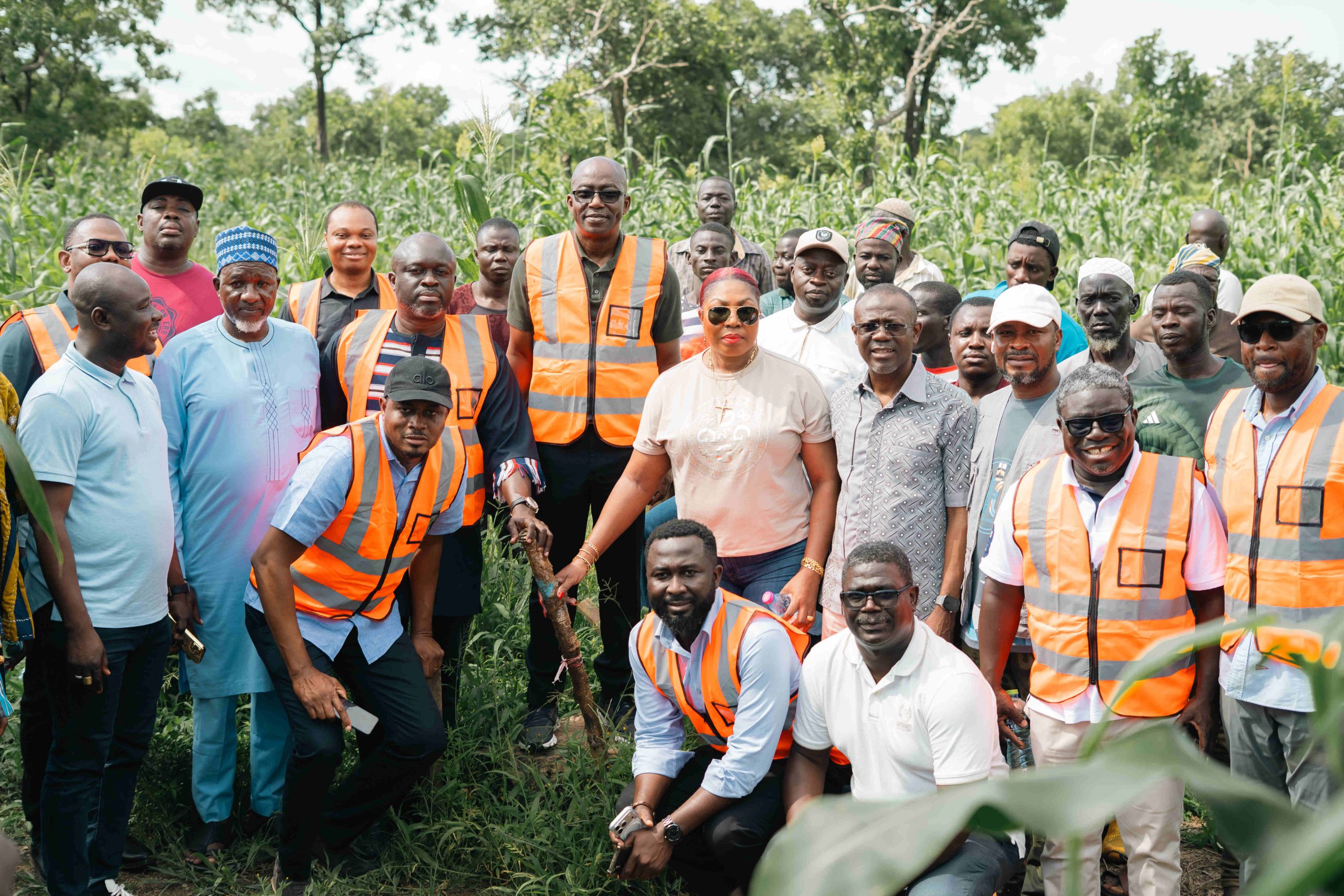
Ghana’s long-running ambition to test the petroleum potential of the Voltaian Basin has crossed from geological investigation into physical preparation, with the Ghana National Petroleum Corporation and its operating subsidiary, GNPC Explorco, inspecting the proposed location of the country’s first exploratory well at Chegu in the Mion District.
The immediate development is the planned construction of a 13.5-kilometre access road to the wellsite. But the road represents more than a civil-engineering project. It is the infrastructure required to move drilling rigs, heavy machinery, technical equipment and personnel into a previously inaccessible frontier area.
Its construction would therefore signal that the Voltaian Basin campaign is moving closer to the point at which years of geological studies, seismic interpretation and public expenditure will face their most consequential test: the drilling of a well.
“The national drive toward drilling the first exploratory well in the onshore Voltaian Basin has crossed a critical operational threshold,” GNPC and GNPC Explorco said following the inspection.
Samuel Opoku Arthur, Managing Director of GNPC Explorco, said work on the road was expected to commence within weeks.
“There is significant progress in advancing the project,” he said. “In the coming weeks, we expect to commence construction of a 13.5-kilometre access road to the well location, marking another important step in our preparations for the next phase of activities.”
The inspection brought together executive management, technical leads and the project manager to assess ground-level readiness and identify the engineering and civil works required before drilling can begin.
The next interventions are expected to include wellsite clearing, levelling and the construction of facilities needed to support drilling operations.
The progress is significant, but it must be interpreted carefully. Preparing a wellsite does not mean petroleum has been discovered. It means GNPC has accumulated sufficient geological confidence to justify testing a prospect with a drill bit.
That distinction will be essential as activity intensifies around Chegu.
Every frontier exploration campaign moves through successive stages of uncertainty.
Geological and geophysical studies can identify structures that may contain hydrocarbons. Seismic data can improve understanding of the subsurface and help technical teams determine where to drill. But only an exploratory well can establish whether a targeted structure contains oil or gas in potentially recoverable quantities.
Even after a well encounters hydrocarbons, further appraisal would be needed to establish the size, quality and commercial viability of the discovery.
The Chegu inspection should consequently be understood as a transition from studying geological possibilities to physically testing them. It is an important threshold, but not the conclusion of the exploration process.
This matters because large public projects can generate expectations long before their economic viability is known. The arrival of engineers, construction teams and heavy machinery may encourage communities and businesses to anticipate jobs, contracts and future petroleum revenues.
Managing those expectations will be almost as important as managing the drilling programme itself.
GNPC must communicate clearly what each stage means, what it does not mean and what must happen before the project can move to the next level.
An unsuccessful exploratory well would not necessarily invalidate the entire basin’s potential; it could instead provide technical information that improves future exploration. Equally, a hydrocarbon encounter would not automatically translate into a producing field.
Public communication must therefore avoid presenting exploration activity as evidence of an impending commercial discovery.
The campaign will also test the institutional capacity of GNPC Explorco.
As the designated operator, the subsidiary is responsible for executing the exploration programme under environmental safeguards, international operational standards and local-participation commitments.
This goes beyond contracting a drilling rig. Operatorship requires the co-ordination of geological interpretation, well engineering, procurement, logistics, safety, environmental management and community engagement.
The Voltaian Basin presents additional complexity because it is an onshore frontier area. Offshore petroleum operations are expensive and technically demanding, but their direct interaction with communities is comparatively limited.
An onshore project intersects with land ownership, farms, roads, settlements, traditional authority and local economic activity. Decisions about access routes, compensation, employment and environmental protection therefore become inseparable from the technical operation.
For GNPC Explorco, Chegu offers an opportunity to demonstrate that a Ghanaian state-owned operator can manage a major upstream exploration campaign safely and transparently.
A well-executed programme could deepen Ghanaian technical capabilities and reduce long-term dependence on international operators. Weak execution, by contrast, could damage public confidence and make future frontier investment more difficult.
The project should therefore be assessed not only by whether the well finds hydrocarbons but also by whether it strengthens Ghana’s petroleum institutions.
The 13.5km access road will be the project’s first substantial and visible footprint.
Its primary purpose is operational. Drilling rigs and auxiliary machinery require roads capable of supporting heavy loads, while crews need reliable access for construction, well operations, emergency response and the delivery of supplies.
However, the road also creates an early opportunity to show that exploration infrastructure can generate value for host communities even before the geological outcome is known.
If properly designed and maintained, it could improve access for residents, support the movement of agricultural produce and connect communities more effectively to markets and public services.
This potential should not be overstated. A road constructed principally for petroleum operations may not automatically meet the wider transport needs of local communities. Questions over drainage, maintenance, safety and post-drilling responsibility will require clear answers.
GNPC and the Mion District authorities should establish from the beginning who will maintain the road, whether it will remain open for public use and how its design will accommodate community needs without interfering with drilling operations.
These arrangements matter because exploratory campaigns can be temporary. If the well does not justify further work, communities should not be left with abandoned infrastructure or unclear maintenance obligations.
The road’s long-term usefulness could become one of the campaign’s earliest measurable development outcomes, irrespective of what the well eventually reveals.
GNPC Explorco has committed to active local participation and says it will work with district authorities, traditional councils and surrounding communities to generate shared value.
The effectiveness of that commitment will depend on how local participation is defined.
At the construction stage, opportunities may arise in roadworks, site preparation, transport, accommodation, catering, security and other support services. But communities must be given realistic information about the number, duration and technical requirements of available jobs.
Promising employment without clarifying the temporary nature of some roles could create disappointment and conflict.
Local-content planning must also look beyond low-skilled work. The campaign presents an opportunity for Ghanaian engineers, geoscientists, environmental specialists, safety professionals and service companies to gain frontier-exploration experience.
GNPC Explorco should therefore develop a transparent local-procurement and workforce framework that identifies available contracts, applicable standards and the process through which businesses and residents can participate.
This would help prevent access to opportunities from being controlled by political, traditional or commercial intermediaries.
The more transparent the allocation of jobs and contracts, the less likely the project is to generate disputes within and among host communities.
Before inspecting the proposed wellsite, the GNPC and GNPC Explorco delegation paid a courtesy call on the Chegu Naa.
The traditional leader expressed support for the project but urged the two institutions to maintain transparent communication, cultural respect and close engagement with the community as operations expand.
That message should be treated as an operating requirement rather than a ceremonial endorsement.
Community relationships are often most stable when engagement begins before construction and continues through drilling, site restoration and any subsequent appraisal phase.
Residents need accessible information about the project timetable, land requirements, environmental risks, employment opportunities and grievance procedures. Consultation should include women, farmers, young people and other groups whose interests may not always be fully represented through formal leadership structures.
The project will also require a functioning grievance mechanism through which land, employment, environmental and contractor-related concerns can be documented and resolved.
Without such a system, small disputes can accumulate and eventually disrupt operations.
GNPC Explorco’s social licence will not come from a single palace visit. It will depend on whether communities believe they are receiving accurate information, fair treatment and a meaningful role in decisions that affect their land and livelihoods.
GNPC Explorco has pledged to operate under stringent environmental safeguards. That commitment must become visible before road and wellsite construction begin.
Baseline studies should document existing water conditions, land use, vegetation, wildlife and community livelihoods. Without reliable baseline information, it becomes difficult to determine whether later environmental changes were caused by exploration activity.
Road construction can alter drainage, increase erosion, disturb vegetation and expand traffic through rural communities. Wellsite preparation and drilling create additional risks involving waste, fuels, drilling fluids, noise and emergency response.
These risks are manageable, but only when mitigation measures are built into project design and independently monitored.
Environmental information should also be communicated in terms residents can understand. Technical documents may satisfy regulatory requirements while failing to answer the practical questions communities will ask: whether their water will remain safe, how farmland will be protected and what will happen if an accident occurs.
Strong environmental performance at Chegu would establish an important precedent for any future Voltaian Basin campaign. Poor performance could undermine trust across a much wider area than the immediate wellsite.
As a state-owned exploration campaign, the project also carries a public-finance test.
Frontier exploration is inherently risky. A well may be technically successful, commercially successful or unsuccessful. Public accountability therefore cannot be based solely on the final drilling result.
GNPC should disclose the project’s major stages, approved budget, procurement arrangements and progress against clearly defined milestones, subject to legitimate commercial and operational confidentiality.
The central question should be whether each investment decision is supported by the technical evidence available at the time.
The road, wellsite and drilling programme must form part of a disciplined stage-gate process in which further spending is approved only after the previous phase has been independently evaluated.
This approach protects public resources while recognising that exploration risk cannot be eliminated.
Transparency would also allow Ghanaians to distinguish a technically justified dry well from wasteful expenditure. Exploration can fail geologically even when it is competently designed and executed. What the public should demand is evidence that decisions were disciplined, contracts were competitive and lessons were preserved.
The site inspection marks an important advance in Ghana’s attempt to understand the petroleum potential of its inland sedimentary basin. It shows that the campaign is progressing from technical preparation towards field execution.
But the difficult work now begins.
GNPC and GNPC Explorco must deliver the access road, prepare the wellsite, manage contractors, protect the environment and retain community confidence—all before the drill provides a definitive answer about the target below Chegu.
The exploration programme will ultimately be judged on several levels: the quality of its technical decisions, the discipline of its expenditure, the safety of its operations, the participation of Ghanaian companies and professionals, and the fairness of its relationship with host communities.
A discovery would potentially reshape Ghana’s petroleum geography by extending serious exploration beyond the offshore basins that have dominated the industry.
A dry well would still produce valuable geological knowledge if the project is professionally executed and its data are properly analysed.
For now, the 13.5km road is best understood as a route towards evidence, not a road to guaranteed oil.
That distinction should guide public expectations as Ghana prepares to drill the Voltaian Basin’s first exploratory well.

