


- Ghana Tightens Ebola Surveillance as Cases in Kenya and Nigeria Raise Travel-Related Risk
Ghana has intensified Ebola surveillance at its borders and health facilities following outbreaks in the Democratic Republic of the Congo and confirmed cases in Kenya and Nigeria, as regional travel links increase the possibility of an imported infection.
The Ministry of Health stressed that Ghana had not recorded an Ebola case. Its response is therefore preventive, aimed at detecting a suspected infection early, isolating the patient quickly and ensuring that healthcare workers can manage the case without allowing further transmission.
The alert follows Kenya’s confirmation on October 6, 2026, of an imported Ebola case caused by the Bundibugyo virus and linked to the outbreak in the DRC. By October 17, Kenyan authorities had reported six additional cases connected to the first patient, including infections among healthcare workers.
Nigeria subsequently reported a confirmed Ebola case in the Federal Capital Territory on October 20. The appearance of cases in two major African travel markets has changed Ghana’s exposure calculation, even though no domestic transmission has been identified.
The Health Ministry described Kenya as presenting a “significant risk” because Ghana has direct flights to the country and passenger volumes are higher than those between Ghana and the DRC. Frequent travel between Ghana and Nigeria compounds that concern.
This does not mean an outbreak in Ghana is inevitable. It means the country’s prevention systems must now operate on the assumption that an infected traveller could arrive before displaying obvious symptoms.
Ebola symptoms typically appear between two and 21 days after exposure, with an average incubation period of eight to 10 days. A person could therefore travel while feeling well and become ill later, making follow-up and accurate travel histories as important as screening at airports.
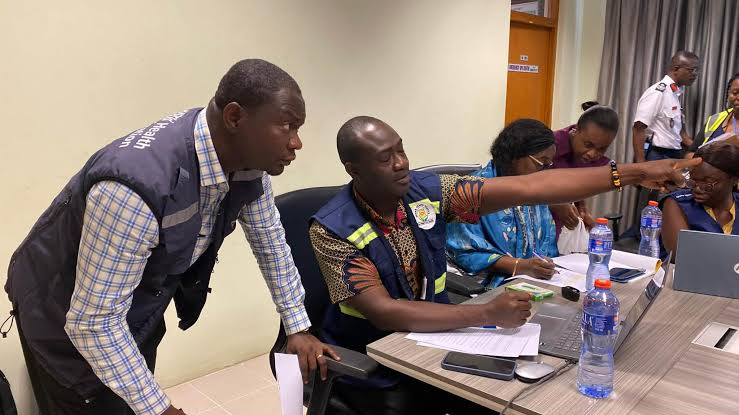
The ministry’s response includes enhanced surveillance at points of entry, simulation exercises, stronger laboratory preparation, healthcare-worker sensitisation, public education and continuous monitoring of travellers arriving from high-risk areas.
Officials have engaged the Ghana Airports Company Limited, Ghana Civil Aviation Authority and other institutions to strengthen coordination. This multi-agency approach is essential because disease prevention at an airport involves immigration officers, airline personnel, port-health teams, laboratories, ambulances and referral hospitals.
The weakest link can undermine the entire chain. Screening officers must identify warning signs, travellers must provide accurate information, laboratories must return reliable results promptly and treatment centres must isolate suspected patients safely.
Simulation exercises at Accra International Airport and the Ghana Infectious Disease Centre are intended to test that chain before a real case arrives. Their value will depend on whether weaknesses identified during the exercises produce immediate corrections, named responsibilities and adequate resources.
Preparedness cannot be judged simply by whether an exercise occurred. Authorities should know how long it takes to transfer a suspected patient from the airport, whether protective equipment is available, how samples reach laboratories and which institution communicates results to the public.
Laboratory readiness is particularly important because the early symptoms of Ebola can resemble other illnesses. High fever, severe headache, extreme fatigue, sore throat and chills may initially be mistaken for more common infections. Unexplained bleeding and confusion can appear later.
Rapid testing allows clinicians to distinguish Ebola from other conditions while limiting unnecessary fear. Updated standard operating procedures must address sample collection, transportation, testing, waste management and protection of laboratory personnel.
The infections among Kenyan healthcare workers provide a warning about occupational exposure. Doctors, nurses, laboratory staff, cleaners and ambulance crews can face elevated risks if a patient’s infection is not recognised or protective protocols are applied inconsistently.
Ghana’s sensitisation programme must therefore reach frontline workers beyond specialised treatment centres. A traveller may first report to a private clinic, pharmacy, district hospital or community facility. Staff at each level need to recognise symptoms, ask about recent travel and know whom to contact without attempting unsafe treatment.
The ministry is also following travellers from high-risk areas throughout their stay in Ghana. People arriving from affected locations may have their health monitored for 21 days, reflecting the maximum recognised incubation period.
Monitoring should be firm but respectful. Public-health protection depends on cooperation, and travellers are more likely to report symptoms when they trust that authorities will protect their privacy, explain procedures and avoid unnecessary stigma.
The ministry reminded the public that Ebola is transmitted through direct contact with the blood or bodily fluids of an infected person or through contaminated materials. It is not airborne. This distinction is crucial because misinformation can generate panic, discrimination and avoidance of legitimate travel or healthcare.
People who develop symptoms after visiting an affected area, or after contact with a suspected or confirmed patient, should seek medical attention promptly and disclose their travel or exposure history. Members of the public should practise good hand hygiene and avoid contact with anyone experiencing unexplained fever, vomiting, diarrhoea or bleeding.
Clear risk communication will be as important as clinical readiness. Authorities must provide frequent updates, explain whether suspected cases have been tested and correct false claims quickly. Information gaps are readily filled by rumours, particularly during outbreaks involving a disease associated with high mortality.
The ministry has urged Ghanaians not to circulate unverified information and to rely on official communication channels. Government must support that request by communicating rapidly, consistently and transparently, including when information remains uncertain.
Ghana’s previous investments in infectious-disease preparedness provide a foundation, but readiness cannot be assumed. Equipment expires, trained personnel move, emergency committees become inactive and protocols can weaken when no outbreak is present.
The regional cases therefore offer a test of institutional memory. Ghana must demonstrate that lessons from earlier epidemics have been converted into systems capable of functioning before a crisis reaches the country.
The appropriate public response is vigilance rather than fear. Ghana has no confirmed Ebola case, and the government’s measures are designed to preserve that position. The decisive question is whether every part of the surveillance and response chain will work quickly if prevention gives way to detection. Success will be measured not by public reassurance alone, but by whether suspected infections are identified, isolated and managed before transmission can begin locally.

