


- Ghana Wins Fiscal Breathing Room as IMF Clears 1.00% of GDP for Development Spending
Ghana will gain additional fiscal space equivalent to 1.00% of gross domestic product from 2027 after the International Monetary Fund agreed to a lower primary surplus target, marking an important shift in the country’s adjustment programme from aggressive fiscal repair towards a more balanced approach to debt sustainability and development spending.
The primary surplus target on a commitment basis will decline to 0.50% of GDP from 1.50%, creating room for the government to direct more resources towards infrastructure, social programmes and other development priorities while maintaining the broader fiscal framework underpinning Ghana’s economic recovery.
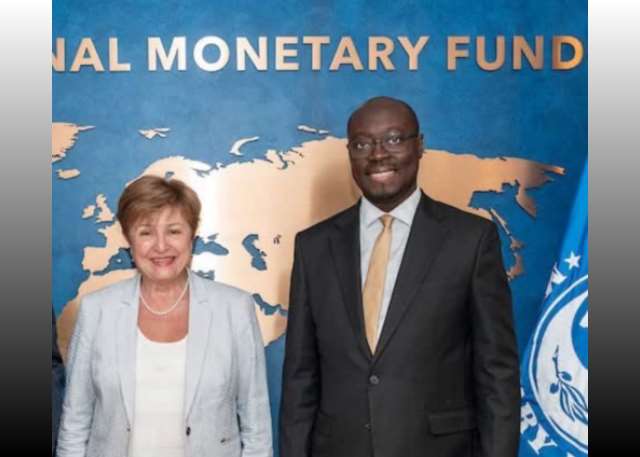
“By relaxing the fiscal stance from 1.5% primary surplus on a commitment basis to 0.5% of GDP, that basically allows an extra percentage point of GDP to be spent on development needs starting in 2027,” said Dr Adrian Alter, the IMF’s Resident Representative in Ghana.
The change is significant because it represents a clear evolution in the policy emphasis surrounding Ghana’s post-crisis recovery.
For the past several years, fiscal management has been dominated by expenditure restraint, debt restructuring, arrears clearance and efforts to restore credibility after the country’s debt and macroeconomic crisis.
Rather than asking only how much government must cut or save, the policy debate is increasingly centred on how much fiscal space can be safely released for investment without undermining debt sustainability.
The revised surplus target does not amount to an abandonment of discipline. A primary surplus measures the difference between government revenue and non-interest expenditure. Lowering the target from 1.50% to 0.50% means the state will be required to save less before interest payments are taken into account, but it will still be expected to run a positive primary balance.
The 1.00 percentage-point difference can therefore be redirected towards development expenditure, provided spending controls remain effective and the broader debt trajectory stays credible.
The government must still finance expenditure from revenue and sustainable borrowing, while avoiding a return to the accumulation of arrears and off-budget commitments that contributed to Ghana’s fiscal difficulties in the first place.
Alter said the government entered 2025 with considerable inherited pressures, including a large stock of arrears and a wider fiscal deficit carried over from 2024.
“The government in 2025 inherited a large stock of arrears, and basically, it needed to address a much larger fiscal deficit in 2025 that was brought from 2024,” he said.
“Basically, to deal with that issue, it had to cut some of the expenditure, and at the same time, it had to put in place much stronger controls, such as the commitment authorisation.”
Those controls are central to whether the additional fiscal space can be used safely. Ghana’s previous fiscal difficulties were not caused only by expenditure visible in approved budgets. They were also aggravated by commitments entered into by ministries, departments and agencies without sufficient cash backing or budgetary provision.
The commitment authorisation framework is intended to limit that practice by preventing public entities from creating obligations beyond what government has formally approved.
An additional 1.00% of GDP can make a meaningful contribution to infrastructure, health, education, energy and other productive sectors.
But the same amount can also be dissipated quickly if it is absorbed by poorly targeted recurrent spending, inefficient procurement or new arrears. The revised framework therefore presents Accra with both an opportunity and a test.
The opportunity is to demonstrate that fiscal consolidation can eventually produce a development dividend.
For households and businesses, macroeconomic stabilisation is meaningful only when it begins to translate into better infrastructure, more reliable public services, stronger employment prospects and lower operating costs.
Redirecting part of the fiscal room towards productive investment could help make that transition more visible.
For the private sector, the composition of spending will be particularly important. Investment in roads, ports, electricity systems, digital infrastructure and logistics can reduce business costs and crowd in private capital. Spending on education and health can strengthen human capital over the longer term.
By contrast, recurrent expenditure that does little to raise productive capacity may provide short-term relief but deliver limited support for future growth. That is why the quality of the additional spending matters as much as the amount.
The IMF’s willingness to accommodate a lower surplus target also reflects recognition that excessively tight fiscal policy can itself become a constraint.
Prolonged consolidation may stabilise debt ratios, but if it suppresses productive investment for too long, growth can weaken. That can eventually make debt sustainability harder rather than easier because slower growth reduces tax revenues and keeps the debt burden high relative to the size of the economy.
Ghana’s challenge is therefore to find a more sustainable balance. The country still needs enough fiscal discipline to preserve confidence and prevent debt from rising again, but it also needs sufficient investment to expand the productive base of the economy.
Debt sustainability is not determined only by spending restraint. It is also shaped by the pace at which the economy grows. Faster growth expands the tax base, raises government revenue and reduces debt ratios relative to GDP.
That means carefully selected public investment can improve fiscal sustainability over time if it raises productivity and supports private-sector expansion.
If additional fiscal space is used inefficiently, Ghana could end up with higher expenditure but little improvement in growth, leaving future governments with a larger financing burden.
The revised framework therefore raises expectations for project selection and public financial management.
Government will need to demonstrate that the extra room is directed towards programmes with clear economic and social returns.
It will also need to resist pressure to treat the lower surplus target as permission for a broader loosening of fiscal controls. Markets are likely to distinguish between a controlled easing designed to support growth and a return to the fiscal practices that preceded the debt crisis.
The former could strengthen Ghana’s recovery.

