


- Ghana’s Nuclear Ambition Hinges on Institutions and Skilled People – Matthew Opoku Prempeh Warns
Ghana’s pursuit of nuclear power is entering a phase in which the quality of its institutions and human capital may matter as much as the technology it eventually selects.
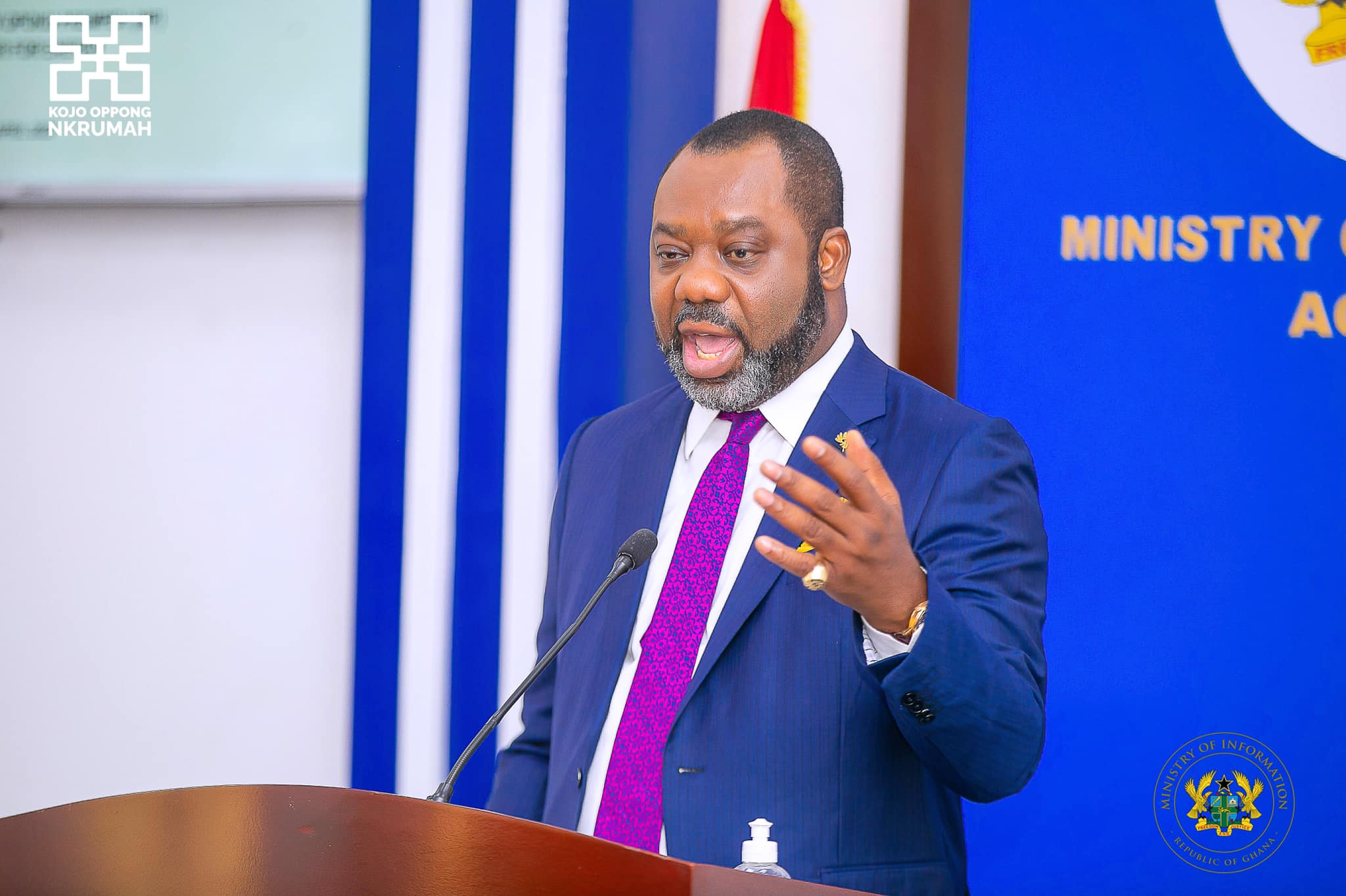
Dr Matthew Opoku Prempeh, former Energy Minister and former New Patriotic Party vice-presidential candidate, has warned that Africa’s nuclear ambitions must be anchored in people and strong institutions if countries are to convert atomic energy from policy aspiration into a reliable source of industrial power.
His intervention goes to the heart of Ghana’s nuclear debate. The country does not simply need to procure a reactor; it must build the regulatory, financial, technical and managerial architecture capable of supporting a nuclear industry for several decades.
That distinction is critical because nuclear power is fundamentally different from most conventional electricity projects. A power plant may be constructed within the lifespan of one administration, but its safety obligations, fuel management, regulatory oversight, waste-management requirements and eventual decommissioning extend far beyond a single political cycle.
Ghana has already established much of the institutional architecture required to advance its programme, including bodies involved in regulation, programme coordination, technical preparation and human-resource development. But the existence of institutions on paper is not the same as having institutions strong enough to withstand political pressure, retain scarce expertise and enforce demanding technical standards over time.
That is why Dr Opoku Prempeh’s emphasis on human capital is particularly important. A credible nuclear programme requires a specialised ecosystem of nuclear engineers, reactor operators, radiation-protection specialists, safety assessors, regulators, emergency-response professionals, cybersecurity experts, nuclear lawyers, project financiers and scientists capable of managing radioactive material.
Ghana has already recognised that challenge and invested in nuclear education and specialist training. Human-resource development has become a core part of the country’s localisation agenda, with institutions such as the Graduate School of Nuclear and Allied Sciences helping to develop domestic expertise.
The acquisition of a nuclear power-plant simulator also reflects that strategy. Such equipment allows personnel to train in reactor operations, abnormal conditions and emergency procedures in a controlled environment before an actual plant enters service.
Those investments may appear relatively small when compared with the billions of dollars required to build a nuclear facility, but their strategic value could prove greater. A reactor can be purchased from abroad; the institutional competence to operate, regulate and maintain it safely cannot be imported indefinitely.
Technology transfer will therefore be central to the economics of Ghana’s nuclear programme. Localisation should not be limited to employing Ghanaian workers during construction but should progressively create domestic capacity to supervise, operate, maintain and regulate nuclear infrastructure.
That means the country must think in terms of careers rather than projects. Nuclear engineers and regulators require years of education, practical experience and continuous professional development, while institutions need mechanisms that prevent trained specialists from being lost to migration or more lucrative international opportunities.
Retention could become as important as training. Ghana may invest heavily in developing specialist personnel only to undermine that investment if compensation, career progression, research opportunities and institutional autonomy are insufficient to keep them within the national programme.
The institutional question is even more consequential. Ghana’s Nuclear Regulatory Authority carries responsibility for ensuring nuclear and radiological activities meet safety and security requirements, placing it at the centre of any future nuclear-power system.
A nuclear regulator cannot operate as an ordinary administrative department. Its credibility must rest on technical independence, the capacity to challenge operators, access to specialist expertise and the authority to enforce safety requirements even where doing so creates delays or political inconvenience.
That requirement has major governance implications. Nuclear power involves risks whose potential consequences are significant even where the probability of a severe accident is low, making prevention, transparency and institutional discipline indispensable.
The programme must therefore be treated as much as a governance project as an engineering project. Decisions covering radioactive-waste management, fuel-cycle planning, procurement, emergency preparedness, financing, cybersecurity, electrical-grid requirements and eventual decommissioning all require competent institutions long before commercial operation begins.
This makes Ghana’s nuclear ambition effectively a national industrial-policy project rather than a narrow energy-sector procurement. If developed well, it could create technical skills, engineering capability, specialised services and high-value employment extending beyond the power plant itself.
The economic case for nuclear power is potentially significant. Ghana needs dependable electricity to support manufacturing, mining, digital infrastructure, industrialisation and rising urban demand, while variable renewable power will require complementary sources capable of providing firm generation.
Nuclear power could provide large-scale baseload electricity without depending on weather conditions. But that advantage comes with substantial upfront capital requirements, long planning and construction horizons and potentially serious consequences if financing or project execution is poorly managed.
Governance therefore becomes inseparable from affordability. A nuclear project that suffers prolonged delays or major cost overruns can impose pressure on public finances even if the reactor eventually operates successfully.
Ghana will consequently need rigorous techno-economic analysis when evaluating reactor technologies and financing arrangements. Capital cost alone cannot determine which option offers the greatest long-term value.
The country must consider financing costs, construction risk, fuel security, maintenance requirements, expected plant availability, local-content potential, technology transfer, waste management and eventual decommissioning. A proposal that appears cheaper at procurement stage may prove more expensive across the full operating life of the asset.
The financing structure will also matter. Large sovereign guarantees or poorly allocated project risks could create future fiscal liabilities, particularly if projected electricity demand, tariffs or construction timelines fail to materialise as expected.
That makes competitive procurement and transparent evaluation especially important. Technology selection should be driven by safety, economics, grid compatibility and long-term national interest rather than diplomatic relationships or attractive headline financing promises.
Ghana also needs to consider whether its electricity grid is ready to absorb a large nuclear unit. Nuclear generation works most effectively within a stable power system capable of managing the loss of a large generating unit without creating broader system instability.
Transmission investment, reserve capacity and grid planning must therefore develop alongside the reactor programme. Building nuclear generation without the corresponding transmission and system infrastructure would merely shift the bottleneck from electricity production to delivery.
Another long-term challenge is radioactive waste. Whatever reactor technology Ghana ultimately chooses, the country will need credible arrangements for handling, storing and eventually disposing of radioactive materials.
Those obligations can last far beyond the commercial life of a plant. Governance structures and financing mechanisms therefore need to be designed so that future generations are not left with unfunded liabilities created by decisions taken decades earlier.
The same principle applies to decommissioning. Ghana should establish from the beginning how eventual plant closure and site restoration will be financed rather than treating those costs as a distant problem.
This long horizon explains why political continuity is indispensable. Ghana’s interest in nuclear energy stretches back to the early post-independence period, with successive governments contributing to policy, legislation, research, regulation and institutional development.
The next step should be to convert that historical continuity into institutional certainty. A nuclear programme that changes strategy every four or eight years would struggle to attract credible investors, retain technical personnel or sustain partnerships with international nuclear institutions.
Bipartisan support therefore has practical economic value. Investors and technology partners need confidence that contracts, regulatory arrangements and long-term energy planning will survive changes in government.
That does not mean removing the programme from democratic scrutiny. On the contrary, long-term political legitimacy will depend on transparency, parliamentary oversight, public communication and credible mechanisms for evaluating costs and safety.
Public trust will also matter. Nuclear power can generate strong perceptions around radiation, waste and accidents, meaning government institutions will need to communicate risks clearly rather than treating public engagement as a late-stage public-relations exercise.
Communities potentially hosting nuclear infrastructure will require credible information on safety, environmental impacts, employment opportunities and emergency preparedness. A technically sound project can still face costly delays if public confidence is weak.
Ghana’s progress into the preparatory stage of its nuclear programme therefore represents more than a technical milestone. It is a test of whether the country can coordinate several institutions, maintain policy consistency and develop enough specialised personnel before major capital commitments are made.
That is why Dr Opoku Prempeh’s warning should be understood as more than an argument for training. Human capital and institutional strength ultimately determine whether sophisticated technology becomes a productive national asset or an expensive source of long-term risk.
For Ghana, the prize could be substantial: dependable electricity, new technical industries, stronger energy security and a platform for deeper industrialisation. But none of those benefits is guaranteed simply by deciding to build a reactor.
The more consequential question is whether Ghana can build the institutions capable of saying no when safety requires it, the engineers capable of operating the technology, the regulators capable of policing it and the financing structures capable of protecting taxpayers.
A reactor may generate the electricity. The people and institutions around it will determine whether Ghana can generate that electricity safely, economically and sustainably for generations.

